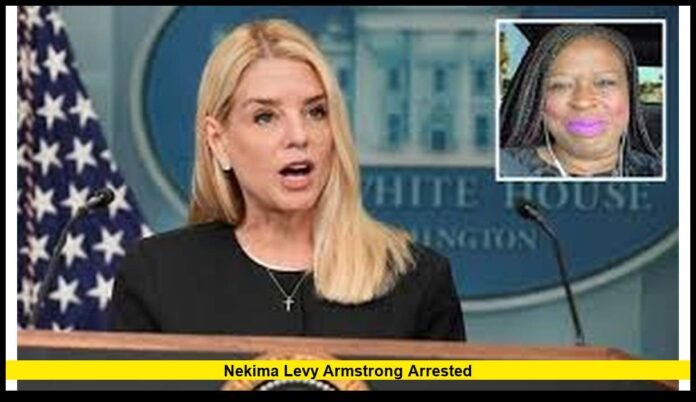

Nekima Levy Armstrong arrested by federal authorities on January 22, 2026, following her alleged role in organizing and leading a protest that interrupted a Sunday worship service at Cities Church in St. Paul, Minnesota. The arrest of the well-known civil rights attorney and activist has become a major national story, drawing attention to the intersection of protest rights, religious freedom, and federal immigration enforcement.
The case centers on a demonstration that took place inside a church sanctuary, an action that federal officials say crossed legal boundaries and triggered enforcement under laws designed to protect the free exercise of religion.
Background on Nekima Levy Armstrong
Nekima Levy Armstrong is a longtime civil rights lawyer, community organizer, and public figure in Minnesota. For years, she has been involved in social justice advocacy, particularly in cases related to racial equity, police accountability, and government transparency.
She previously served in leadership roles within civil rights organizations and has been a visible presence at major protests in the Minneapolis–St. Paul area. Her activism often places her at the center of politically charged debates, especially those involving law enforcement and federal authority.
In recent weeks, her focus shifted to immigration enforcement after a fatal shooting involving an ICE officer in Minneapolis intensified tensions across the region. That event became a catalyst for protests calling for accountability and reform.
What Happened Inside Cities Church
On January 18, 2026, a group of demonstrators entered Cities Church during a live Sunday worship service attended by congregants and families. The protest was directed at one of the church’s pastors, who also holds a senior leadership position within U.S. Immigration and Customs Enforcement in Minnesota.
The group interrupted the sermon, chanting slogans and calling attention to immigration enforcement actions and their impact on local communities. The demonstration caused the service to pause and created visible distress among some worshippers.
Video of the incident circulated widely on social media, showing protesters standing in the sanctuary, speaking loudly, and refusing to leave immediately when asked. Church leaders later described the moment as deeply disruptive and said it violated the sense of safety and reverence expected in a place of worship.
Supporters of the protest said the location was chosen deliberately to confront what they viewed as a moral conflict between religious leadership and federal immigration authority.
Federal Investigation and Arrest
Within days of the protest, federal agencies opened an investigation to determine whether laws protecting religious institutions had been violated. Authorities reviewed footage, witness statements, and communications related to the organization of the demonstration.
On January 22, federal agents arrested Nekima Levy Armstrong and another individual believed to have helped coordinate the protest. The arrests were carried out by a joint task force that included the FBI and the Department of Homeland Security.
Attorney General Pam Bondi announced the enforcement action, stating that the federal government would not allow the disruption of worship services and would apply the law evenly, regardless of political motivation.
Officials emphasized that places of worship are protected under federal law and that intentionally interfering with religious services may carry serious legal consequences.
Possible Legal Grounds
Although formal indictments had not yet been made public at the time of the arrest, authorities indicated that the investigation involves statutes that prohibit interference with religious exercise.
One of the central laws under review is the Freedom of Access to Clinic Entrances Act, commonly known as the FACE Act. While the law is widely associated with protecting access to reproductive health facilities, it also includes provisions that safeguard religious institutions from obstruction, intimidation, or disruption.
Prosecutors are also examining whether conspiracy or civil rights violations may apply, based on the planning and execution of the protest.
Legal experts note that cases involving protests inside houses of worship are rare at the federal level, which makes this situation closely watched by constitutional scholars and civil liberties organizations.
National Reaction
The arrest of Nekima Levy Armstrong has generated strong reactions across the political spectrum.
Supporters of the enforcement action argue that churches, synagogues, mosques, and other religious spaces must remain protected from political confrontations. They say that protest activity, while legal in many public settings, crosses a line when it interrupts worship and targets congregants.
Several religious leaders from different faith traditions have expressed concern that allowing such disruptions could set a dangerous precedent and undermine the sanctity of religious gatherings.
At the same time, civil rights advocates and immigration activists have voiced alarm over what they see as aggressive federal intervention. They argue that the protest was nonviolent and intended to raise awareness about government actions that affect vulnerable populations.
Some legal analysts caution that the case could test the balance between First Amendment protections and federal laws designed to ensure religious freedom.
Armstrong’s Position and Support Network
Before her arrest, Nekima Levy Armstrong publicly defended the protest and its purpose. She stated that the demonstration sought to highlight what she described as a conflict between spiritual leadership and the enforcement of policies that have caused fear and loss within immigrant communities.
She emphasized that the action was meant to be peaceful and symbolic, not threatening. Her supporters maintain that the goal was to spark dialogue and accountability rather than to intimidate worshippers.
Following her arrest, advocacy groups organized vigils and public statements calling for her release and for careful scrutiny of the charges. They describe her as a long-time advocate for justice who has consistently worked through legal and nonviolent means.
Church members, however, have shared a different perspective. Many say they felt their place of worship was violated and that the protest disrupted a sacred moment meant for prayer and reflection.
Key Moments in the Case
January 18, 2026
The protest takes place during a Sunday service at Cities Church in St. Paul, drawing immediate attention from local and national media.
January 19–21, 2026
Video of the incident spreads widely online. Federal officials confirm that they are reviewing the event for potential legal violations.
January 22, 2026
Federal agents arrest Nekima Levy Armstrong and another alleged organizer. The Justice Department announces that the case involves interference with a place of worship.
Broader Implications
The case has raised several important questions that extend beyond Minnesota:
- Limits of Protest: Where does lawful demonstration end and unlawful disruption begin?
- Protection of Religious Spaces: How should federal law respond when political activism enters sanctuaries?
- Free Speech vs. Free Exercise: How courts will balance the rights of protesters with the rights of congregations.
The outcome could influence how future demonstrations are planned and how law enforcement responds when activism intersects with religious settings.
What Comes Next
Nekima Levy Armstrong is expected to appear in federal court, where prosecutors will outline the specific charges and defense attorneys will begin challenging the government’s case.
The proceedings are likely to involve constitutional arguments, including the scope of the First Amendment and the application of statutes designed to protect religious freedom.
As the legal process unfolds, the case is expected to remain in the national spotlight, not only because of Armstrong’s public profile but also because of the broader issues it raises about protest, faith, and federal authority.
The arrest of Nekima Levy Armstrong has become a defining moment in the national conversation about where activism, law, and religious liberty intersect.
Share your perspective below and follow along as this developing story continues to unfold.