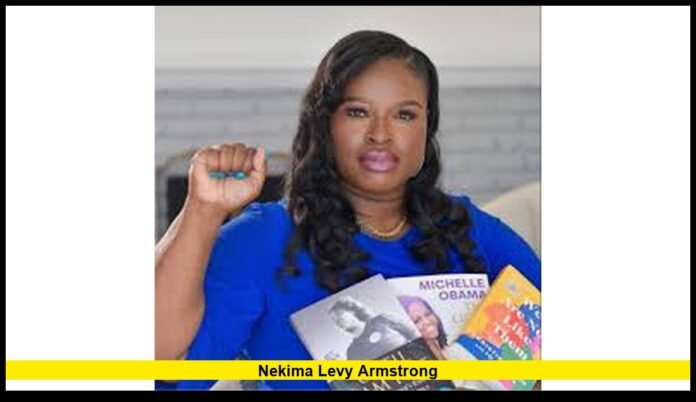

Nekima Levy Armstrong was arrested on January 22, 2026, after her involvement in leading a high-profile protest that shut down a Sunday church service at Cities Church in St. Paul, Minnesota. The arrest of the civil rights attorney and activist has become a major national story, fueling debate over immigration enforcement, protest rights, and the legal protections for places of worship in the United States.
Who Is Nekima Levy Armstrong?
Nekima Levy Armstrong is an American lawyer, activist, ordained minister, and founder of the Racial Justice Network. She was born on June 27, 1976, in Jackson, Mississippi, and later moved to Minnesota, where she became a prominent civil rights leader.
Levy Armstrong served as president of the Minneapolis NAACP chapter and has spent decades advocating for racial equality, police reform, and community justice. She also taught law at the University of St. Thomas and has led or participated in protests addressing issues ranging from police brutality to housing inequality. Over the years, she has developed a reputation as both a forceful community organizer and a vocal critic of systemic injustice.
Her leadership roles and activism have made her a familiar figure in the Twin Cities and beyond, and her recent arrest has elevated her profile on a national stage once again.
The Protest That Sparked Arrest
The events that led to Nekima Levy Armstrong’s arrest began on January 18, 2026. A group of activists, including Levy Armstrong, entered Cities Church during a Sunday worship service. Their goal was to confront church leadership over the pastor’s dual role as a religious leader and as an official with U.S. Immigration and Customs Enforcement (ICE).
Protesters interrupted the service by chanting slogans such as “ICE out” and “Justice for Renée Good,” referring to a local mother who was killed earlier in January during a confrontation with ICE agents. Participants in the demonstration argued that the pastor’s association with ICE created a moral conflict that needed to be addressed publicly, especially within the setting of the church.
Video of the protest spread rapidly on social media, drawing nationwide attention and sparking sharp reactions from religious communities, legal experts, and activists. Many worshippers were visibly upset by the disruption, while other voices praised the protesters for drawing attention to broader concerns about immigration policy and enforcement practices.
Federal Law Enforcement Action
On Thursday, January 22, 2026, federal law enforcement agents, including the FBI and Homeland Security Investigations, arrested Nekima Levy Armstrong and at least one other individual in connection with the protest at the church. The arrest was publicly announced by U.S. Attorney General Pam Bondi, who stated that disrupting a place of worship constitutes a serious offense and will not be tolerated.
Authorities indicated that the arrests could involve potential violations of federal statutes protecting religious freedom. One law under consideration is the Freedom of Access to Clinic Entrances (FACE) Act, which prohibits the use of force or intimidation to interfere with the exercise of religion at places of worship. While the FACE Act is more commonly associated with protests at medical facilities, federal prosecutors view its provisions as applicable to this case because the protest occurred during an active worship service.
Officials have described Levy Armstrong as playing a “key role” in organizing the protest, though formal charges have not yet been fully detailed in public. The federal action has set the stage for a contentious legal battle that could have broader implications for how protests intersect with protected religious spaces.
Legal and Constitutional Implications
The arrest of Nekima Levy Armstrong has raised significant legal questions about the balance between First Amendment rights and protections for religious worship. Legal analysts have weighed in on both sides of the issue.
Supporters of free speech argue that peaceful protest is a cornerstone of American democracy and should be protected even when it occurs inside or near houses of worship. They maintain that criticizing immigration policy and public officials is a legitimate form of political expression, regardless of the setting.
Conversely, critics contend that places of worship deserve special legal protection and that interrupting a religious service crosses an important line. They argue that worshippers have a right to spiritual space free from political disruption, and that laws like the FACE Act were designed precisely to prevent such interference.
As the case moves through federal courts, attorneys for both sides are expected to debate these constitutional tensions. The outcome could influence how similar protests are handled in the future, particularly when they occur in spaces that are typically shielded from political confrontation.
Community Reactions and National Debate
The arrest has generated a wide range of public reactions across the United States.
Many civil rights advocates and progressive leaders have expressed solidarity with Levy Armstrong and the protesters. They argue that the actions taken inside the church were a righteous response to what they characterize as overly aggressive immigration enforcement tactics in the Twin Cities region. For them, drawing attention to the dual role of the pastor was a necessary step in advancing justice for immigrant communities.
Some religious leaders, particularly within conservative Christian circles, have strongly condemned the protest. They describe the demonstration as an inappropriate and disrespectful intrusion into a worship service. These critics emphasize that sacred spaces should not be used as platforms for political disputes, regardless of the issue at hand.
At the same time, other clergy and faith leaders have expressed more nuanced views. Some argue that faith communities have a role in social justice movements and that speaking out against perceived injustices can be consistent with spiritual teachings. This has sparked a broader conversation within American Christianity about how churches engage with contemporary social and political issues.
The protest and arrest also reflect deeper national tensions surrounding immigration enforcement. In Minneapolis–St. Paul, federal immigration operations have been particularly intense in recent months, prompting a wave of demonstrations and calls for reform. These operations, which have included aggressive tactics and an expanding federal presence, have become flashpoints for broader debates about the role of ICE, border policy, and civil liberties.
The Racial Justice Network and Levy Armstrong’s Activism
Nekima Levy Armstrong leads the Racial Justice Network, a grassroots organization committed to addressing racial injustices and systemic inequality. The group engages in community outreach, policy advocacy, and public demonstrations. It has played a central role in organizing protests and mobilizing support around issues that affect marginalized communities in Minnesota and beyond.
Levy Armstrong’s work with the Racial Justice Network and other organizations highlights her longstanding commitment to activism. Over the years, she has been involved in legal challenges, public campaigns, and community building efforts aimed at combating discrimination and promoting equity. Her leadership has brought both acclaim and controversy, cementing her status as one of the most visible civil rights figures in the Midwest.
What Comes Next in the Legal Process
As of today, formal charges against Nekima Levy Armstrong have not been fully disclosed. Federal prosecutors are expected to review multiple avenues for prosecution, and the defense is likely to mount a robust challenge based on constitutional protections.
The legal process could take months or even years to unfold, with potential appeals and broader implications for federal law enforcement practices. Observers across the political spectrum will closely watch the case, as it touches on critical issues such as the boundaries of protest rights, federal protections for religious spaces, and the limits of civil disobedience.
Conclusion
The arrest of Nekima Levy Armstrong after leading a protest that disrupted a Minnesota church service has ignited national conversation about civil liberties, immigration enforcement, and the legal protections afforded to religious institutions. As the legal case progresses, it will continue to draw attention from communities, activists, and policymakers across the United States.
What’s your perspective on the balance between protest rights and protecting places of worship? Share your thoughts and join the discussion below.