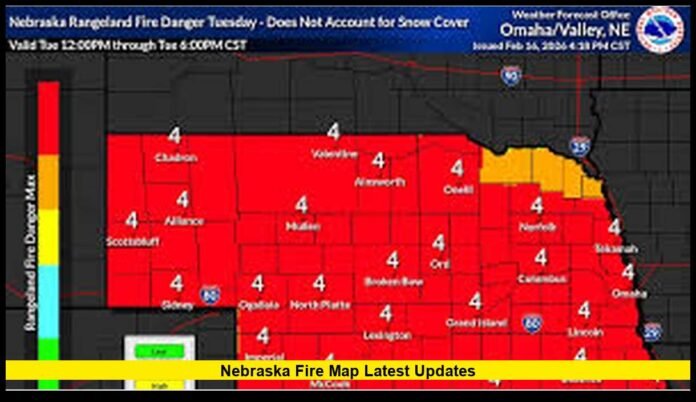

Nebraska fire map data is becoming a crucial tool for residents and emergency officials as wildfire monitoring systems track active fires, burn perimeters, and smoke patterns across the state during the 2026 fire season. Interactive maps now provide near real-time updates that help communities understand where fires are burning and how quickly conditions are changing.
Wildfire activity in Nebraska often increases during dry and windy periods in late winter and spring. Grasslands and agricultural areas can ignite quickly when vegetation becomes dry. Modern fire mapping systems allow emergency managers, firefighters, and the public to follow wildfire activity with detailed visual updates.
These maps combine satellite heat detection, aerial imaging, and on-the-ground reports from local fire departments. The result is a dynamic picture of fire activity that updates frequently throughout the day.
What a Nebraska Fire Map Shows
A wildfire map designed for Nebraska provides a visual overview of fire activity across the state. It allows users to see where fires have been detected and how they are spreading.
Key details displayed on most wildfire maps include:
- Active wildfire locations
- Satellite heat detection points
- Fire perimeter outlines
- Estimated acres burned
- Containment progress
- Nearby towns and highways
- Smoke movement and air quality patterns
These features help both emergency crews and residents monitor fire activity with greater clarity.
The mapping systems also show geographic layers such as forests, grasslands, and transportation routes. These layers help responders plan firefighting operations more effectively.
How Wildfires Are Detected
Wildfires can start quickly in open grassland environments. Early detection plays a major role in controlling the spread.
Several technologies work together to identify fires as soon as possible.
Satellite Monitoring
Earth-orbiting satellites scan the planet’s surface several times per day. These satellites identify heat signatures that indicate potential fires.
Once a hotspot appears, mapping systems add it to the fire map as a possible fire location.
Aerial Observation
Aircraft and drones often assist in mapping large fires. Infrared cameras help detect fire boundaries even through smoke.
These flights provide highly detailed information about how far the fire has spread.
Ground Reports
Local firefighters and emergency personnel confirm fire locations reported by satellites. They also measure the size of the fire and determine containment status.
This combination of technology and human observation improves accuracy.
Why Nebraska Experiences Wildfires
Nebraska may not experience forest fires on the same scale as some western states, but the region still faces serious wildfire risks.
Several environmental conditions make the state vulnerable.
Prairie and Grassland Fuels
Large portions of Nebraska consist of grasslands. Dry grasses ignite easily and can carry fire quickly across wide areas.
During drought periods, vegetation becomes especially flammable.
Strong Plains Winds
The Great Plains frequently experience high winds. When wind speeds increase, fires can move rapidly across open land.
Wind can also carry embers long distances, starting new fires.
Seasonal Dry Periods
Low humidity and limited rainfall during certain months dry out vegetation.
Dry conditions combined with wind create ideal circumstances for wildfire ignition.
Agricultural Activities
Controlled burns are sometimes used in farming and ranching operations. When weather conditions change suddenly, fires can escape containment.
Because of these risks, Nebraska maintains a strong wildfire monitoring network.
Agencies Responsible for Fire Monitoring
Multiple organizations contribute information used in wildfire mapping.
Important agencies include:
- Nebraska Forest Service
- Nebraska Emergency Management Agency
- Local volunteer fire departments
- County emergency response teams
- Federal wildfire monitoring systems
These organizations share data to create a comprehensive view of wildfire conditions across the state.
Local firefighters often provide the first reports when a fire begins.
State and federal agencies then coordinate additional resources if the fire grows.
How Residents Use Wildfire Maps
Residents across Nebraska rely on wildfire maps to stay informed about nearby fires.
These maps help communities understand:
- Whether a wildfire is near their area
- Which roads might be affected
- Where smoke may travel
- Whether evacuation warnings have been issued
Farmers and ranchers often monitor wildfire maps closely because fires can spread rapidly across grazing land.
Access to real-time information helps people prepare for changing conditions.
Counties Frequently Impacted by Wildfires
Wildfire activity can occur in any part of the state, but certain regions face higher risk.
Areas that often appear on wildfire monitoring systems include:
- The Nebraska Sandhills
- Western Nebraska grasslands
- The Nebraska Panhandle
The Sandhills region contains millions of acres of prairie. Fires can move quickly across this landscape, especially during windy weather.
Volunteer fire departments play a vital role in responding to fires in these rural areas.
The Importance of Rapid Fire Response
When a wildfire appears on a fire map, emergency services move quickly to control it.
Typical response actions include:
- Dispatching local fire crews.
- Evaluating fire size and direction.
- Creating containment lines.
- Deploying additional crews and equipment if needed.
Firefighters often rely on specialized equipment such as:
- Brush trucks designed for rough terrain
- Water tankers
- Bulldozers used to build firebreaks
- Aerial support when available
Early response can significantly reduce the size and damage of wildfires.
How Weather Influences Fire Behavior
Weather conditions strongly affect wildfire growth.
Several weather factors determine how a fire behaves.
Wind
Wind speed and direction influence how quickly a fire spreads.
Strong winds can push flames across large areas in a short time.
Temperature
High temperatures dry out vegetation and increase fire intensity.
Warm conditions also make it easier for sparks to ignite new fires.
Humidity
Low humidity allows fires to burn more aggressively.
Moist air slows the spread of flames.
Lightning
Thunderstorms occasionally ignite fires when lightning strikes dry vegetation.
Fire maps sometimes show lightning strike locations to help identify possible fire sources.
Smoke Tracking and Air Quality Monitoring
Wildfire smoke can travel far beyond the area where a fire begins.
Modern wildfire mapping systems often include smoke-tracking features. These tools show how wind carries smoke across regions.
Smoke monitoring helps residents understand potential health risks.
Exposure to wildfire smoke may cause:
- Eye irritation
- Coughing or throat irritation
- Breathing difficulties for sensitive individuals
Air quality monitoring stations collect data that supports smoke prediction models.
This information appears on many wildfire maps.
Technology Improving Wildfire Mapping
Advances in technology continue to improve wildfire monitoring systems.
Several innovations now support faster and more accurate fire detection.
Advanced Satellites
Modern satellite sensors detect smaller heat sources than earlier systems.
This improvement allows fire detection much earlier.
Drone Surveillance
Drones help firefighters monitor remote areas without risking human safety.
They provide detailed aerial views of fire perimeters.
Data Integration
Mapping systems now combine data from satellites, weather stations, and emergency responders.
This integration creates more accurate wildfire maps.
Technology continues to improve the speed of wildfire detection and response.
How Fire Maps Support Firefighters
Wildfire maps are valuable operational tools for firefighters.
Emergency crews use map data to determine:
- Where the fire started
- Which direction it is moving
- Where containment lines should be built
- Which communities may face danger
Mapping systems help teams plan safe routes for equipment and personnel.
These tools also allow multiple agencies to coordinate efforts during large fires.
Community Awareness and Fire Prevention
Public awareness helps reduce wildfire damage.
Many Nebraska communities encourage residents to monitor fire maps and follow safety guidelines.
Common prevention measures include:
- Avoiding outdoor burning during dry conditions
- Clearing dry grass near buildings
- Reporting smoke or fire immediately
- Following burn restrictions issued by local authorities
Community cooperation supports faster fire response and reduces risk.
Future Improvements in Wildfire Monitoring
Wildfire monitoring technology continues to evolve.
Researchers are developing systems that can detect fires within minutes of ignition.
Future improvements may include:
- Faster satellite scanning
- Artificial intelligence analysis of heat data
- Expanded drone monitoring networks
- More detailed smoke forecasting
These advancements will help emergency responders react more quickly to wildfire threats.
As climate patterns shift and drought conditions change across the Great Plains, wildfire monitoring tools will remain essential.
The Role of Public Access to Fire Data
Public access to wildfire information plays a major role in safety.
When residents can see updated fire locations and smoke patterns, they can make informed decisions about travel and outdoor activity.
The Nebraska fire map continues to serve as a central tool for wildfire awareness across the state.
Clear and accessible information helps communities respond quickly to changing wildfire conditions.
Have you checked the wildfire conditions in your region recently? Share your thoughts and stay alert as fire activity continues to evolve across Nebraska.