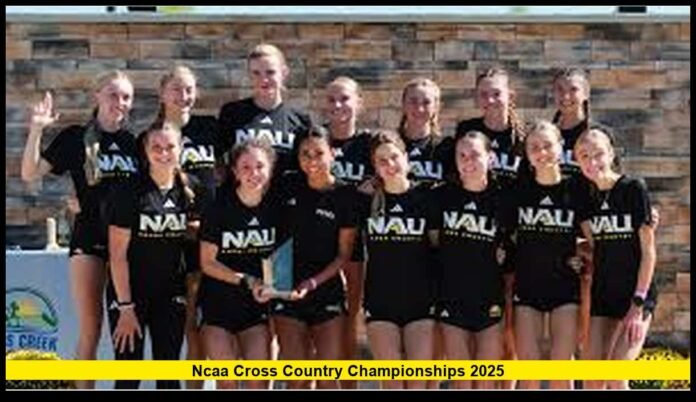

The NCAA Cross Country Championships 2025 brought the nation’s top collegiate distance runners to the Gans Creek Cross Country Course in Columbia, Missouri on Saturday, November 22, for what proved to be an unforgettable weekend of racing. With the spotlight firmly on the marquee women’s 6 km and men’s 10 km events, this edition of the championships delivered standout individual performances, dramatic team scores and rich storylines across all levels of the sport.
Location, Schedule & Event Setup
Columbia’s Gans Creek venue served as the stage for the Division I championships. On the morning of the event the women’s 6 km race kicked off at 10:20 a.m. ET, followed by the men’s 10 km at 11:10 a.m. ET. Conditions were cool and crisp, with grass and rolling terrain presenting a genuine cross-country feel rather than a flat, track-style layout. The field included 31 automatic qualifying teams on each side (men’s and women’s) plus at-large selections, bringing together the top programs and individual qualifiers from regional meets held earlier in November.
Women’s Race: Individual Glory & Team Depth
The women’s competition delivered one of the most compelling narratives of the day. An athlete from Alabama claimed the individual title, crossing the line in 18:25.4 — a dominant run that underscored speed, endurance and tactical acumen in equal measure. Right behind, runners from BYU and Florida placed second and third respectively, with times of 18:38.9 and 18:46.4.
Behind the individual glory, the team battle was intense. A powerhouse program from North Carolina squared off against BYU, Oregon and New Mexico. In the end, North Carolina State secured the women’s team championship with a score of 114 points. BYU finished second at 130, while Oregon claimed third at 153. These scores reflected not only quality in the top pack runners but consistency deep into the scoring positions — often the deciding factor in team cross-country.
Notable individual finishes included:
- 4th place: Riley Chamberlain (18:47.0)
- 5th: Hannah Gapes (18:51.3)
- 6th: Grace Hartman (18:52.6)
Understanding the team result requires recognizing how the top five finishers’ places aggregate into the team score. North Carolina State’s ability to place two athletes in the top six and then follow with strong 24th- and 35th-place finishes showed depth. BYU’s challenge proved fierce but fell just short; Oregon’s third place reflected strong upward momentum.
What the Terrain & Conditions Brought to the Table
Gans Creek features a range of terrain: sweeping grass fields, moderate hills, and tight turns around trees and marshy patches. On race morning the cool air and morning dew raised the premium on traction and race line choice. Teams that rehearsed sight lines and had athletes comfortable racing off- cam left the door open for major strategic advantage. In these conditions, cross country becomes as much about pack management and choosing the right passing moment as it is about raw pace.
Athletes reported that the initial section of the course felt fast but controlling effort early paid dividends. Around the halfway point, the field began to thin, and leaders separated themselves with a sustained surge on the hill segment that preceded the final 1 km. That segment proved pivotal: those who timed their move there held momentum into the finish straight.
Team Triumph & Program Implications
The triumph by North Carolina State solidifies their place among the elite in women’s collegiate cross country. Their recruitment pipeline, coaching continuity and ability to deliver both star performances and dependable second finishers matter. Behind them, BYU and Oregon signaled that they are closing the gap and positioning for future seasons as challengers to the throne.
For coaches and programs around the country this edition of the championships offers a lesson: winning demands more than a star at the front. It demands a top-tier lead athlete, plus reliable 4th- and 5th-scorer depth in a single race. The fact that BYU placed multiple athletes inside the top eight but still trailed shows how fierce the margin becomes.
Men’s Race & Field (Overview)
While much of the preview focus leaned toward the women’s race (due to its high drama and context), the men’s 10 km championship served as the concluding race and provided its own share of storylines. A powerhouse men’s program — Oklahoma State — claimed the team championship with a score of 57 points, demonstrating depth across the five counting runners (places included 4th, 5th, 6th, 12th and 30th). The victory marked a return to the very top for a program that has been building consistently over recent seasons.
The men’s individual title was tightly contested. While full individual finishing times beyond the top three were not readily released early, the team result signals that the winning runners executed as a cohesive unit rather than relying on a single standout.
Qualification Path & Field Composition
The national championship field is assembled through regional meets. For Division I, there are nine regions; each region automatically qualifies two teams on each side (men’s and women’s) and one individual qualifier per region who is not on a qualified team. Then at-large selections fill out the field for both individuals and teams, based on cross-country ranking metrics, head-to-head results and regional placings. The result is a field that features both national powers and smaller programs punching above their weight through regional performance.
Understanding who made the field and how they got there adds a layer to the championship story: the regionals often featured high drama, and programs which managed to peak at the right time carried that momentum into Columbia.
Broadcast and Spectator Experience
The championships were streamed live on national college‐sports platforms and televised via the major college athletics network. Fans following at home could see the women’s 6 km launch at 10:20 a.m. ET and the men’s 10 km at 11:10 a.m. ET. On site, spectators faced early morning chill but cheering crowds gathered along the grass turns and final straight, giving the event an electric, collegiate festival atmosphere. Many viewers credited the streamlined schedule and clear timing with delivering a crisp experience rather than a marathon all-day affair.
Breakout Performances & Recognition
Beyond the headline team winners and individual champion, many athletes earned All-American honors (top 40 finishers) for the first time in their careers. For example, freshman and sophomore athletes who raced the first half of the season largely unheralded emerged in the top 20. Their performances signal that the collegiate cross country landscape remains dynamic and that new stars can emerge on the biggest stage.
Programs that improved significantly in finishing position or scoring compared to last year will be ones to watch next season. For instance, a program securing a top‐10 result for the first time in several years can use this championship performance as a recruiting and morale springboard.
Trends & Takeaways for Future Seasons
- Depth remains king: The team scores reaffirm that spread across scoring runners matters more than one, two or even three standout athletes.
- Terrain familiarity matters: Teams who had raced on similar rolling, grass courses earlier in the season appeared to have slight advantages.
- Mid-race moves matter: In both races the decisive break came between kilometers 4 and 5, where athletes who surged gained separation.
- Coaching consistency counts: Programs with stable coaching and training culture once again featured in the top tier.
- Emerging programs are closing in: The margin between the podium and the chasing pack continues to shrink.
Looking Ahead to Next Season
With the national meet concluded, the focus for many programs shifts toward winter training, indoor track transitions and next fall’s cross country campaign. Individual champions and top scorers will balance track seasons, while teams early in their development cycle will aim to close the gap for next year’s nationals. Some programs may add altitude training camps or rotate new freshmen into scoring roles in anticipation of tightened competition.
The site selection for future championships, changes in coaching staff, and recruiting classes will all gain fresh relevance in the coming months. And as always, cross country remains a sport where the race on the day matters more than expectations.
Congratulations to all the athletes and teams who competed and made national history on that brisk November morning in Missouri. Share your reactions below and stay tuned for follow-up coverage as the collegiate distance running world shifts into its next phase.