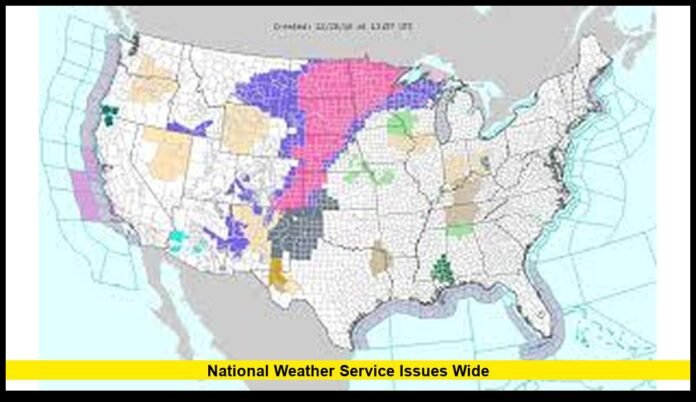

The national weather service has issued a sweeping array of warnings, watches, and advisories across large segments of the United States as a powerful late-November storm system unleashes heavy snow, bitter cold, gusty winds, and hazardous travel conditions. As millions of Americans prepare for holiday travel, the timing and severity of the storm are prompting urgent safety alerts and travel disruptions.
The Scope and Timing of the Storm
A formidable winter storm system formed over the central United States and is now pushing eastward. Meteorological conditions created a perfect setup: a surge of cold atmospheric air colliding with moist, warm air sweeping northward from the South. This collision has produced widespread snowfall, heavy lake-effect bands over the Great Lakes, strong gusty winds, and sharp temperature drops — a mix that has triggered a cascade of alert levels across many states.
Snowfall forecasts in the hardest-hit zones show 6–12 inches widely, with localized higher amounts where bands stall or intensify. At the same time, the storm’s southern and coastal fringe is generating heavy rains, gusty winds, and flooding risks — a stark contrast to the snow farther north. The dual nature of the event means the storm is impacting everything from interstates to coastal highways, complicating both ground and air travel.
Geographic Spread: Which Regions Are Affected and How
Midwest & Great Lakes
This region is bearing the brunt of the snowfall. Strong lake-effect snow bands — generated by cold air flowing over the warmer Great Lakes — are dumping heavy accumulation in narrow, focused zones. Some communities are already seeing rapid accumulations of snow, with visibility dropping to near-zero in intense snow-band episodes. Roads are turning slick quickly, and crews are racing to keep highways and main roads plowed and treated.
Cities and towns downwind of the lakes should expect several hours of dangerous conditions — including heavy snow, blowing snow, and slick surfaces — followed by bitter cold and reduced visibility that could persist well into the night. Motorists are warned to either delay travel or proceed with extreme caution, especially outside major interstates.
Upper Midwest & Plains
Across the Plains and Upper Midwest, wet snow mixed with gusty winds is creating hazardous travel conditions. Cross-state highways, often long and open, are especially vulnerable. Snow accumulation combined with blowing snow and ice is reducing traction and visibility, causing slower speeds and, in some cases, temporary closures. Road maintenance crews are working continuously, but fresh snowfall and drifting threaten to undo gains rapidly.
Northeast Corridor
As the storm moves eastward, the Northeast could see a mix of precipitation — from snow inland to rain along the coast — depending on temperature gradients. Coastal and near-shore areas face the challenge of shifting precipitation types, which can complicate travel and forecast accuracy. Wet roads, slush, and freezing rain may make early evening commutes especially hazardous.
Southern States & Gulf Coast Fringe
While snow is less likely in the South, the storm’s southern edge is bringing heavy rain, gusty winds, and isolated thunderstorms in parts of the Gulf Coast and Southeast. Low-lying areas and coastal zones should brace for localized flooding, especially in flood-prone neighborhoods or near waterways. The combination of heavy rain and wind could also lead to downed branches or power lines, increasing the risk of outages or property damage.
Travel, Infrastructure, and Public Safety — What’s at Stake
Air Travel
Airports located in the Midwest and Great Lakes regions have reported delays and cancellations as runways become slick and visibility drops. As a result, passengers are being advised to check flight statuses frequently, allow for delays, and prepare for possible weather-related interruptions. Those flying this holiday weekend should expect complications.
Ground Transportation
Highways and interstates across affected zones are suffering from hazardous conditions. Icy patches, slush, drifting snow, and low visibility are slowing traffic dramatically. In some rural and high-altitude areas, plow crews are working through the night to keep major roads open — but side roads may remain impassable. Travelers are urged to carry emergency kits, avoid unnecessary travel, and adopt winter-driving precautions.
Rail & Freight
Railroads running through snowbelt regions face delays due to accumulation and potential track icing. Freight companies are adjusting schedules to avoid the worst of the storm, and some passenger rail services in heavily affected zones have issued warnings of possible delays or cancellations until conditions improve.
Public Services and Safety Infrastructure
Local governments in many counties are coordinating with state emergency teams to open warming centers, deploy salt and sand teams, and provide emergency assistance to stranded drivers. Utility crews stand ready to respond to power outages caused by wind-related downed lines or heavy snow on tree branches. Residents are encouraged to stay plugged in to official alerts and reports.
How the National Weather Service Communicates Danger — From Watches to Warnings
The national weather service employs a tiered alert system to convey risk levels:
- Warnings: These alert viewers that hazardous weather is happening or imminent; immediate protective action is recommended.
- Watches: These suggest that conditions are favorable for hazardous weather; people should prepare and stay alert.
- Advisories: These indicate potential for disruption or inconvenience due to weather, but typically involve less severe conditions.
Local forecast offices add detail with hourly updates, zone-specific forecasts, and timing guidance for when snow or ice will hit. That combination helps residents, travelers, and emergency managers make timely decisions as conditions change.
How to Stay Safe: Recommended Preparations for Residents and Travelers
Given the breadth and severity of this storm, the national weather service and local authorities recommend:
- Delaying nonessential travel — particularly in zones under warnings or advisories.
- Checking latest forecasts and road/flight status frequently before leaving.
- Packing emergency supplies — blankets, water, snacks, flashlight, phone charger, first-aid kit — if travel is unavoidable.
- Securing outdoor items in windy or snowy zones to prevent damage from strong gusts or heavy snow load.
- Securing reliable communication tools (battery-powered radios, charged phones) in case of power or signal outages.
- Monitoring local flood alerts if you live near waterways or in flood-prone areas, especially in southern or coastal zones.
- Following official instructions from local or state emergency services for closures, shelter openings, or evacuation notices.
Why This Storm Is Producing Such Intense Conditions Right Now
Meteorologically, the current storm is powerful because of a classic cold-air clash with moisture. As frigid air pushes south and collides with moist air streaming up from the Gulf and Atlantic, precipitation intensifies. Snow forms more efficiently in those conditions — especially when cold air streams over relatively warmer bodies of water, like the Great Lakes, creating lake-effect snow bands. Those bands can dump heavy snow in narrow zones, flipping a sunny afternoon into whiteout conditions in hours.
Such dynamics often lead to spotty but extreme snowfall — making accurate, localized forecasting critical. They also challenge cleanup efforts, as heavy snow, blow-ins, and repeated bursts overload plow and road-treatment crews.
What This Means for the Coming Weeks
With this storm hitting at the start of a busy holiday travel season, its impact may stretch beyond the immediate days. Delays in travel, backlog in freight and cargo movement, and pressure on public services could ripple through December.
Adding to that, seasonal forecasts suggest more cold air and potential winter systems may follow, meaning the national weather service and local agencies may soon face consecutive rounds of severe weather — a developing pattern that underscores the importance of preparedness.
Coordination Among Forecast, Transportation, and Emergency Officials
Across affected states, coordination is already underway. Forecast offices, state departments of transportation, and emergency management teams are sharing data, pre-treating major routes, and opening warming shelters where needed. Transit agencies, including railroads and public transit networks, are adjusting service schedules to minimize risk. These efforts aim to reduce chaos and help ensure safety even while the storm remains active.
What the Public Should Remember
- The national weather service alerts are in effect; many areas face serious hazards.
- Conditions can change quickly — light snow now may turn into heavy snow or freezing rain within hours.
- Lakes and large bodies of water remain dangerous zones for lake-effect snow bands and sudden weather changes.
- Simple family and personal planning makes a big difference: check before travel, pack emergency items, and stay alert.
- Community and local government response matters: follow their updates, heed road closures or shelter advisories, and respect travel warnings.