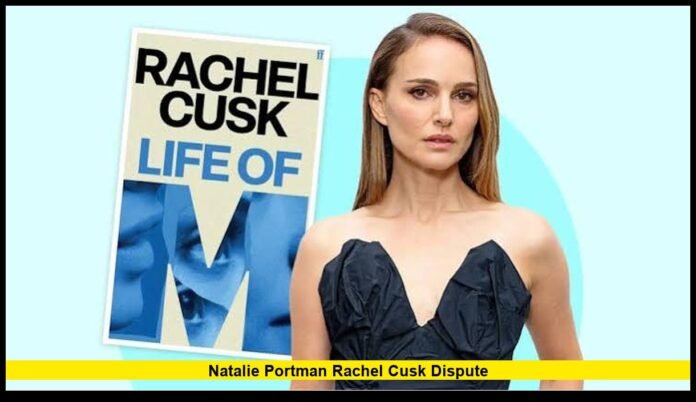

The Natalie Portman Rachel Cusk dispute has become a major topic of conversation across entertainment and literary circles in 2026. The attention surrounds Rachel Cusk’s novel Life of M and speculation that its fictional movie-star protagonist may have been partly inspired by Natalie Portman.
The discussion has attracted particular interest because Portman has previously expressed admiration for Cusk’s writing. That history has made questions about the fictional character, the possible real-life inspiration behind her, and Portman’s reported reaction especially intriguing.
However, there is an important distinction to keep in mind. While reports have described possible tension surrounding the book, neither Natalie Portman nor Rachel Cusk has publicly established that they are involved in a personal feud. Likewise, the similarities between Portman and the fictional character have generated considerable speculation, but fiction should not automatically be treated as biography.
Here is what is known about the controversy and why Life of M has generated so much discussion.
Key Points Summary
╔════════════════════════════════════════════════════════════════════╗
║ – Rachel Cusk’s Life of M centers on an internationally famous actress. ║
║ – Readers and commentators have identified similarities between M and Natalie Portman. ║
║ – Reports have suggested Portman may be unhappy about the portrayal. ║
║ – Portman has previously publicly praised Cusk and her writing. ║
║ – Cusk has not established that every aspect of M represents Portman. ║
║ – Neither woman has publicly confirmed a major personal feud. ║
║ – The controversy has sparked a wider debate about privacy and fiction. ║
╚════════════════════════════════════════════════════════════════════╝
What Is the Natalie Portman Rachel Cusk Dispute About?
The controversy centers on Rachel Cusk’s Life of M, a novel featuring a globally recognized actress known as M.
The fictional star has attracted attention because commentators have identified elements of her background and career that appear similar to aspects of Natalie Portman’s public life.
Those apparent parallels quickly transformed a literary discussion into an entertainment story.
The situation became even more interesting because Portman was already publicly associated with Cusk through her appreciation of the writer’s work. Portman has recommended Cusk’s books and participated in literary discussions involving the author.
As speculation surrounding Life of M increased, reports began suggesting that Portman was unhappy with the character and the apparent similarities.
Yet that does not mean every claim circulating about the situation has been personally confirmed by Portman.
The controversy therefore sits somewhere between literary interpretation and a reported celebrity disagreement.
Why Is Life of M Being Linked to Natalie Portman?
The comparisons are largely based on similarities that readers and early commentators have noticed between the fictional M and Portman.
M is presented as an extraordinarily famous actress who has lived with celebrity for much of her life.
Portman also became famous at a young age. Her breakthrough performance in Léon: The Professional arrived when she was still a child, and she later developed into one of Hollywood’s most recognizable performers.
Her career includes major franchises, independent films and acclaimed dramatic performances.
One particularly notable point of comparison involves ballet.
Portman starred as Nina Sayers in Black Swan, the psychological drama centered on the competitive world of professional ballet. The performance became one of the defining moments of her career and earned her the Academy Award for Best Actress.
Other perceived similarities involving international fame, Paris and the luxury-fashion world have also contributed to speculation.
Individually, such details might not attract much attention. Taken together, however, they have encouraged readers to ask whether Portman provided inspiration for M.
Has Rachel Cusk Said M Is Natalie Portman?
The discussion requires an important distinction between inspiration and literal representation.
A fictional character can draw from real-world observations without being a direct portrait of one individual.
Novelists frequently combine characteristics from different people, alter biographical details and invent events that never occurred. Even when readers recognize similarities between a character and a real person, that does not establish that everything about the fictional character applies to that person.
That distinction is particularly important in the case of Life of M.
Readers may believe they recognize Natalie Portman in certain characteristics of M, but the novel remains fiction rather than a biography of the actress.
As a result, fictional behavior, dialogue and personality traits involving M should not automatically be presented as facts about Portman.
Why Has the Portrayal Created So Much Attention?
The controversy is not simply about a fictional character resembling a celebrity.
It is also about how that character is portrayed.
Life of M examines the strange reality of extreme fame and what celebrity can do to a person’s relationships, identity and understanding of everyday life.
A globally famous movie star does not necessarily experience ordinary situations in the same way as someone who is anonymous.
People recognize her.
Businesses and institutions may make special arrangements for her.
Her presence can change the behavior of everyone around her.
Even simple activities can become complicated by fame.
The fictional M provides a way of exploring these ideas. But once readers began associating M with Portman, observations about celebrity within the novel inevitably started being interpreted as possible observations about the real actress.
That is where the literary debate becomes much more personal.
Natalie Portman’s Previous Praise for Rachel Cusk
One reason the story has attracted so much attention is Portman’s previous public appreciation for Cusk.
Portman is well known for her interest in books and literature. Through her book-related projects and public recommendations, she has frequently discussed writers and works she admires.
Cusk has been among the authors she has highlighted.
Portman has recommended Cusk’s writing and participated in a public literary conversation with her.
Those interactions demonstrate genuine professional and literary admiration.
However, public admiration does not necessarily establish the exact nature of a private friendship.
This distinction has become increasingly important as reports surrounding Life of M have characterized the controversy in highly personal terms.
Without detailed statements from Portman and Cusk themselves, outsiders cannot know the full history or current condition of their relationship.
Did Natalie Portman Feel Betrayed by Rachel Cusk?
Some reports surrounding the controversy have characterized Portman as being upset or feeling betrayed by the situation.
Such descriptions have fueled dramatic headlines about a possible falling-out.
However, readers should distinguish between descriptions attributed to unnamed sources and statements made publicly by Portman herself.
Portman has not publicly provided a comprehensive account of her feelings about the character or explained whether she believes M represents her.
That makes definitive declarations about her reaction difficult.
There may be tension surrounding the book, but presenting every reported emotional reaction as a direct quotation or confirmed position from Portman would overstate what is publicly established.
Were Natalie Portman and Rachel Cusk Close Friends?
This is another question without a simple answer.
The two women have a documented public connection.
Portman has praised Cusk’s writing, recommended her books and appeared in conversation with the novelist.
Those interactions naturally led some observers to describe the pair as friends.
However, the degree of their personal closeness is much less clear.
Public professional relationships between actors, authors, filmmakers and artists can easily be interpreted as friendships from the outside even when the actual relationship is more limited.
That matters because much of the controversy depends on the idea of personal betrayal.
If Portman and Cusk were extremely close, readers might interpret the situation one way. If their relationship was primarily based on literature and professional admiration, the circumstances could look considerably different.
Without direct clarification, describing the precise nature of their private relationship would involve speculation.
Why the Fiction Versus Reality Question Matters
The controversy has reopened a longstanding debate in literature: how much of another person’s life can a novelist use when creating fiction?
Writers have always drawn inspiration from reality.
Family members, relationships, friendships, workplaces, arguments and memorable encounters can all influence fictional stories.
But problems can emerge when a character is recognizable enough that readers immediately associate that character with a particular real person.
Even if a novelist changes the name, readers may identify the supposed inspiration through biographical clues.
That creates an unusual situation.
Readers might begin treating fictional events as real.
Invented conversations can be interpreted as actual conversations. Fictional personality traits can become attached to the real person. Completely imaginary behavior can begin circulating online as though it reveals something meaningful about the individual believed to have inspired the character.
When the supposed inspiration is already a celebrity, the effect can become even larger.
Is Life of M a Natalie Portman Biography?
No.
Whatever readers ultimately conclude about the similarities, Life of M is a novel.
It should therefore be approached as fiction rather than as an unauthorized biography of Natalie Portman.
This distinction is crucial because fictional characters do not have to follow the factual history of their possible inspirations.
A writer can take one recognizable detail from reality and construct an entirely imaginary personality and story around it.
Even if M contains elements that remind readers of Portman, that does not mean every action, thought or experience attributed to M should be connected to the actress.
The literary controversy is largely about precisely this uncertainty.
How much similarity is coincidence?
How much represents broad inspiration?
And at what point does a fictional character become recognizable enough that readers effectively treat the character as a portrait of someone real?
Celebrity Makes the Issue More Complicated
Famous people occupy an unusual position when it comes to privacy.
A significant amount of information about their careers and lives is already publicly available.
Portman’s filmography, awards, interviews, public appearances and professional collaborations have been documented for decades.
That gives novelists and other artists an enormous amount of public material from which they could theoretically draw inspiration.
At the same time, celebrities remain real people with private relationships and personal boundaries.
That creates tension between artistic freedom and personal privacy.
The Life of M discussion has become a useful example of that tension because readers are trying to determine where recognizable public details end and fictional invention begins.
Why Black Swan Is Important to the Comparisons
Among Portman’s many films, Black Swan remains especially significant to this discussion because ballet-related elements have been cited among the reasons readers see similarities between Portman and M.
Released in 2010, Black Swan featured Portman as a ballerina whose pursuit of perfection becomes psychologically consuming.
The performance earned widespread acclaim and ultimately brought Portman the Academy Award for Best Actress.
Because the role is so closely associated with her career, any fictional movie star with a significant ballet-related project could naturally remind readers of Portman.
However, a recognizable career parallel alone does not establish that the entire character represents her.
That uncertainty continues to drive much of the discussion.
What the Controversy Says About Modern Celebrity Culture
The story also demonstrates how quickly literary interpretation can become celebrity news.
A generation ago, discussion about whether a fictional character resembled a real actor might have remained largely within literary reviews and book circles.
Social media has changed that process.
Individual comparisons can spread rapidly. A handful of similarities can become viral talking points, and speculation can quickly transform into apparently definitive claims.
That makes careful wording particularly important.
There is a meaningful difference between saying readers believe a character resembles Natalie Portman and saying the character definitively is Natalie Portman.
Likewise, there is a difference between reports of tension and a publicly confirmed feud.
Those distinctions can disappear when complicated stories are reduced to short social-media posts or dramatic headlines.
Could Natalie Portman Publicly Respond?
Portman could eventually address the controversy directly, but there is no requirement for her to do so.
Celebrities frequently choose not to respond to speculation, particularly when commenting might bring even more attention to the original story.
If Portman does speak publicly about Life of M, her comments could dramatically reshape the narrative.
She could say she does not believe M represents her.
She could acknowledge similarities while dismissing them as unimportant.
Alternatively, she could explain that she is uncomfortable with the portrayal.
Until she provides such clarification herself, reports about her feelings should continue to be described as reports rather than established first-person statements.
Could Rachel Cusk Explain the Inspiration Behind M?
Cusk could also provide additional context about how the character was created.
Authors are frequently asked whether characters are based on real people, particularly when similarities appear obvious to readers.
Her explanation could clarify whether M emerged from one recognizable person, several different people, observations about celebrity culture or primarily fictional invention.
But authors do not always provide simple answers to such questions.
Sometimes ambiguity is part of the work itself.
Readers may therefore continue debating the possible inspiration behind M even if Cusk discusses the novel publicly.
Why the Natalie Portman Rachel Cusk Dispute Is More Than Celebrity Gossip
The fascination surrounding this story goes beyond the two famous names involved.
It raises legitimate questions about art, privacy and ownership of personal experience.
Who owns a shared conversation?
Can one person transform an encounter into fiction without the other person’s approval?
Does the answer change when the inspiration is a public figure?
And how much responsibility does an author have when readers can easily identify the supposed real-life model for a fictional character?
There are no universally accepted answers.
Novelists require freedom to invent characters and explore difficult ideas. At the same time, recognizable fictional portrayals can have consequences for real people.
That conflict is what makes the controversy particularly interesting from a literary perspective.
Natalie Portman Rachel Cusk Dispute: What Is Confirmed?
The safest way to understand the situation is to separate established information from speculation.
Rachel Cusk has written a novel centered on an internationally famous actress known as M.
Readers and commentators have identified similarities between M and Natalie Portman.
Portman has previously expressed admiration for Cusk’s work and has publicly interacted with the novelist.
Reports have also suggested that Portman may be unhappy about the apparent portrayal.
What remains much less certain is whether M should be interpreted directly as Portman, precisely how Portman feels about the book and whether the situation has produced a serious personal rupture between the two women.
Until either Portman or Cusk provides more definitive public clarification, those questions remain open.
The controversy is therefore best understood not as a fully confirmed celebrity feud but as a developing literary dispute shaped by recognizable similarities, reported reactions and unanswered questions about where fiction ends and real life begins.
Frequently Asked Questions
Q: What is the Natalie Portman Rachel Cusk dispute?
A: The controversy concerns speculation that the actress at the center of Rachel Cusk’s Life of M contains recognizable similarities to Natalie Portman, along with reports that Portman may be unhappy about the portrayal.
Q: Is Rachel Cusk’s M based on Natalie Portman?
A: Readers and commentators have identified several apparent similarities, but the fictional character should not automatically be treated as a literal representation of Portman.
Q: Did Natalie Portman accuse Rachel Cusk of betraying her?
A: Reports have characterized Portman as upset about the situation, but dramatic descriptions of her reaction should not be confused with a detailed public statement directly from the actress.
Q: Were Natalie Portman and Rachel Cusk friends?
A: Portman has publicly praised Cusk’s writing, recommended her work and participated in a literary conversation with her. The precise extent of their private friendship is not publicly clear.
Q: Why are readers comparing M to Natalie Portman?
A: The comparisons have been driven by perceived similarities involving fame from a young age, international celebrity, Paris, the luxury-fashion world and a ballet-related film career connection.
Q: Why is Black Swan relevant?
A: Portman won an Academy Award for her performance as a ballerina in Black Swan. Ballet-related similarities surrounding the fictional actress have therefore attracted particular attention.
Q: Is Life of M a biography of Natalie Portman?
A: No. It is a work of fiction. Similarities between a fictional character and a real celebrity do not make every event or characteristic in the novel factual.
Q: Has Natalie Portman publicly explained her reaction?
A: Portman has not provided a comprehensive public account settling the major questions surrounding the controversy.
Q: Is there a confirmed feud between Natalie Portman and Rachel Cusk?
A: Reports have suggested tension, but describing the situation as a fully confirmed personal feud would go beyond what the two women have publicly established.
Q: Why has the controversy become so popular?
A: It combines celebrity, literature and questions about privacy while also involving a famous actress and an acclaimed novelist who had a documented public connection.
Q: Could more details emerge?
A: Yes. Future interviews or statements from Portman or Cusk could clarify the inspiration behind M, Portman’s reaction and the current nature of their relationship.
The Natalie Portman and Rachel Cusk controversy continues to raise fascinating questions about celebrity, privacy and the limits of fictional inspiration. Share your thoughts in the comments and stay updated for any new developments.