

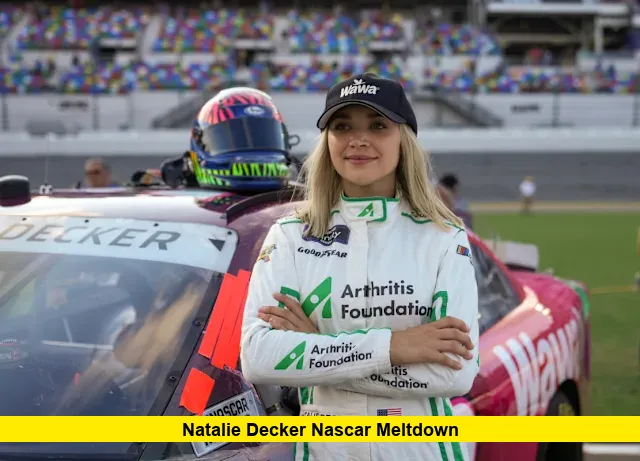
Female NASCAR driver Natalie Decker made headlines across the motorsports world after an emotional in-car breakdown during the NASCAR Craftsman Truck Series ECOSAVE 200 at Dover Motor Speedway on May 15 that ended with her parking her truck mid-race and declaring she would never return to the series. The incident, captured on team radio, quickly went viral and sparked an intense debate about mental health, competitive pressure, and the realities facing female drivers in NASCAR.
What Happened at Dover?
The 29-year-old Wisconsin native was driving the No. 22 truck for Team Reaume when her race unraveled rapidly. Decker was penalized for jumping a restart and was subsequently black-flagged for failing to maintain minimum speed on the track. What followed was a deeply personal and emotional radio exchange that stunned the racing world.
She keyed up her mic and told her crew in clearly emotional comments: “You guys, I’m trying my best to hold my s**t together but I don’t want to keep doing this.”
Her crew did their best to keep her calm, with team owner Josh Reaume assuring Natalie that she could park the truck if she wanted to. But the reassurance did little to ease her distress.
Decker was clearly disappointed in herself, saying: “I feel like a fking failure if I do that. There’s so many things I want to say and I’m probably going to get fking suspended, you have no idea. I’m sorry Josh, I’m not going to come back to the Truck Series … I’m staying in the O’Reilly Series, this series f**king sucks.”
She also expressed anxiety about the public reaction, adding: “The amount of hate I’m going to get online for this is just going to be insane, I’m not ready.”
Her night officially ended with a 34th-place DNF after crashing on lap 119 at Dover.
Mental Health Concerns and the Irony of Her Paint Scheme
The timing of the breakdown carried an especially poignant layer. The 29-year-old entered the NASCAR Craftsman Truck Series ECOSAVE 200 carrying a special Mental Health Awareness Month paint scheme tied to the Nico’s Hope for Life Foundation.
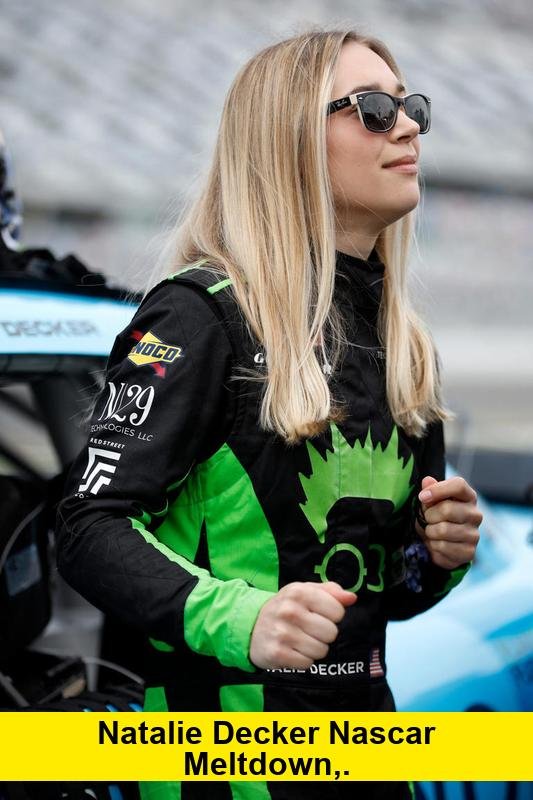
Nico’s Hope for Life Foundation was born from unimaginable loss and a refusal to stay silent. After losing his son Nico to suicide in 2018, Jerry Osuna turned grief into action, building a mission grounded in four pillars: empowering individuals, caring for communities, inspiring hope, and saving lives.
Making the incident even more striking, Decker posted an upbeat Instagram video explaining how calm and positive she felt heading into the weekend, just five hours before the race ended. “It’s going to be a good day, because there are so many positive vibes from everyone,” Decker said. “So, I’m just excited. I’m feeling really calm, which I like.”
NASCAR insiders later claimed there were concerns Decker may have been suffering an anxiety or panic attack inside the truck during the race.
A Season That Has Been One Controversy After Another
The Dover meltdown did not arrive in a vacuum. Decker’s season had already been marked by a string of on-track incidents and public scrutiny.
The trouble began at the season-opening Daytona race. At Daytona during Speedweeks, Decker hit Sam Mayer’s truck 16 seconds after the caution flag had already come out — meaning everyone else had already slowed down. She hadn’t. The radio call that followed had her blaming Mayer, and that clip spread quickly, and not in a good way.
Decker’s troubles also included criticism from fellow female drivers for a photo she took in which she pulled down her fire suit with comedian Bert Kreischer.
At Watkins Glen, the controversy continued. Decker was black-flagged during the race for not meeting NASCAR’s minimum speed requirement. She qualified almost nine seconds behind pole, started last, and failed to meet the minimum speed requirement within just 20 laps into the race.
Adding fuel to the fire was how Decker had secured her starting spot at Watkins Glen. She didn’t get in on speed — there was a 2.1-second gap between Dystany Spurlock and Decker, which in NASCAR is an eternity. She got through on owner points, a system where a team earns points over time, guaranteeing a starting spot even when the qualifying lap is among the slowest of the day. Meanwhile, faster female competitors like Spurlock and Toni Breidinger were left out entirely.
Fan Reaction: Divided Between Criticism and Compassion
As Decker had predicted, the online response was immediate and intense — but not entirely negative.
Some fans were deeply critical. “She is not a race car driver, she is a social media person with money … NASCAR needs to pull her license before she kills someone,” wrote one fan, reacting to her meltdown.
Others questioned how she continued to get starts when more proven drivers could not. “Reminder that Daytona Busch series, truck series, and ARCA winner Mike Wallace can’t get a NASCAR license but Natalie can somehow,” wrote another fan.
But many expressed genuine concern for her wellbeing, with supporters pointing out the mental health dimensions of the breakdown. The Whiskey Riff assessment captured the nuance well: Decker is a successful influencer and attractive to sponsors, but it feels like she realized that she’s in over her head and needs more time to develop if she actually wants to be a race car driver.
Natalie Decker’s Story: More Than the Headlines
It would be reductive to view Decker’s story only through the lens of controversy. Her August 2025 return to racing made her the first woman to race post-birth, a notable milestone in the sport.
Decker announced in August 2024 that she was expecting her first child. In February 2025, she gave birth to her first child, a son named Levi, and later stated she had experienced complications during the delivery.
She also holds a career-best Truck Series finish of 5th at Daytona back in 2020, demonstrating she is capable of competitive runs when things click. Decker has a social following comprised of 200,000 on Instagram and over 300,000 on Facebook, and uses subscription-based platforms including Patreon to connect with nearly 2,000 members.
However, her struggles in NASCAR’s national divisions have continued statistically, with two starts in the Truck Series delivering zero top-10 finishes, an average finish of 35.0, and having completed just 101 of 274 possible laps for a 36.9 completion rate.
What Comes Next for Natalie Decker?
Decker declared on the radio at Dover that she is done with the Truck Series and will focus exclusively on the O’Reilly Auto Parts Series. Whether that statement holds — made in the heat of an emotional moment mid-race — remains to be seen.
What is clear is that the pressure of competing in NASCAR, managing public criticism, navigating life as a new mother, and carrying the weight of representing women in motorsports has taken a visible toll. Her meltdown at Dover may ultimately serve as a turning point — either a breaking point that redirects her career, or a moment of raw honesty that reshapes how fans and the racing community approach the mental health of athletes in motorsports.
Either way, the conversation Natalie Decker has ignited — about belonging, mental health, pressure, and what it truly takes to race at the national level — is one NASCAR cannot afford to ignore.
What do you think — should Natalie Decker step away from the Truck Series, or does she deserve more support from NASCAR and fans alike? Drop your thoughts in the comments below and stay tuned for the latest updates.