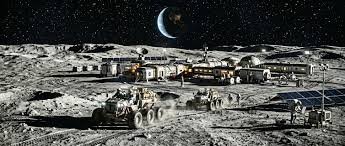

The Biggest Shift in Space Policy in a Generation
America’s space program just made its most dramatic pivot in decades. NASA has committed $20 billion over the next seven years to build a permanent NASA moon base on the lunar surface — and the announcement arrived with an urgency that signals this is no longer just a distant ambition. Speaking at the agency’s “Ignition” event at NASA headquarters in Washington, D.C., NASA Administrator Jared Isaacman made the mission crystal clear: return Americans to the moon before the end of President Trump’s current term, build a functioning base, and establish an enduring human presence there that will last for generations.
This is not a rehearsal. This is the real thing.
Want to know exactly how America plans to build its first home on the Moon? Keep reading — the details are extraordinary.
Why NASA Is Scrapping the Old Plan
For years, NASA’s lunar strategy centered on a project called the Lunar Gateway — a planned space station intended to orbit the moon and serve as a staging point for surface missions. That plan is now paused. NASA’s Moon Base program executive announced that systems and hardware originally developed for the Gateway program will be repurposed to accelerate construction of the surface base directly.
The logic behind this decision is straightforward. A moon-orbiting station adds complexity, cost, and time without delivering the one thing that matters most right now — putting Americans on the surface and keeping them there. By redirecting Gateway resources toward the base itself, NASA believes it can move faster and more efficiently within its existing budget.
Not everyone is pleased with the change. Several international partners — including space agencies from Japan, Canada, and Europe — had agreed to provide hardware specifically for the orbital station. Their exact roles in the revised program are now being renegotiated, and NASA has signaled it will release new partnership frameworks in the coming days.
A Three-Phase Road Map to Permanent Human Settlement
NASA is approaching the moon base as a construction project, not a single dramatic event. The agency laid out a deliberate, three-phase road map that builds capability step by step.
Phase one focuses on building, testing, and learning. Rather than relying on rare, expensive one-off missions, NASA will shift to a repeatable, modular approach. Rovers, scientific instruments, communication systems, and power technology will be sent to the lunar surface regularly to test performance, gather data, and reduce risk before any humans arrive.
Phase two involves early infrastructure. NASA and its commercial partners will begin constructing semi-habitable areas where astronauts can live and work during short visits. International partners are expected to contribute key hardware during this phase, including contributions from the Japan Aerospace Exploration Agency.
Phase three marks the transition to permanent human presence. Larger habitats, heavy surface vehicles, and advanced power systems will be delivered as the base evolves from a forward operating post into a fully functioning settlement. Hardware from the Italian Space Agency and the Canadian Space Agency is expected to play a role in this final phase.
As Isaacman put it plainly: “The moon base will not appear overnight. We will build it through dozens of missions, working together with commercial and international partners towards a deliberate and achievable plan.”
Location: The Lunar South Pole
NASA did not choose a random patch of terrain for this endeavor. The base will be built near the lunar south pole — one of the most scientifically valuable and strategically important locations on the moon. Permanently shadowed craters in that region are believed to contain significant deposits of water ice, which could be extracted and used to support human life, generate breathable oxygen, and even produce rocket propellant for missions deeper into space.
The south pole also offers relatively stable temperatures compared to other lunar regions and access to near-continuous sunlight on certain elevated ridges, making solar power generation more practical. NASA’s plan includes habitats, pressurized rovers that astronauts can drive across the surface, and nuclear power systems to keep the base running during periods when solar energy is unavailable.
Nuclear Power: The Key to Long-Term Survival on the Moon
One of the most forward-looking elements of the entire program is its reliance on nuclear energy. Living on the moon is not just about getting there — it requires a continuous, reliable power source that can operate for years without resupply.
NASA and the U.S. Department of Energy are working together to develop fission surface power systems capable of generating substantial electrical output to support habitats, equipment, research operations, and eventual construction activity. These nuclear systems are designed to operate safely for extended periods without refueling, making them the only practical option for sustained human presence in an environment where solar power alone cannot meet demand.
This nuclear power infrastructure also lays the groundwork for eventual missions to Mars, where the same technology will be essential for keeping astronauts alive far from Earth.
A Nuclear Spacecraft to Mars in 2028
The moon base is ambitious — but NASA’s plans do not stop there. The agency also announced it will launch a nuclear-powered spacecraft called Space Reactor 1 Freedom to Mars by 2028. This mission represents the first operational use of nuclear electric propulsion in deep space, a technology that could eventually cut travel times to Mars significantly.
When the spacecraft reaches Mars, it will deploy a payload of small, Ingenuity-class helicopters designed to explore the Martian surface and help identify landing zones for future crewed missions. The mission also serves a critical engineering purpose: establishing the regulatory framework, industrial base, and flight heritage needed for future large-scale nuclear propulsion systems.
NASA also announced that the Dragonfly mission — a nuclear-powered drone designed to fly through the atmosphere of Saturn’s moon Titan — will launch in 2028, with arrival at Titan expected in 2034. The breadth of these nuclear-powered exploration plans signals a fundamental shift in how America approaches deep space travel.
The China Factor: Why Speed Is Everything
The announcement carries an urgency that goes beyond scientific ambition. The United States and China are engaged in a direct competition to establish dominance in space, and the moon is the immediate prize. China has publicly stated its intention to land astronauts on the lunar surface by 2030, and its International Lunar Research Station program has been advancing steadily.
Isaacman addressed this reality head-on at the Ignition event, speaking to an audience that included members of Congress and representatives from more than 35 countries. “The clock is running in this great-power competition, and success or failure will be measured in months, not years,” he said. Whoever builds a permanent, functioning presence on the moon first will likely shape the rules, norms, and resource rights that govern the next century of space exploration.
That competitive reality is one reason NASA is accelerating its timeline and consolidating its efforts around the surface base rather than continuing to divide resources between the Gateway station and lunar landing programs.
Artemis II: The Mission Launching in Days
The moon base announcement came just days before the scheduled launch of Artemis II — NASA’s first crewed lunar flyby in more than 50 years. The mission has four launch opportunities within a six-day window beginning April 1, and NASA officials report no major issues with the spacecraft as of this week.
Artemis II will send four astronauts aboard the Orion spacecraft and Space Launch System rocket on a ten-day mission around the moon and back. While the crew will not land on the surface, the mission is critical for testing life support systems, deep-space navigation, and Orion’s performance in the lunar environment. Artemis IV and Artemis V — the missions that will actually land astronauts on the surface — are now targeted for 2028.
After Artemis V, NASA envisions landing on the moon every six months as construction of the permanent base progresses. That kind of sustained mission cadence would represent a complete transformation of America’s relationship with the moon — from rare, celebrated visits to routine operational activity.
Making It Work Within the Existing Budget
One of the most frequently asked questions about this program is how NASA plans to pay for it without a massive budget increase. Isaacman’s answer is direct: the agency does not necessarily have a funding problem — it has an efficiency problem.
By redirecting money away from the Gateway program, eliminating redundancies, converting contractor positions to civil service roles, and focusing resources on the highest-priority objectives, NASA believes it can execute this plan within its existing financial framework. The $20 billion committed to the first two phases of the moon base program represents a reallocation, not a windfall.
The total long-term cost of the Artemis program, including eventual Mars infrastructure, is expected to exceed $100 billion — but NASA is betting that a more focused, disciplined approach to spending will deliver results that years of more diffuse investment never did.
What Comes After the Moon
The moon base is not the destination — it is the proving ground. Every technology tested on the lunar surface, from nuclear reactors to pressurized habitats to resource extraction systems, feeds directly into the capability required for a crewed Mars mission. NASA’s vision is a continuous chain of exploration: Earth orbit, the moon, Mars, and eventually the outer solar system.
The James Webb Space Telescope continues to transform humanity’s understanding of the early universe. The Nancy Grace Roman Space Telescope is set to launch as early as this fall. Dragonfly heads to Titan in 2028. And astronauts will return to the lunar surface within two years.
For the first time in a long time, the pieces of America’s space program are pointing in the same direction — toward a permanent human presence beyond Earth, beginning with the moon.
This is one of the most defining moments in the history of American space exploration — drop your thoughts in the comments below and keep following this story as history unfolds in real time.