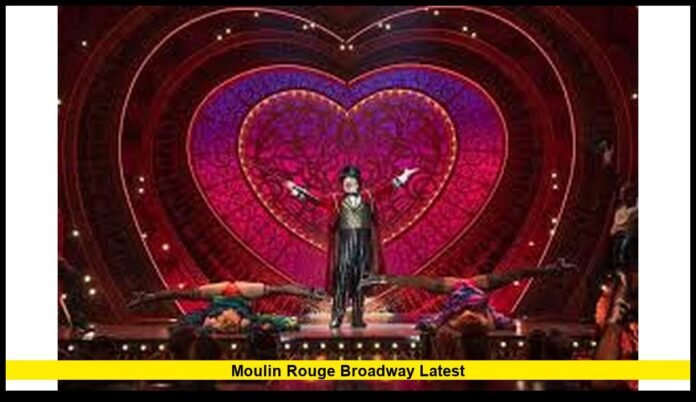

Moulin Rouge Broadway remains one of the most visually extravagant and commercially successful productions in Times Square as of February 26, 2026. The award-winning musical continues its run at the Al Hirschfeld Theatre, drawing tourists and local theater fans with its immersive design, pop-driven score, and high-profile casting.
Since opening in 2019, the show has established itself as a modern Broadway staple. Even after the industry-wide shutdown in 2020, it returned to strong ticket sales and sustained audience demand. Years into its run, the production still ranks among the most talked-about musicals in New York City.
Here is a comprehensive look at the show’s current status, creative team, box office performance, casting strategy, and cultural impact.
From Film to Broadway Phenomenon
The stage production is based on Baz Luhrmann’s 2001 film Moulin Rouge! starring Nicole Kidman and Ewan McGregor. The movie became known for its bold visual style and mashups of popular songs.
Bringing that cinematic energy to the stage required a major creative overhaul. The Broadway adaptation began previews in June 2019 and officially opened in July 2019 at the Al Hirschfeld Theatre.
The musical quickly gained awards momentum. When Broadway shut down in March 2020 due to the pandemic, the production paused along with every other show. It reopened in September 2021 and regained traction almost immediately.
As of early 2026, it continues to run on Broadway.
Award-Winning Production
The musical earned widespread recognition during the 2020–2021 awards season.
At the Tony Awards ceremony held in 2021, the production won 10 Tony Awards, including:
- Best Musical
- Best Direction of a Musical
- Best Choreography
- Best Scenic Design
- Best Costume Design
- Best Lighting Design
- Best Sound Design
These wins highlighted the show’s technical achievements. Scenic and costume elements play a major role in its appeal.
The elaborate set transforms the theater interior into a Parisian nightclub inspired by the historic Moulin Rouge in Montmartre.
The Theater Experience
One of the defining features of Moulin Rouge Broadway is its immersive staging.
The Al Hirschfeld Theatre, located on West 45th Street, underwent significant renovations before the show’s debut. Designers reimagined not only the stage but also the auditorium.
Audience members encounter:
- A massive red windmill extending over the orchestra
- An oversized blue elephant structure on the balcony
- Rich red velvet drapery and gold accents
- Ornate cabaret-style décor
Before the performance begins, performers appear throughout the space, setting the mood.
This immersive approach creates a nightclub atmosphere rather than a traditional proscenium experience.
The Story at the Heart of the Spectacle
Set in Paris at the turn of the 20th century, the musical follows Christian, a young writer, and Satine, the star courtesan of the Moulin Rouge nightclub.
Their romance unfolds against financial pressures, artistic ambition, and the interference of a wealthy duke.
The story blends comedy, melodrama, and high-energy ensemble numbers.
Although the staging feels modern, the narrative maintains a classic romantic arc centered on love and sacrifice.
A Pop-Focused Score
Unlike traditional musicals built around original compositions, this show uses a jukebox format.
The Broadway version incorporates more than 70 pop songs, many woven into creative mashups.
Songs included in the stage adaptation draw from artists such as:
- Elton John
- Lady Gaga
- Adele
- Beyoncé
- Rihanna
- Katy Perry
- The Rolling Stones
The musical arrangements combine familiar melodies into high-energy production numbers.
The result appeals to audiences who may not typically attend Broadway shows but recognize the soundtrack.
Casting Strategy and Star Performers
Casting has played a major role in sustaining ticket sales.
The roles of Christian and Satine frequently rotate among Broadway veterans and rising stars. Limited engagements by well-known performers often drive short-term box office spikes.
Over the years, Tony Award winners and nominees have led the cast. Producers regularly announce casting updates to maintain buzz.
The ensemble also features strong dancers and vocalists who handle demanding choreography and complex musical arrangements.
Because Broadway casting evolves, audiences should confirm current performers before attending.
Box Office Strength
The production has consistently ranked among Broadway’s highest-grossing musicals since reopening in 2021.
Several factors support its financial performance:
- Premium seating options
- Tourist-heavy attendance
- Group ticket sales
- Repeat visitors
The immersive set design justifies higher ticket prices for orchestra and specialty seats.
During peak tourism months, performances often approach full capacity.
Role in Broadway’s Recovery
When Broadway resumed performances after the pandemic shutdown, large-scale musicals played a key role in attracting visitors back to Times Square.
This show’s strong visual identity and recognizable music helped drive early demand.
The production contributed to the broader revival of theater tourism in New York City.
Its continued run signals stable audience interest in high-budget spectacle productions.
Creative Leadership
The creative team behind the Broadway adaptation includes respected names in theater.
- Directed by Alex Timbers
- Choreography by Sonya Tayeh
- Book written by John Logan
Timbers’ direction balances spectacle with intimacy during quieter moments. Tayeh’s choreography blends contemporary movement with cabaret influences.
John Logan’s script reshaped the film’s narrative to suit the stage while maintaining its emotional core.
National and International Reach
The Broadway success led to additional productions.
A North American touring company launched following the show’s return to Broadway. International productions have opened in cities including London.
These versions maintain the visual identity of the Broadway staging while adapting to different theaters.
However, the New York production remains the flagship location.
Audience Demographics
The audience mix reflects Broadway’s broader trends.
Common attendees include:
- Tourists visiting New York City
- Couples celebrating anniversaries
- Fans of the original film
- Pop music enthusiasts
- Theatergoers seeking immersive productions
The show appeals to a wide age range due to its recognizable music catalog.
Evening performances tend to attract visitors, while matinees often draw local audiences.
Technical Design Highlights
The production’s technical elements play a central role in its identity.
Lighting shifts rapidly between nightclub glamour and intimate romance. Costume design features elaborate corsets, sparkling fabrics, and period-inspired attire.
Sound design supports seamless mashups of dozens of songs.
Stage mechanics allow quick scene transitions without interrupting pacing.
These design choices create a cinematic feel within a live theater environment.
Competitive Broadway Landscape
Broadway features a mix of long-running classics and new productions each season.
Despite competition, Moulin Rouge Broadway maintains strong brand recognition.
Its visual spectacle sets it apart from smaller-scale dramas and traditional revivals.
In a market where shows often close within months, multi-year longevity signals sustained demand.
Why It Continues to Thrive
Several factors explain its ongoing popularity:
- Recognizable music across generations
- Immersive visual design
- Rotating star casting
- Romantic storyline
- Strong social media presence
The red windmill outside the theater has become a recognizable photo backdrop in Times Square.
Visitors often share pre-show images online, reinforcing its cultural visibility.
The Experience in 2026
Audiences attending in 2026 can expect:
- A two-act production running approximately two and a half hours
- High-energy dance numbers
- Dramatic romantic duets
- A fully immersive theater environment
- Frequent cast announcements throughout the year
The core production remains consistent, while casting updates keep performances fresh.
Cultural Impact
The show’s longevity reflects broader shifts in Broadway programming.
Large-scale jukebox musicals continue to attract diverse audiences. Spectacle-driven productions perform well in tourism-heavy markets.
The musical also supports local employment, from performers and stagehands to hospitality workers in surrounding businesses.
Its continued success contributes to Times Square’s status as a global entertainment destination.
Moulin Rouge Broadway stands as a vivid example of how film adaptations can thrive on stage when paired with bold design and strong casting.
The red windmill still spins nightly, drawing crowds eager for spectacle and romance.
Have you experienced the magic at the Al Hirschfeld Theatre, or are you planning a visit soon? Share your thoughts and stay tuned for the latest casting and performance updates.