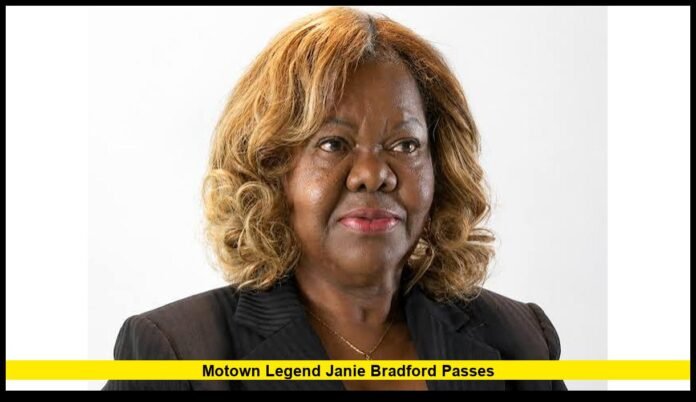

Motown legend Janie Bradford passes away at 87 after an extended illness, her family confirmed, marking the loss of a pioneering songwriter who helped shape the record label during its earliest years. Bradford Hobbs died at a Los Angeles hospital on Aug. 21, 2026. Her family announced her death the following day.
Bradford was among the people who helped build Motown before the Detroit company became a worldwide music powerhouse. She joined the organization in 1958 as a receptionist, but her work soon moved into songwriting and publishing.
Her most famous credit came from “Money (That’s What I Want),” which she co-wrote with Motown founder Berry Gordy. Barrett Strong recorded the song in 1959, and its success became an important early moment for the young label.
Bradford’s career continued well beyond that breakthrough. She contributed to songs recorded by Marvin Gaye, Stevie Wonder, Mary Wells, The Supremes, Martha & The Vandellas and other major Motown performers.
Janie Bradford Dies at 87 in Los Angeles
Bradford died following an extended illness at a Los Angeles hospital, according to her family. She was 87.
Her death brought an end to a career that stretched across several important periods in American music. Bradford was not simply connected to Motown through a single recording. She worked inside the organization during its formative years and later held an important publishing position.
The circumstances surrounding her death have been confirmed, while her family has not publicly provided a specific cause of death.
Bradford’s passing was announced as her contributions to Motown received renewed attention. Her work as a songwriter, publishing executive and supporter of young artists gave her a legacy that extended beyond the recording studio.
She also remained connected to the entertainment community for decades after her years at Motown.
How Janie Bradford Became Part of Motown
Bradford was born in Charleston, Missouri, in 1939. She later moved to Detroit, where her path eventually crossed with singer Jackie Wilson.
Wilson was a neighbor of Bradford and introduced her to Berry Gordy in the late 1950s. Gordy was then developing the business that would become Motown.
Bradford joined the company in 1958 as a receptionist.
Her job title did not tell the full story of what employees did in Motown’s early days. The company operated with a close-knit team, and people often became involved in different parts of the creative process.
Bradford was one of those employees.
She eventually developed into a songwriter and became part of the creative community surrounding Gordy and the label’s growing group of artists.
Her early arrival gave her a unique place in Motown history because she was there before the company reached its legendary status.
The Song That Helped Launch Motown
Bradford’s name is permanently linked to “Money (That’s What I Want),” the song she co-wrote with Gordy.
Barrett Strong recorded the song in 1959. It became one of the earliest major successes associated with the Motown operation.
The recording later gained international exposure when The Beatles recorded their own version. That cover introduced Bradford’s songwriting to a much broader audience.
The song’s importance goes beyond its later covers. Its early success demonstrated that Gordy’s Detroit operation could create records that could compete in the national market.
Bradford therefore contributed to one of the recordings that helped establish Motown’s commercial identity.
The song also continued to attract performers across generations, keeping Bradford’s work connected to popular music long after its original release.
Berry Gordy Pays Tribute to Bradford
Following Bradford’s death, Gordy remembered her as someone who had been part of his journey from the beginning.
He described her as a member of the original Motown family and highlighted the people who believed in his vision before the company became famous.
Gordy’s comments underscored Bradford’s importance to Motown’s early development.
She was part of the group that worked alongside Gordy when the company was still taking shape. Her role was not limited to the public image of the label. She contributed directly to its creative output.
That history made her passing particularly meaningful for people who study Motown’s origins.
Bradford’s Work With “Too Busy Thinking About My Baby”
Another major songwriting credit came with “Too Busy Thinking About My Baby.”
The Temptations recorded the song first. Marvin Gaye later recorded it and turned it into a major hit.
Gaye’s version became one of the better-known recordings associated with Bradford’s songwriting career. It demonstrated that her contribution to Motown was not limited to the label’s earliest hit.
The song also showed the connection between Motown’s songwriting pool and its roster of major recording artists.
Bradford worked during a period when songs often moved between performers and were reshaped through different arrangements and interpretations.
Her writing became part of that process.
Other Motown Artists Connected to Bradford’s Work
Bradford’s songwriting credits reached across several corners of the Motown roster.
She worked on material connected to artists including Stevie Wonder, The Supremes, Martha & The Vandellas and Mary Wells.
Her collaboration with Smokey Robinson on “Your Old Standby” resulted in a Mary Wells recording that became a recognizable Motown release.
Bradford also had songwriting connections with other performers from the label’s extensive roster.
These credits show the breadth of her involvement during Motown’s growth.
Some of the artists connected to Bradford’s songwriting career include:
- Barrett Strong
- Marvin Gaye
- Mary Wells
- Stevie Wonder
- The Supremes
- The Temptations
- Martha & The Vandellas
- The Marvelettes
Her work reached different generations and styles within the Motown sound.
From Receptionist to Music Publishing Executive
Bradford’s career at Motown eventually moved beyond songwriting.
She became head of Writer Relations for Jobete, Motown’s publishing company.
That position placed her within an important part of the company’s business structure. Music publishing played a major role in the success of Motown because the company controlled and managed compositions performed by its artists.
Bradford understood the songwriting side of the business because she had participated in it herself.
Her experience allowed her to work with writers and help connect creative talent with the publishing operation.
She remained associated with Motown for more than two decades.
That lengthy involvement gave Bradford an unusual perspective on the label’s transformation from a small Detroit operation into one of the most recognizable names in American music.
Her Life After Motown
Bradford continued working within the entertainment world after leaving Motown.
She later founded the Heroes and Legends Awards, an event that recognized figures from the entertainment industry while supporting scholarships for young people.
The program became an important part of her post-Motown career.
For decades, Bradford used the platform to celebrate performers, musicians and other entertainment figures.
Her work also reflected a commitment to supporting people who were beginning their own careers.
The scholarship effort connected Bradford’s history in music with her interest in helping younger generations pursue opportunities in the performing arts.
Her influence therefore continued even after her direct work with Motown had ended.
Janie Bradford Receives a 2026 Hall of Fame Honor
Bradford received one of her most recent major honors in 2026.
She was named among the inductees into the Women Songwriters Hall of Fame Class of 2026.
The honor recognized her work as a songwriter and her contribution to the music industry.
Her inclusion was especially significant because it highlighted a career that began more than six decades earlier.
Bradford’s songwriting history included both a landmark early Motown recording and songs performed by some of the biggest names in soul and R&B.
The 2026 recognition came shortly before her death.
It provided a final major acknowledgment of her creative contribution during her lifetime.
Why “Money (That’s What I Want)” Remains Important
“Money (That’s What I Want)” remains the recording most closely associated with Bradford.
The song’s history connects several important moments in popular music.
Barrett Strong’s 1959 recording became an early Motown success. The Beatles later recorded it, helping carry the composition into the British Invasion era.
The song’s continued recognition has kept Bradford’s songwriting contribution visible to audiences who may not have known her name.
That is an important part of her legacy.
Songwriters often remain less recognizable than the performers who sing their work. Bradford’s career illustrates how a songwriter can influence music history without always occupying the spotlight.
Her compositions became vehicles for artists who reached millions of listeners.
Bradford’s Connection to the Early Motown Family
Motown’s story is often associated with performers such as Marvin Gaye, Stevie Wonder, Diana Ross and The Temptations.
Behind those artists stood a large network of writers, producers, musicians, executives and staff.
Bradford belonged to that early group.
She joined Gordy’s organization while it was still developing. Her experience gave her direct knowledge of the people and creative environment that helped establish Motown.
That background also explains why Gordy’s tribute emphasized her role among the company’s original supporters.
Bradford represented an important part of Motown’s history that existed away from the stage.
A Career Built Around Music and Community
Bradford’s professional life followed two connected paths.
The first involved creating and supporting music. Her songwriting helped supply material for major Motown performers, while her publishing role connected her to writers and compositions.
The second involved preserving and celebrating entertainment history.
Through the Heroes and Legends Awards, she continued recognizing people who had made contributions to music and entertainment.
The scholarship component added another dimension to that work.
Rather than allowing her career to end with her Motown years, Bradford continued building relationships within the entertainment community.
Her later work showed the importance she placed on recognition, mentorship and opportunity.
Janie Bradford’s Family
Bradford is survived by her husband, Wardean Hobbs; daughter Nicole Hobbs; son Lance Finney; and grandsons Bradford and Austin.
Her family confirmed her death and provided information about her surviving relatives.
Funeral arrangements had not been completed at the time of the latest reports.
Additional details about services may be released by the family.
A Lasting Motown Legacy
Janie Bradford’s career began when Motown was still a young company trying to establish itself.
She entered the organization as a receptionist and became a songwriter whose work reached some of the most influential performers in American music.
Her collaboration with Berry Gordy on “Money (That’s What I Want)” gave her a permanent connection to Motown’s early history.
The song’s later recordings by major artists extended that legacy across generations.
Her songwriting work with Marvin Gaye, Mary Wells, Stevie Wonder, The Supremes, The Temptations and Martha & The Vandellas further strengthened her place in the Motown story.
Bradford also demonstrated that her influence could continue outside the recording business.
Her leadership in the Heroes and Legends Awards created a platform for honoring established entertainment figures and helping young artists through scholarships.
Her 2026 Women Songwriters Hall of Fame induction offered another public recognition of her achievements.
With her death at 87, Motown has lost one of the people who helped shape its earliest chapter.
Bradford’s songs, professional work and commitment to the entertainment community remain central to how her career will be remembered.
Janie Bradford’s contribution to Motown history will continue through the songs she helped create and the generations of music fans who discover her work.