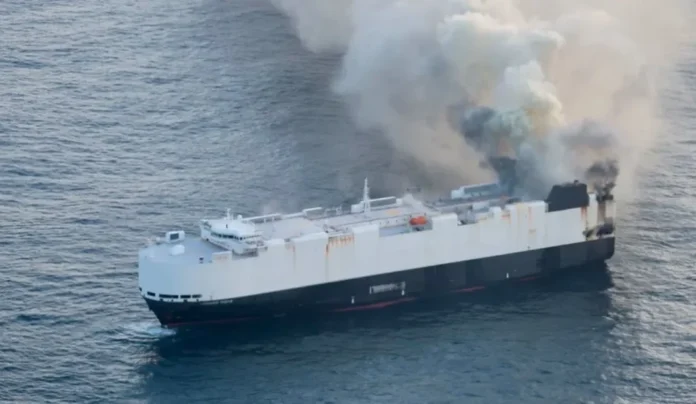

The Morning Midas cargo ship, a massive vessel carrying thousands of vehicles, met a tragic end in the North Pacific Ocean on June 23, 2025, after a devastating fire broke out earlier this month. This 600-foot Liberian-flagged car carrier, en route from Yantai, China, to Lázaro Cárdenas, Mexico, caught fire on June 3, forcing its 22 crew members to abandon ship. After burning for nearly three weeks, the ship succumbed to fire damage, severe weather, and water ingress, sinking 360 nautical miles from land in waters 5,000 meters deep. This article dives into the latest developments surrounding the Morning Midas cargo ship disaster, exploring its impact and ongoing concerns.
Fire Erupts on Morning Midas Cargo Ship
On June 3, 2025, the Morning Midas cargo ship sent a distress signal when smoke billowed from a deck loaded with electric vehicles. The fire, which started approximately 300 miles southwest of Adak, Alaska, quickly grew uncontrollable. Despite the crew’s efforts to deploy onboard firefighting systems, the blaze forced all 22 seafarers to evacuate. A nearby merchant vessel, the Cosco Hellas, rescued them safely via lifeboat, with no injuries reported.
The ship carried 3,048 vehicles, including 70 fully electric and 861 hybrid models. Initial reports noted heavy smoke from the stern, where electric vehicles were stowed, raising questions about whether lithium-ion batteries sparked the fire. These batteries, known for rapid fire spread and toxic gas emissions, pose unique challenges for maritime firefighting. However, investigators have yet to confirm the fire’s cause, as the ship now rests deep underwater, complicating evidence recovery.
Salvage Efforts and Sinking
Salvage operations began days after the fire, with Resolve Marine leading the effort. Two tugboats equipped with pollution control gear monitored the Morning Midas cargo ship as it drifted, battered by heavy weather. By mid-June, thermal scans showed no active flames, but the vessel’s structural integrity was compromised. On June 23, at 4:35 p.m. local time, the ship capsized and sank, unable to withstand the combined damage.
The U.S. Coast Guard, which assisted in the initial response, concluded its oversight on June 24, reporting no visible pollution. A specialized pollution response vessel is en route to the site, joining two salvage tugs to monitor for debris or fuel leaks. The ship carried 1,530 metric tons of fuel oil and 350 metric tons of gas oil, raising fears of environmental damage despite the wreck’s depth minimizing immediate risks.
- Fire broke out on June 3, 2025, on a deck with electric vehicles.
- All 22 crew members evacuated safely; no injuries reported.
- Ship sank on June 23 in 5,000-meter-deep waters, 360 miles from land.
- No visible pollution yet, but salvage tugs monitor for fuel leaks.
Environmental and Industry Concerns
The sinking of the Morning Midas cargo ship has sparked worries about environmental impacts and maritime safety. While no pollution is currently visible, the presence of thousands of vehicles, including electric models with lithium-ion batteries, raises concerns about long-term ocean contamination. The wreck’s depth—deeper than the Titanic’s—makes salvage nearly impossible, leaving the cargo and fuel at risk of gradual leakage.
This incident follows a pattern of fires on car carriers, notably a 2023 blaze on a freighter carrying 3,000 vehicles, including 500 electric models. Industry experts are now calling for stricter fire-safety protocols, especially for vessels transporting electric vehicles. Lithium-ion battery fires burn intensely, often reigniting and challenging containment efforts. The Morning Midas disaster underscores the need for improved emergency response systems and better training for crews handling such cargo.
What’s Next for Maritime Safety?
The loss of the Morning Midas cargo ship is a wake-up call for the shipping industry. Analysts urge a reassessment of how electric vehicles are transported, suggesting dedicated fire-suppression systems and segregated storage for high-risk cargo. The incident also highlights the importance of robust salvage plans, as delays in towing the Morning Midas exacerbated its fate.
For now, the focus remains on monitoring the wreck site. The U.S. Coast Guard and Zodiac Maritime, the ship’s manager, prioritize environmental protection, with vessels on standby to address any pollution. The automotive industry faces a significant loss, with 3,048 vehicles—valued at millions—now at the ocean’s bottom. As investigations continue, the cause of the fire may remain elusive, buried with the ship.
Stay informed about the Morning Midas cargo ship disaster and its implications for maritime safety. Follow real-time updates on social media platforms like Instagram and YouTube for the latest news and expert insights.