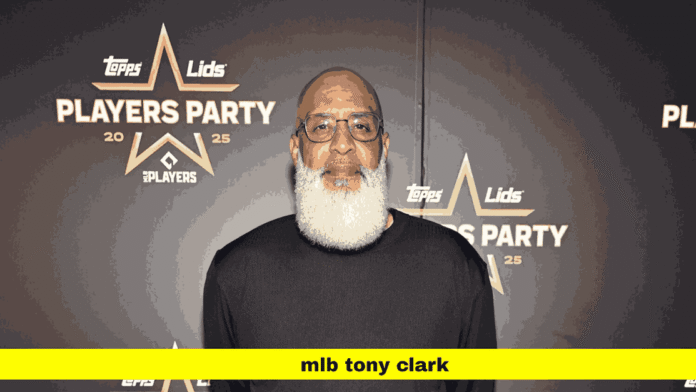

As the 2026 Major League Baseball season approaches, mlb tony clark remains one of the most influential figures in professional sports. Serving as executive director of the Major League Baseball Players Association, Tony Clark continues to play a central role in labor relations, player advocacy, competitive balance discussions, and policy matters shaping the league’s future.
Recent public statements and league developments confirm that Clark and the MLBPA remain actively engaged in conversations surrounding revenue distribution, player safety, international competition scheduling, and the long-term stability of the sport. His leadership extends beyond negotiations, influencing how players interact with ownership, league executives, and global baseball stakeholders.
Tony Clark’s Role as MLBPA Executive Director
Tony Clark has led the MLBPA since 2013, becoming the first former Major League player to serve as full-time executive director of the union. A former All-Star first baseman who played 15 seasons in the majors, Clark brings direct playing experience into labor leadership. His tenure has included one full collective bargaining agreement negotiation cycle, major pandemic-related negotiations, and multiple disputes over rule implementation and scheduling changes.
As executive director, Clark represents thousands of active Major League players as well as former players entitled to benefits. The MLBPA functions as the bargaining unit responsible for negotiating the collective bargaining agreement with Major League Baseball ownership. That agreement governs salary structures, revenue sharing impacts, arbitration systems, service time rules, health benefits, grievance procedures, and numerous competitive policies.
Clark’s current term continues amid stability following the 2022 collective bargaining agreement, which runs through the 2026 season.
Labor Stability and the Current Collective Bargaining Agreement
The existing labor agreement between MLB and the MLBPA was ratified in March 2022 after negotiations that included a lockout. The agreement extended through the 2026 season and introduced several structural changes. These included adjustments to the competitive balance tax thresholds, the creation of a draft lottery system, expanded postseason format, minimum salary increases, and a pre-arbitration bonus pool.
As of early 2026, there have been no announced work stoppages or formal labor disputes under Clark’s leadership. The union and league continue to operate under the current agreement. While conversations about the next negotiation cycle remain ahead in the long term, no official bargaining for a new deal has begun publicly.
Clark has consistently emphasized player unity and long-term economic growth within the sport. Under his guidance, the MLBPA has maintained a position focused on preserving guaranteed contracts, arbitration rights, and player compensation growth in alignment with league revenues.
Player Compensation and Revenue Trends
Recent financial data released by Major League Baseball confirmed continued strong revenues across the league. Increased attendance figures in several markets, combined with national broadcast agreements and digital streaming growth, have supported overall revenue stability.
The MLBPA has closely monitored how revenue growth translates into player compensation. Minimum salaries have increased under the current agreement. The competitive balance tax threshold has also risen incrementally, allowing high-spending teams additional flexibility while maintaining league-wide financial guardrails.
Clark has stated publicly in past discussions that player compensation must reflect the sport’s economic health. While no immediate disputes are underway, the union continues to track payroll patterns across franchises to assess compliance with competitive intent.
International Competition and Scheduling Discussions
Baseball’s global presence has expanded significantly, particularly with the success of the World Baseball Classic and international regular-season games. Clark and the MLBPA have participated in discussions surrounding player participation in international tournaments, ensuring insurance coverage, health protections, and scheduling considerations align with player safety.
The MLBPA’s involvement ensures that players competing internationally maintain access to protections under union-negotiated agreements. These discussions often involve coordination with team ownership and international governing bodies.
Clark has reiterated the importance of growing the game globally while safeguarding the rights and well-being of players representing their countries.
Rule Changes and Player Input
Recent MLB rule changes, including pace-of-play initiatives such as the pitch clock, larger bases, and defensive shift restrictions, have reshaped the game on the field. While these changes were negotiated under prior agreements, ongoing evaluation continues.
Clark has maintained that players must have a voice in how rule changes affect gameplay. The MLBPA retains representation on joint competition committees that review implementation and performance data.
League data indicates that pace-of-play initiatives have reduced average game times compared to seasons prior to implementation. Attendance improvements in several markets followed these changes, suggesting fan engagement remains strong.
The MLBPA continues to monitor how these adjustments influence player workload and competitive fairness.
Health, Safety, and Player Welfare
Health and safety remain core priorities for Clark and the MLBPA. The union has consistently emphasized concussion protocols, injury reporting transparency, and access to high-quality medical care.
In addition, the MLBPA continues to advocate for mental health resources, offseason support programs, and comprehensive benefits for former players. Clark has often underscored that long-term player welfare extends beyond active roster years.
The collective bargaining agreement includes provisions for health benefits and pension contributions, reflecting decades of union advocacy.
Minor League Integration and Player Rights
A major development in recent years involved the MLBPA’s expansion to represent minor league players. In 2022, minor league players voted to unionize under the MLBPA umbrella. This marked a significant shift in baseball labor history.
Under Clark’s leadership, the MLBPA negotiated the first collective bargaining agreement for minor leaguers, establishing minimum salary standards and housing provisions. This agreement addressed longstanding compensation concerns within the developmental system.
The integration of minor league representation expanded Clark’s responsibilities and reinforced the union’s role across all professional tiers affiliated with Major League Baseball.
Free Agency Landscape and Market Trends
Recent offseasons have demonstrated strong activity within the free-agent market. Several high-profile contracts signed in the past two years have included long-term commitments exceeding $200 million. These deals underscore financial health within select franchises.
Clark has historically defended the integrity of the free-agent system, opposing practices that he believes suppress market competition. The MLBPA monitors free agency trends to ensure compliance with labor protections and fair negotiation standards.
As of the start of the 2026 season, there have been no formal collusion claims or filed grievances publicly announced.
Competitive Balance and Payroll Strategy
Competitive balance remains an ongoing conversation within the league. The draft lottery system introduced under the 2022 agreement aims to discourage tanking while preserving opportunities for smaller-market teams to rebuild.
Clark has stated that competitive integrity benefits players across all markets. Payroll distribution, revenue sharing formulas, and tax thresholds continue to be monitored through joint committee reviews.
Data from recent seasons shows increased parity, with expanded postseason participation allowing more teams to remain competitive deeper into the regular season.
Broadcast Rights and Revenue Growth
National television agreements and streaming platforms have contributed significantly to MLB revenue stability. Clark and the MLBPA closely observe how broadcast revenue influences salary structures and long-term bargaining leverage.
With evolving digital media consumption patterns, baseball’s media rights agreements remain critical components of financial health. The union’s position has historically emphasized transparency in revenue reporting during bargaining cycles.
Clark’s Background as a Player
Before leading the MLBPA, Tony Clark played for several teams during his 15-year career, including the Detroit Tigers, Arizona Diamondbacks, and New York Yankees. He was a two-time All-Star and served as a clubhouse leader throughout his playing days.
His transition from player to union leadership brought firsthand experience into negotiations. Players often cite Clark’s credibility as a former athlete as a key factor in union cohesion.
Outlook for the 2026 Season
As spring training activities progress and the regular season approaches, Clark’s focus remains on stability under the existing labor framework. No official disputes have been announced. The union continues to function under the current collective bargaining agreement.
MLB projects continued fan engagement and steady revenue performance entering the 2026 campaign. The MLBPA’s role will remain central in monitoring implementation of league policies and safeguarding player rights.
Clark’s leadership continues to influence discussions not only about economics but about the culture of the sport itself.
Baseball remains one of America’s most tradition-rich institutions, and labor stability plays a crucial role in preserving that foundation. With mlb tony clark maintaining steady leadership at the helm of the MLBPA, players retain a unified voice as the league moves through another pivotal season.
What are your thoughts on the direction of MLB under Tony Clark’s leadership? Share your perspective and stay tuned for continued updates as the 2026 season unfolds.