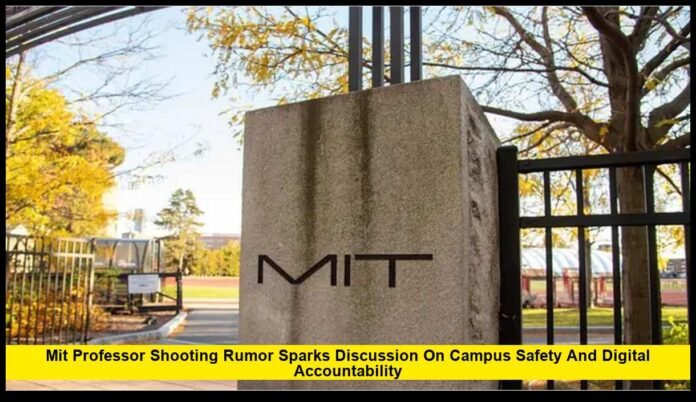

MIT professor shooting rumor quickly gained traction on social media, sparking worry among students, faculty, and the public. Officials soon confirmed that no incident had taken place, exposing the risks of false online reports. MIT’s prompt response and reliable safety measures restored calm and reinforced trust in verified information.
No Verified Incident, But Major Online Reaction
During December 2025, a sudden surge of posts across multiple social media platforms mentioned an alleged MIT professor shooting, causing confusion and anxiety among students, parents, and alumni. Within hours, the unverified claims spread widely across X (formerly Twitter), Facebook, and TikTok, where users began sharing dramatic but unsupported reports. Some even posted unrelated images of police vehicles, which further fueled speculation that an active threat was taking place on campus.
As panic began to rise, both the Cambridge Police Department and the MIT Police moved quickly to set the record straight. They released official statements confirming that no shooting, injuries, or violent incidents had been reported involving any professor or university staff. The authorities emphasized that there were no emergency calls, no police deployments, and no disruptions to normal campus activity at any point.
The university’s emergency alert system—an automated system designed to activate during genuine threats—remained silent, confirming that there was no credible risk to the MIT community. Students who checked the MIT Alert portal saw that campus operations continued as usual, with no security lockdowns or cancellations.
Officials also reminded the community that misinformation can spread faster than the truth when emotions are high. They urged everyone to verify information through official channels, such as MIT’s website, public safety social media accounts, and direct email notifications. By addressing the rumors swiftly and clearly, MIT helped prevent unnecessary alarm and restored confidence among students, staff, and local residents.
MIT’s Rapid Response Strategy
MIT’s Public Safety Department acted swiftly to contain misinformation. Within minutes of the rumor spreading, university officials released a public message reaffirming that campus operations were normal. The alert directed students, faculty, and parents to check official resources for real-time information, rather than social media.
MIT Police Chief John DiFava reinforced the message by reminding students that the university maintains a comprehensive emergency alert system designed to notify everyone within seconds of a confirmed threat. The system uses text messages, emails, and digital signage to provide verified instructions in emergencies.
This rapid response helped calm fears and highlighted how transparent communication can prevent panic when false information spreads.
Why the “MIT Professor Shooting” Rumor Spread So Quickly
Experts in information science note that false reports of violence often gain traction because they trigger strong emotional reactions. Fear-based stories spread faster online than corrections or clarifications, especially on platforms such as X (formerly Twitter) and TikTok.
In this case, the phrase “MIT professor shooting” appeared in several viral posts without any attached evidence. Users reshared screenshots and videos claiming to show police activity, but none were connected to MIT or verified by any news outlet.
This event underscores the growing challenge universities face: combating misinformation while keeping communication credible and calm. MIT’s ability to respond promptly demonstrated how preparedness and verified channels can stop false stories before they spiral out of control.
MIT’s Longstanding Commitment to Campus Safety
MIT has invested heavily in maintaining a secure environment for its students and staff. The university’s campus safety structure is among the most advanced in the country, combining human vigilance with smart technology.
Key elements of MIT’s safety framework include:
- MIT Alert: A multi-channel system delivering emergency messages via SMS, email, and voice alerts.
- Blue Light Network: Hundreds of illuminated call boxes across campus for immediate police contact.
- 24/7 MIT Police Patrols: Officers trained in emergency response, crisis negotiation, and first aid.
- Mental Health and Threat Assessment Teams: Collaborative programs that identify behavioral risks early.
Each of these initiatives plays a crucial role in ensuring the community’s safety. The system’s efficiency was visible during this misinformation incident, when its silence confirmed the absence of any genuine emergency.
Read Also:- brown active shooter: Full Timeline, Police Actions, and Campus Impact at Brown University
Understanding the Role of Digital Media in Crisis Situations
The widespread discussion of the MIT professor shooting illustrates how the digital landscape has transformed the way people process information. News breaks online before official channels can verify it, creating confusion between reality and rumor.
Universities across the United States now invest in social media monitoring tools to detect emerging misinformation about campus incidents. MIT’s Information Systems & Technology (IS&T) division plays a central role in this process, working with public safety teams to track potential threats and false reports in real time.
By integrating these monitoring systems with campus alerts, MIT ensures that community members receive accurate, verified information first, preventing the kind of chaos that viral falsehoods often cause.
MIT’s Safety Record Among Leading U.S. Institutions
When comparing major American research universities, MIT consistently reports some of the lowest crime statistics. According to the most recent federal campus safety data:
| Category | MIT (2024 Data) | U.S. University Average |
|---|---|---|
| Violent Crimes per 10,000 students | 0.3 | 1.9 |
| Property Crimes per 10,000 students | 2.7 | 6.5 |
| Emergency Response Time | Under 2 minutes | 3–5 minutes |
These statistics reflect the university’s continuous investment in both technology and human oversight. Campus police remain highly visible, and student orientation programs regularly include personal safety training to ensure everyone understands emergency procedures.
How Students and Faculty Stay Prepared
Every semester, MIT organizes comprehensive safety awareness sessions designed to equip students and faculty with the knowledge and confidence to handle emergencies effectively. These sessions are led by MIT Police officers and emergency management experts who focus on real-world scenarios, ensuring participants know exactly what to do in moments of crisis.
The training covers a range of possible situations — from lockdown procedures and building evacuations to fire safety and active threat response. Through practical demonstrations, students practice how to react quickly and calmly, whether they are in a classroom, dormitory, or laboratory.
During these sessions, participants gain hands-on experience in essential safety skills, including:
- Recognizing and reporting suspicious activity before it escalates.
- Following MIT Alert instructions immediately to ensure personal and community safety.
- Using Blue Light emergency phones positioned across campus for direct police assistance.
- Remaining calm and supporting peers until official updates are received.
In addition to these drills, MIT encourages every student to download and activate the MIT Safe mobile app, which provides real-time safety alerts, emergency contact options, and location sharing for faster response times.
Faculty members receive specialized briefings tailored to their responsibilities during emergencies. They are trained to guide students toward safe areas, maintain order in classrooms, and communicate effectively with emergency responders. Beyond physical safety, instructors are also reminded to support students emotionally, particularly after a stressful event or false alarm.
By blending preparedness with empathy, MIT fosters a campus culture that values both vigilance and community care. This proactive approach ensures that everyone—from first-year students to senior professors—knows their role in keeping the university secure, informed, and resilient.
Psychological Impact of False Threats
Even though no shooting occurred, the rumor still had psychological effects on students who saw it online. Many reported feeling anxious or distracted until they received official confirmation that the story was false.
MIT’s Student Mental Health and Counseling Services offered additional support following the incident, reminding students that emotional well-being is as important as physical safety. Experts point out that false alarms can lead to stress, loss of concentration, and distrust in online information.
Addressing those concerns through open dialogue and community reassurance is a key part of MIT’s broader safety mission.
The Role of Law Enforcement in Maintaining Trust
Cambridge Police worked closely with MIT officials during the misinformation surge, ensuring clear communication with the public. Officers used local channels to clarify that no active investigation or emergency response was underway.
Their collaboration with MIT’s campus police demonstrated how local and institutional agencies can cooperate effectively to manage public concern. By addressing the situation quickly and transparently, they prevented confusion from escalating into widespread panic.
Lessons for Universities Nationwide
The “MIT professor shooting” rumor serves as a valuable case study for other academic institutions. It shows that speed, clarity, and credibility are essential when addressing potential misinformation about safety.
Universities can learn from MIT’s response by:
- Maintaining active communication lines between law enforcement and media outlets.
- Using automated alert systems to issue quick factual updates.
- Educating students on identifying false reports before sharing them.
- Supporting community wellness after exposure to alarming misinformation.
By combining these strategies, campuses nationwide can reduce the impact of digital falsehoods while protecting their communities.
The Broader Issue of Online Accountability
Beyond MIT, the incident has renewed public debate about how social media platforms handle false reports involving schools and universities. While many platforms have introduced fact-checking tools, the system often struggles to keep pace with viral misinformation.
Digital analysts suggest that users must play a more active role by verifying information before sharing it. Institutions like MIT are also encouraging this behavior through media literacy initiatives that teach students how to evaluate the reliability of online content.
MIT’s Ongoing Security Innovations
MIT continues to improve its security systems with cutting-edge technology. The university is currently piloting several advanced tools designed to enhance safety while respecting privacy:
- AI-based surveillance analytics that detect unusual movement patterns.
- Enhanced ID access systems that restrict entry to sensitive research facilities.
- Upgraded radio networks connecting MIT Police, campus security, and Cambridge emergency services.
- Mobile safety apps allowing real-time reporting and location sharing in emergencies.
These initiatives reflect MIT’s ongoing effort to combine innovation, safety, and transparency across its campus.
Looking Ahead: Building Digital and Physical Resilience
In a time when false stories can reach thousands of people in minutes, institutions like MIT must balance technological progress with responsible communication. The recent misinformation about the MIT professor shooting demonstrated how essential that balance is.
By maintaining strong emergency systems, emphasizing mental health, and responding swiftly to rumors, MIT continues to set a national example for campus safety. The university’s measured, factual response also reinforced public trust — an increasingly valuable asset in today’s online environment.
Conclusion
The online reports of an “MIT professor shooting” were proven false, but the event became a defining moment for understanding the role of information accuracy in modern campus life. MIT’s clear communication, combined with its robust safety infrastructure, showed how preparedness and truth can overcome fear and speculation.
How should universities and social media platforms work together to stop misinformation before it spreads? Share your views in the comments below.