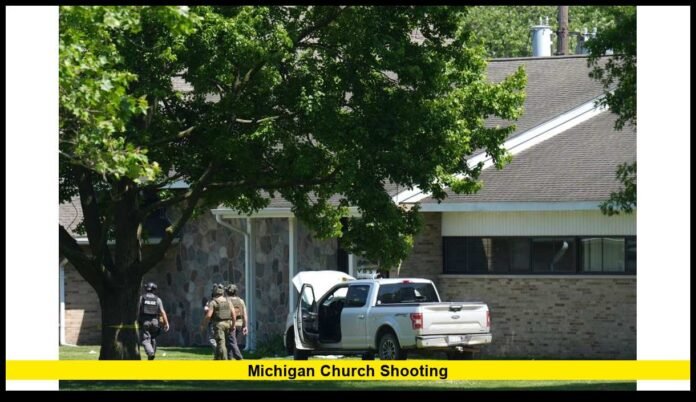

The Michigan church shooting in Grand Blanc Township on September 28, 2025, has shaken the state and the nation. What should have been a peaceful Sunday morning worship service turned into a horrifying tragedy marked by gunfire, flames, and fear. Multiple victims were shot, a church was set ablaze, and the suspected gunman is now confirmed dead. As investigators sift through the details, the town of Grand Blanc is struggling to comprehend how such devastation could strike at the heart of a sacred space.
Timeline of the Shooting
The attack began shortly before 11 a.m. at The Church of Jesus Christ of Latter-day Saints on McCandlish Road. Families and congregants had gathered for services when the sound of gunfire tore through the sanctuary. Witnesses described chaos as parishioners dropped to the floor, scrambled toward exits, and tried to shield children from harm.
- The first emergency calls were placed around 10:55 a.m.
- Within minutes, law enforcement officers from Grand Blanc Township and surrounding jurisdictions responded.
- Reports confirmed multiple gunshot victims inside the church.
- Shortly after the shooting began, a fire erupted inside the building, consuming parts of the structure and forcing emergency crews to shift between firefighting and medical rescue.
By late morning, police confirmed the shooter was neutralized, ensuring no continuing threat to the public.
Shooter Down, but Questions Remain
While authorities have stated that the shooter is dead, his identity and motive have not been publicly released. Officials are carefully examining whether this was an act of personal grievance, religious hatred, or another form of targeted violence. Investigators are also exploring how the fire began and whether it was intentionally set by the shooter.
Some unverified accounts suggest incendiary devices or accelerants may have been involved. If confirmed, that would indicate premeditation and a broader plan to inflict destruction beyond the gunfire alone. Federal agencies, including the FBI and ATF, are assisting in the analysis of evidence found at the scene.
Victims and Casualties
The exact number of victims remains uncertain, but local hospitals have received multiple patients with gunshot injuries. Early reports suggest between six and eight people were struck by bullets. In addition to gunshot wounds, some victims suffered smoke inhalation or injuries sustained during the rush to evacuate.
Medical staff are working tirelessly to stabilize those brought in. Authorities are expected to provide official updates soon, clarifying the number of fatalities and survivors. For now, families remain in painful suspense, waiting for word on the condition of their loved ones.
Emergency Response and Fire Containment
The rapid response from first responders was critical in preventing further loss of life. Firefighters battled heavy flames inside the church while police secured the perimeter and paramedics rushed victims to hospitals. Law enforcement officials also established a reunification site at the nearby Trillium Theater to help reconnect families separated during the incident.
The scene has been described as both chaotic and highly coordinated, with agencies balancing multiple emergencies at once. Residents were urged to avoid the area to allow emergency teams full access to the site.
Community in Shock
Grand Blanc, a town of about 8,000 residents, is known for its quiet neighborhoods and strong sense of community. For many locals, the church was not just a place of worship but a gathering space central to family and social life.
The attack has left residents stunned. Many expressed disbelief that such violence could occur in their community. Parents spoke of struggling to explain the tragedy to their children, while longtime members of the church mourned the loss of a sanctuary they believed was safe.
Governor’s Statement and National Attention
Michigan Governor Gretchen Whitmer issued a statement within hours of the attack. She condemned the violence, expressed condolences to the families, and promised full cooperation between state and local agencies.
National leaders have also voiced concern, with many calling the shooting an attack not only on individuals but also on the sanctity of religious freedom. Faith-based organizations across the country are rallying support for Grand Blanc, pledging prayers, donations, and assistance in the days ahead.
Patterns of Violence in Houses of Worship
The Michigan church shooting is part of a troubling trend of violent incidents targeting places of worship across the United States. Although rare compared to other forms of mass violence, church shootings carry a unique weight because they violate the sanctity of sacred spaces where people seek peace and safety.
In recent years, houses of worship have increasingly implemented security protocols such as surveillance cameras, volunteer security teams, and closer coordination with local police. However, as the Grand Blanc tragedy shows, even precautionary measures cannot always prevent determined attackers.
Investigative Priorities
As the investigation unfolds, authorities are focusing on several key areas:
- Shooter’s identity and background – Determining whether the suspect had prior criminal history or mental health issues.
- Motive – Establishing whether the attack was personal, ideological, or connected to broader extremist beliefs.
- Connection between fire and gunfire – Examining whether arson was planned to maximize destruction or to cover evidence.
- Weapons and devices – Identifying the firearms used, and whether explosives or incendiary devices were present.
- Digital footprint – Reviewing social media, communications, and possible online threats made prior to the attack.
Impact on the Church and Local Faith Community
The Church of Jesus Christ of Latter-day Saints has deep roots in Michigan, with congregations active across the state. The Grand Blanc branch, in particular, has long served as a hub for spiritual growth and community service.
The fire damage, combined with the emotional trauma, means it will likely be months before the congregation can return to worship in its original location. In the meantime, leaders are expected to arrange temporary meeting spaces and provide counseling to congregants who witnessed the tragedy firsthand.
National Debate on Security and Policy
Tragedies like the Michigan church shooting inevitably reignite debates over security and policy. Advocates are calling for stronger measures to protect houses of worship, ranging from armed security to enhanced mental health resources. Others emphasize the need for broader gun control measures, highlighting the recurring theme of mass shootings in the United States.
At the same time, faith leaders stress that churches must remain open and welcoming, balancing safety with their mission to serve communities. This tension—between openness and protection—remains unresolved but urgent in the wake of such violence.
Healing and Moving Forward
In the coming days, vigils, prayer services, and community gatherings are expected to honor the victims. Local leaders are encouraging residents to come together, support one another, and resist fear.
Counseling services and crisis hotlines have been made available for those traumatized by the event. Teachers, parents, and clergy are preparing to help children process the tragedy in age-appropriate ways, recognizing the lasting emotional impact such violence can have on young minds.
A Lasting Impact on Michigan
This shooting marks one of the deadliest and most destructive acts of violence in a Michigan place of worship in recent memory. The combination of gunfire, arson, and mass panic ensures it will leave deep scars on Grand Blanc and ripple across the state.
Yet amid the tragedy, acts of courage have also emerged—parishioners who shielded others, first responders who ran into a burning building, and neighbors who opened their homes to the displaced. These stories of bravery will stand as a testament to resilience even in moments of horror.
The Michigan church shooting has left a community in pain but also determined to heal. As more details unfold, one truth remains: the people of Grand Blanc will not allow violence to define their future. Share your thoughts below and stay connected as we continue to cover this story.