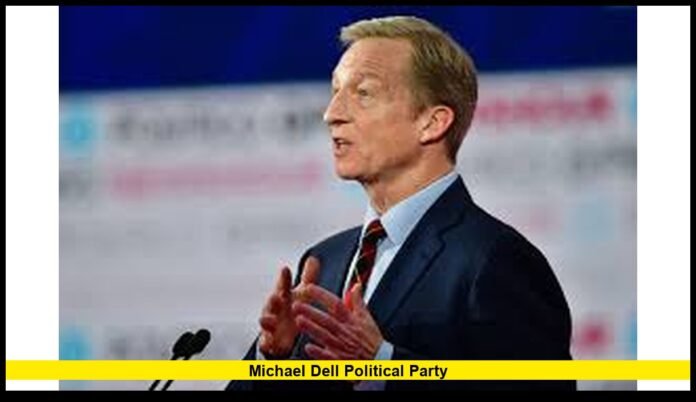

Michael Dell political party discussions have intensified throughout 2025 as the billionaire tech leader continues to draw national attention through major philanthropic actions and influential roles in technology and public policy. His growing prominence has encouraged the public to take a closer look at his political standing, donation history, and public actions to understand where he aligns in today’s sharply divided political climate.
Despite this widespread curiosity, the question remains more nuanced than many expect. Michael Dell has not publicly declared formal membership in any political organization. Instead, his pattern of political engagement reflects the type of complex, business-oriented strategy often seen among large-scale corporate leaders. This strategic approach has prompted ongoing national interest, especially among those wanting to understand how his influence interacts with the current political landscape.
Why His Political Identity Matters in 2025
The renewed focus on Michael Dell’s political identity comes at a moment when the role of major business leaders in shaping national policy is larger than ever. Across the country, the voices of executives in technology, finance, and global commerce increasingly influence debates that were once the domain of lawmakers alone. With the tech sector positioned at the heart of issues like cybersecurity, data protection, artificial intelligence oversight, workforce retraining, international trade, and taxation, the perspectives of top CEOs carry real weight. Their political preferences are no longer considered private matters—they are viewed as indicators of where the future of policy may be headed.
This shift is especially notable in the technology world, where companies like Dell Technologies play a central role in both the economy and national security. As the government confronts challenges around regulating emerging technologies and modernizing digital infrastructure, the stance of high-profile industry leaders can shape public conversation and even influence legislative priorities.
In 2025, Michael Dell has become part of this broader discussion for several reasons. His recent public initiatives—ranging from major philanthropic commitments to strategic investments that intersect with education, healthcare, and public technology—have put him firmly in the spotlight. These efforts demonstrate a growing interest in social impact and national development, naturally prompting analysts to look more closely at his political engagement.
Additionally, Dell’s reputation as a long-standing figure in the tech world makes any shift in his public activities more likely to attract notice. When business leaders who typically stay out of the political spotlight begin making large-scale contributions to public-facing projects, observers often revisit their past political donations, affiliations, and public statements to understand their worldview.
This context explains why searches for Michael Dell political party have surged in 2025. The heightened interest is not tied to any specific election cycle, but rather to the public’s desire to understand how influential innovators align politically. As Americans navigate rapidly changing policy landscapes shaped by technology, they increasingly look to the individuals behind major tech companies to gauge where industry and government might intersect next.
Understanding His Political Donations and Public Support Patterns
The most reliable way to understand Michael Dell’s political direction is to examine how he allocates his financial support over time. Political donations often reveal a clearer picture than public statements, offering insight into which policies and leaders resonate with a major business figure. In Dell’s case, long-term contribution patterns help illustrate how he views governance, economic development, and the future of innovation in the United States.
A Consistent Lean Toward Republican Recipients
Across many election cycles, Michael Dell has established a noticeable trend of supporting Republican candidates and organizations. This pattern reflects a general ideological alignment with priorities traditionally associated with the Republican Party, especially those connected to economic growth and business-friendly policy.
These contributions suggest support for approaches that emphasize lower corporate taxes, reduced regulatory burdens, strong incentives for technological expansion, and policies that encourage entrepreneurial ecosystems. For a leader who built one of the world’s most successful computer companies, these themes directly align with the interests of technological competitiveness and corporate mobility.
The long-term consistency of these donations also indicates that Dell’s political engagement is not sporadic or reactionary. Instead, it reflects a stable posture toward pro-business economic frameworks, reinforcing the perception that he favors an environment where innovation, private sector investment, and global trade can flourish with fewer governmental constraints.
Evidence of Bipartisan Engagement
Despite the clear lean toward Republican recipients, Michael Dell’s donation record also shows strategic support for selected Democratic candidates. These contributions are typically targeted and issue-driven, reflecting his interest in areas that directly affect the tech industry and the country’s long-term talent pipeline.
In many cases, these Democratic donations align with policy areas such as public education, STEM workforce development, technology-focused economic policies, and programs designed to expand innovation grants or digital infrastructure. By supporting candidates who champion these initiatives, Dell demonstrates a pragmatic approach—one that prioritizes national competitiveness and workforce readiness over strict partisan loyalty.
This dual-track pattern underscores that his giving is not rigidly ideological. Rather, it appears motivated by issues that intersect with economic stability, technological advancement, and the broader future of American competitiveness. It also explains why conversations around the Michael Dell political party question remain nuanced. His record shows a dominant but not exclusive preference, leaving room for interpretation about how he navigates the political landscape.
How Corporate Stances Differ From Personal Political Behavior
A major source of confusion for those trying to interpret Michael Dell’s political identity is the noticeable gap that sometimes emerges between the public positions adopted by Dell Technologies and the patterns reflected in his personal political donations. While both are associated with the same leader, they do not always speak to the same motivations or priorities.
Corporate Statements That Cross Party Boundaries
Dell Technologies has, at times, taken public positions on social, civic, and workplace issues that extend beyond traditional conservative policy lines. Under Michael Dell’s leadership, the company has made statements supporting civic participation, employee rights, community engagement, and industry-wide social initiatives. These positions reflect the expectations placed on modern global corporations, which must balance stakeholder interests, international market pressures, talent retention, and public responsibility.
Because these company-wide stances occasionally align with positions more commonly associated with the political center or left, some observers assume they mirror Michael Dell’s personal ideology. However, corporate statements typically emerge from strategic considerations, internal workforce priorities, and broader industry trends. They are designed to serve the company’s global reputation and operational stability—not to signal the CEO’s personal political leanings.
Personal Donations Reflect Business Priorities
In contrast, Michael Dell’s personal political giving tends to be more tightly connected to economic and innovation-focused priorities. His donation patterns consistently reflect an interest in policies that shape America’s competitive landscape and support a thriving business environment. His support frequently aligns with initiatives related to:
- Competitive and predictable tax structures
- Market freedom for technology and emerging industries
- Investment in research, development, and scientific advancement
- Strong and open global trade channels
- Scalable opportunities for corporate expansion
These issue-driven preferences demonstrate that his political behavior is often anchored in economic philosophy rather than social ideology. It explains why his public corporate stances can differ from his private political choices—each serves a different purpose and responds to different pressures.
This clear separation between corporate advocacy and personal engagement is one of the key reasons the michael dell political party conversation remains nuanced. His public leadership role and personal political behavior do not always move in the same direction, making simple labels insufficient for capturing the full picture.
Why He Has Not Announced an Official Party Membership
While many public figures openly associate themselves with a specific political party, Michael Dell has chosen not to take that route. Several reasons explain why business leaders of his scale avoid official political labels.
1. Global Business Considerations
Dell Technologies operates worldwide, serving governments, corporations, and consumers across political and cultural lines. Publicly claiming allegiance to one political party could create tension in markets where neutrality is essential for business relationships.
2. Broad Stakeholder Responsibilities
As a CEO leading tens of thousands of employees, Dell must consider how political identity might affect workplace culture, stakeholder relations, and investor confidence. Official political alignment could create unnecessary division or public pressure.
3. Policy-First Political Approach
Executives like Michael Dell typically support policies that align with their companies’ priorities. This approach does not fit neatly into partisan categories. While certain business policies may align with Republicans, other areas—such as education, skills development, or workforce programs—may align with Democratic positions.
4. Avoiding Unwanted Political Interpretation
Declaring a political identity can quickly overshadow all other aspects of a public figure’s work. Avoiding labels helps keep attention on innovation, leadership, and philanthropy rather than on ideology.
For these reasons, Dell has chosen a path of political activity without visible partisan membership.
How Recent Events Affect the Conversation
Public discussion around michael dell political party increased significantly following recent philanthropic actions. His large donation aimed at supporting children’s long-term economic opportunities sparked discussion about the connection between his social contributions and public policy.
Although philanthropy is not inherently political, large-scale donations often intersect with policy goals such as wealth building, education access, and financial security. As a result, the public often tries to interpret these actions through a political lens.
His growing visibility in areas connected to national policy naturally leads to questions about his political views, even though these actions are not framed as partisan endorsements.
Why Business Leaders Often Defy Traditional Political Labels
Michael Dell is part of a growing trend among U.S. business leaders who engage politically in ways that do not fit neatly into the red-or-blue lens.
Characteristics of Business-Driven Political Behavior
- Support varies based on economic issues rather than ideology.
- Contributions shift across election cycles based on policy impact.
- Leaders remain flexible to maintain influence across administrations.
- Public actions often prioritize innovation and economic stability.
- Philanthropic initiatives can align with goals from either party.
These traits make simplistic labels inadequate. The michael dell political party conversation remains open because his actions reflect a multidimensional relationship with politics, rather than adherence to a single ideological direction.
What We Can Say with Confidence
Even though Michael Dell has never made a formal declaration about his political affiliation, the information available today paints a clear and consistent picture of how he interacts with the political landscape. His behavior as a donor, business leader, and public figure offers enough evidence to describe his approach with reasonable accuracy.
He Is Not Publicly Attached to a Party
Michael Dell has never aligned himself with any political party in a public or official capacity. He has not issued statements identifying himself as a Republican or Democrat, nor do public records list him as a registered member of either party. This absence of a stated affiliation means that assessments of his political identity must rely on observable patterns rather than explicit declarations.
His Donation History Shows a Strong Lean Toward Republican Candidates
One of the clearest insights into his political direction comes from his contribution history. Over multiple election cycles, his donations consistently favor Republican candidates and organizations that promote pro-business policies. These recipients typically support positions such as competitive tax structures, lower regulatory barriers, and incentives aimed at strengthening the innovation ecosystem. The continuity of these contributions sends a strong signal about his economic priorities and ideological leanings.
He Still Shows Bipartisan Support When Issues Align
Despite a notable preference for Republican candidates, Dell’s donation patterns also include targeted support for Democrats when policy alignment warrants it. These contributions often relate to issues such as education, technology infrastructure, digital training, and programs that help build the future workforce. This shows that Dell’s engagement is not strictly partisan. Instead, he supports leaders who advance policies that strengthen national competitiveness and support long-term industry growth.
His Corporate Actions Reflect Broader Civic Considerations
While Michael Dell’s personal political giving leans in one direction, Dell Technologies occasionally adopts public stances that appeal to a wider ideological spectrum. Corporate statements on civic engagement, workforce culture, community investment, and industry-wide social initiatives sometimes diverge from traditional conservative viewpoints. These positions are shaped by global business realities, employee expectations, and corporate responsibility—not by Dell’s personal political identity.
Most Accurate Characterization
Based on all available information, the clearest and most accurate description is that Michael Dell is a business-focused, Republican-leaning donor who engages with both parties when their policies align with economic growth, innovation priorities, and the long-term stability of the technology sector. This flexible approach explains why the michael dell political party conversation remains nuanced, and why simple labels do not fully capture the complexity of his political footprint.