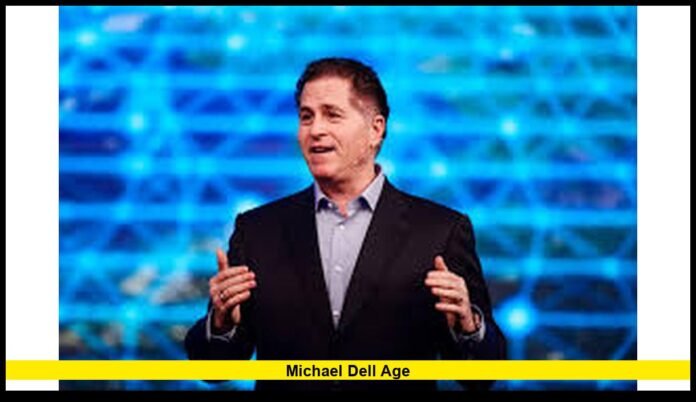

Michael Dell age continues to be a topic of wide public interest in 2025, not only because he is one of the most recognizable figures in American technology, but also because he remains actively involved in business and philanthropy at a time when many leaders begin stepping back. As of this year, he is 60 years old, and his current stage of life aligns with major developments shaping the future of his company, American families, and the direction of large-scale philanthropic efforts. His age stands as a reminder of how long he has remained relevant in a fast-moving industry while still playing a decisive role in key national conversations.
Michael Dell was born on February 23, 1965, a time when personal computers did not yet exist as a household idea. Today, decades later, he continues influencing how technology evolves, and how investments in younger generations can reshape economic mobility. His age reflects not only the years he has spent building one of the world’s largest tech firms but also the maturity guiding his latest decisions.
A Milestone Year With National Impact
Turning 60 would be a significant milestone for anyone, but for Michael Dell, this year carries additional meaning because it coincides with one of the most impactful philanthropic efforts in the United States. Instead of slowing down, he has increased his engagement, taking part in initiatives designed to benefit millions of American families.
In 2025, Michael Dell and his wife made national headlines by committing billions of dollars to fund long-term financial accounts for children around the country. This contribution is structured to support both young kids and newborns in the coming years, giving them a foundation for future financial stability. It stands as one of the most far-reaching gestures ever made by a U.S. business leader, and it highlights how his sense of purpose continues evolving with age.
This major financial commitment demonstrates that the milestone of turning 60 has not shifted his attention away from big goals. Instead, it appears to have strengthened his interest in creating economic opportunity for the next generation.
Leadership Still Driving the Tech Industry
Despite being 60, Michael Dell continues to serve as a guiding force for Dell Technologies, a corporation whose influence extends far beyond laptops and desktops. Under his leadership, the company has undergone one of the most substantial transitions in its history, aligning itself with modern infrastructure, artificial intelligence systems, and advanced cloud technologies.
In 2025, Dell Technologies adjusted its projections for coming years in response to skyrocketing demand for AI-focused hardware. The new expectations show that the company is preparing for sustained growth, especially in the sectors driving global digital transformation. These include enterprise servers, data-center solutions, and infrastructure models designed for the evolving needs of businesses, governments, and global organizations.
This shift emphasizes that even in his 60s, Michael Dell is not pushing the company toward retirement complacency. Instead, he promotes forward-looking strategies centered on long-term viability and innovation. By steering the organization away from older product structures and moving toward flexible, AI-ready models, he sends a clear message that Dell Technologies will remain a central player in the next era of computing.
His leadership style—shaped by decades of studying technological cycles—allows the company to adapt quickly. Age, in this context, becomes an asset, not a limitation.
A Business Founder Still Reshaping Markets
Michael Dell’s age puts him in a unique category of American founders who started their companies young and have remained central figures in their industries for more than 40 years. What sets him apart is that he continues engaging in key strategic decisions rather than transitioning into a distant advisory role.
In 2025, he demonstrated this active involvement when he made financial adjustments to his personal portfolio. A major stock sale involving millions of shares took place this year, drawing attention from business watchers. Such transactions often spark public discussion, but in this case, it aligns with common long-term asset management strategies used by high-net-worth executives.
Even after this adjustment, his influence over the company remains significant. His ownership stake and executive role continue to reinforce his position as a long-term leader shaping Dell Technologies’ future direction. For many observers, the move reflects routine wealth planning rather than a step away from leadership. It shows that even at 60, he remains deeply connected to both short-term strategies and long-range organizational goals.
Guiding Dell Technologies Into the AI Era
Michael Dell’s 60th year arrives at a moment when artificial intelligence has become the centerpiece of modern computing. Under his leadership, Dell Technologies is embracing this shift with substantial investments in both hardware and services required to support AI workloads.
Companies across the country—and around the world—are upgrading their systems to manage advanced machine-learning models, automated data pipelines, and high-performance computing applications. Dell Technologies is working to position itself as a critical supplier for these needs, expanding its offerings for enterprise clients.
This expansion includes:
- Accelerated infrastructure solutions supporting AI-driven workloads
- New server lines optimized for large-scale computing power
- Modernized cloud frameworks that replace outdated systems
These efforts reinforce the message that Michael Dell remains focused on the future. His age adds valuable experience to the decision-making process, helping the company avoid missteps and remain competitive in a crowded market.
Philanthropy That Matches the Scale of His Career
Another defining element of Michael Dell’s 60th year is the philanthropic decision that aims to touch millions of lives. The multi-billion-dollar commitment made by him and his wife stands as one of the largest philanthropic contributions directed toward youth investment in U.S. history.
The structure of the program provides financial support for both current children and those born over the next several years. By ensuring that each participant receives a foundational investment amount, the initiative aims to broaden long-term economic mobility, giving families a tool for future planning.
Michael Dell has long been associated with philanthropic efforts, but the scale, timing, and national scope of this year’s commitment elevate it beyond previous actions. At age 60, he appears more focused than ever on supporting programs that promote stability and opportunity for underserved communities.
This effort reflects a shift in how many modern business leaders operate. Instead of simply donating to established causes, they help create systems intended to influence national outcomes. In that sense, his age marks both a personal milestone and a point of expanded public responsibility.
Why His Age Matters in 2025
Michael Dell age has become a focus of public discussion in 2025 because it provides context for his current actions. Turning 60—an age typically associated with reflection or reduced activity—has instead aligned with some of the most important decisions of his career.
Several factors explain why this particular moment stands out:
1. A Powerful Combination of Experience and Momentum
Four decades of leadership give him deep insight into which technologies will matter most in the coming years.
2. A Major Philanthropic Initiative
Supporting millions of children with long-term investment accounts marks one of the most ambitious goals he has ever pursued.
3. Industry-Wide Influence
Changes announced by Dell Technologies affect global supply chains, enterprise partners, and the broader digital ecosystem.
4. Strong Public Visibility
A significant stock sale, renewed corporate strategy, and large-scale donation have placed him at the center of multiple national conversations.
Michael Dell’s age is meaningful not simply because he is 60, but because of how active, influential, and forward-thinking he remains during this stage of life.
What Michael Dell’s Next Chapters Could Look Like
While it is impossible to predict specific outcomes, several themes appear likely to define the direction of his work moving forward:
Continued Leadership at Dell Technologies
His strategic decisions suggest he will remain closely involved in guiding the company through market transitions.
Growth of AI and Cloud Initiatives
As businesses require more advanced computing systems, Dell Technologies is positioned to expand its presence.
Increasing Philanthropic Focus
Large-scale contributions may become an ongoing component of his public work as he continues shaping long-term opportunities for younger generations.
Stronger Presence in National Economic Discussions
With a high-profile investment in children’s financial futures, he may play a growing role in conversations about economic mobility and family financial support.
These directions align with the steady, future-focused leadership style he has demonstrated throughout his life.
FAQs
1. How old is Michael Dell in 2025?
Michael Dell is 60 years old.
2. What is his date of birth?
He was born on February 23, 1965.
3. Why is his age discussed so much this year?
Because 2025 marks a milestone year in which business decisions, philanthropic efforts, and corporate changes have raised his public profile significantly.
Michael Dell’s 60th year stands out as one of the most influential phases of his life. His actions in business and philanthropy continue shaping opportunities for young people and guiding the evolution of modern technology. Share your thoughts below and let us know how you view his ongoing impact.
Disclaimer:
The information in this article is based on publicly available updates as of the current publishing date. Details regarding individuals, companies, and events may evolve over time. This article is intended for general informational purposes and should not be taken as financial, legal, or investment advice. Readers are encouraged to verify developments independently and use their own judgment when interpreting this content.