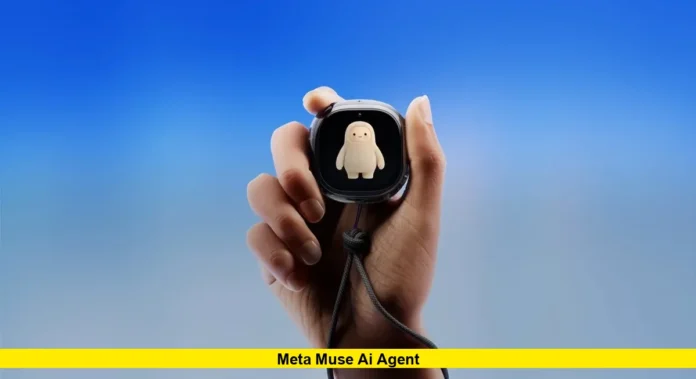

meta muse ai agent has quickly become one of Meta’s most closely watched consumer AI products since its U.S. launch on September 8, 2026. The personal AI agent can browse the web, complete multi-step tasks, connect with apps, shop with user approval, and continue working after the app is closed.
Meta introduced Muse as a shift from traditional chatbots toward AI that can actually perform tasks for users. The company designed the system around a dedicated virtual machine, connected applications, permission controls, and an audit trail intended to keep users involved when important actions occur.
The product has also expanded rapidly since launch. Meta announced new Muse capabilities at Connect 2026, including plans to bring the agent to AI glasses and additional integrations. At the same time, Amazon has blocked Muse from shopping on Amazon.com, creating an early example of the challenges AI agents face when interacting with major online platforms.
What Is Meta Muse?
Muse is Meta’s personal AI agent designed to do more than answer questions. Users can give it a task or goal, and the system can determine the steps needed to complete that request.
Meta says Muse can work across connected applications and websites. Its capabilities include browsing, filling out forms, organizing information, creating documents, generating images, managing reminders and completing certain transactions.
The agent is available through the dedicated Muse experience and can also be accessed through WhatsApp. Meta has also introduced a Mac application that allows Muse to interact with files and native applications on a computer.
The basic concept is different from a conventional chatbot. A chatbot generally produces a response after receiving a prompt. Muse is designed to continue working through a task and take actions within the permissions granted by the user.
How the Meta Muse AI Agent Works
At the center of Muse is what Meta calls the Muse Secure VM. The system provides the AI agent with a dedicated virtual computer and browser environment.
That environment allows Muse to interact with websites and services without requiring the user to manually perform every step.
For example, a user can ask Muse to research an appointment, complete a form, organize travel details or help with an online purchase. The agent can navigate the relevant websites and work through multiple stages.
Meta says a separate security component called Sentinel controls whether Muse can access the internet. Sensitive operations can also require user approval.
The company says users can review an audit trail showing actions that Muse has taken or plans to take.
This approach is important because an AI agent has greater access to real-world systems than a simple conversational assistant.
Muse Can Continue Working in the Background
One of the major differences between Muse and conventional chat-based AI is its ability to continue working after a user leaves the application.
Meta’s product documentation says Muse can keep working in the background after the app is closed.
A user could assign a task and return later to see the results rather than keeping the application open throughout the process.
Meta also describes Muse as capable of monitoring information and tracking longer-term goals. That means the system is designed around ongoing tasks rather than only individual questions.
The company says Muse can remember information that matters to the user and use that context when making suggestions or completing future tasks.
Shopping Is a Major Muse Capability
Shopping has become one of the most visible uses of Muse.
The agent can search products, compare options and help complete purchases. Meta designed the shopping experience so that users remain involved in important transaction decisions.
The system can request approval before completing a purchase. Meta also says sensitive payment information is protected through its payment infrastructure.
At launch, Meta highlighted Stripe Link as part of the shopping experience. The system can use a one-time card number in situations where the merchant does not directly support Link, keeping the user’s underlying card information away from the transaction flow.
Meta later expanded its commerce strategy through additional partnerships.
Shopify has agreed to support agentic checkout with Muse through Shop Pay. Meta has also announced additional shopping and service connections as the platform expands.
Why Amazon Blocked Muse
The rapid growth of agentic shopping has also created friction between Meta and major retailers.
Amazon blocked Muse from shopping on Amazon.com beginning September 20, 2026.
Amazon said Meta had not received permission for Muse to access the retailer’s website in this manner. Amazon also raised concerns about how the automated agent interacts with its platform and handles customer information.
The dispute highlights an important issue for AI agents: an agent may technically be able to navigate a website, but that does not automatically mean the website operator permits the activity.
For users, the result is straightforward. Muse cannot currently be used to shop on Amazon in the same way it can interact with supported shopping destinations.
The situation also illustrates why partnerships and formal integrations are becoming increasingly important for agentic AI.
Shopify Takes a Different Approach
Shopify has taken a different position.
The company announced a partnership with Meta to support agentic checkout using Shop Pay across Shopify stores.
That arrangement gives Muse a structured way to complete purchases with participating merchants rather than relying entirely on ordinary website navigation.
The contrast between Amazon and Shopify is significant for the development of AI shopping agents.
Retailers must decide whether agents should access their storefronts, how those agents identify themselves, what information they can access and how transactions should be handled.
Muse is therefore becoming part of a broader shift in how consumers may interact with online stores.
Muse Expands to Mac
Meta expanded Muse beyond mobile and web experiences with the introduction of its Mac application in September.
On Mac, Muse can work with files, Messages, Calendar, Notes and Mail when users grant permission.
This gives the agent access to a more traditional computer environment.
Instead of simply browsing the web, Muse can assist with information stored locally or inside native applications.
Meta emphasizes that users control which information and applications the agent can access. Sensitive actions can also require approval.
The Mac rollout represents another step toward Meta’s broader goal of making Muse a persistent assistant across devices.
Muse Is Coming to Meta AI Glasses
Meta announced another major expansion at Connect 2026.
The company said Muse will come to its AI glasses, allowing people to interact with their personal agent hands-free.
The announcement connects Muse with Meta’s larger hardware strategy. Instead of limiting the agent to a phone or computer, Meta wants users to access it through wearable devices.
AI glasses could allow users to interact with Muse while moving through everyday activities without reaching for a smartphone.
Meta has also announced a broader lineup of AI glasses across its product portfolio.
The integration is part of the company’s stated vision of personal AI agents that remain available across different devices.
Muse Voice and Calling Features
Muse has also moved into voice-based interactions.
Meta launched a phone-calling capability that allows Muse to place calls to businesses as part of certain tasks.
The agent can interact with people on the other end of a call and provide users with transcripts and summaries.
However, Meta is still testing how the feature should operate safely.
Reuters reported in September that Meta had been testing a human-concierge system in which human contractors handled some calls initiated through Muse. Meta said the testing was intended to collect feedback and improve safety and privacy protections before wider public release.
The development shows that some of the most advanced agent features remain under active testing.
Privacy and Security Remain Central to Muse
Because Muse can interact with personal accounts and services, privacy is a major part of its design.
Meta says Muse does not have direct visibility into passwords or payment methods stored in its secure credential system.
The company also says users decide which applications Muse can connect to and what permissions it receives.
For example, users can control whether Muse has read-only access to certain information or can take actions through a connected service.
Meta says users can disconnect services and change permissions.
The company has also said users can opt out of having their Muse interactions used to train its AI models.
Meta announced plans for Muse Confidential VM, which would add another layer of encryption designed so that even Meta could not access the contents of a user’s protected environment.
Muse Adoption Has Accelerated
Muse has attracted significant attention since its September launch.
Third-party mobile analytics firms have reported millions of downloads during the first few weeks.
Sensor Tower estimated that Muse had surpassed 3.4 million downloads by September 25, although the figure is an estimate rather than a number published directly by Meta.
Other analytics companies have reported different totals, reflecting differences in measurement methods and reporting periods.
Muse also reached the top of the U.S. App Store rankings shortly after launch.
The rapid adoption has increased attention on Meta’s consumer AI strategy and the company’s effort to move beyond conventional AI assistants.
Muse Is Still Evolving
Despite its rapid expansion, Muse remains a developing product.
Meta continues to introduce new integrations, device support and capabilities.
At Connect 2026, the company announced additional functionality, including expanded connectors and plans for deeper interaction with AI glasses.
Meta’s AI research organization has also continued updating the models behind its agent ecosystem. Muse Spark 1.3 was introduced as a newer model focused on reasoning and agentic tasks.
That development matters because the usefulness of an agent depends not only on its interface but also on how reliably it can plan, understand instructions and operate computer tools.
What Makes Muse Different From a Traditional AI Assistant?
The distinction can be summarized through the type of work each system performs.
| Capability | Traditional chatbot | Muse |
|---|---|---|
| Answer questions | Yes | Yes |
| Browse the web | Sometimes | Yes |
| Multi-step tasks | Limited | Yes |
| Connected apps | Limited | Yes |
| Background work | Usually limited | Yes |
| Website interaction | Limited | Yes |
| Shopping assistance | Varies | Yes |
| Purchase approval | Varies | Yes |
| Computer interaction | Limited | Yes |
| Long-term goals | Limited | Yes |
The key difference is agency.
Muse is designed to move from generating information to carrying out actions. That makes permissions, security and third-party access especially important.
What Is the Current Status of Meta Muse?
As of the latest available updates, Muse is an active Meta product available in the United States, with the company rapidly expanding its capabilities.
The service has moved from its initial mobile and web launch to Mac, broader shopping integrations, voice-related features and announced AI-glasses support.
At the same time, some functions remain under development or testing, while access to certain third-party platforms depends on agreements with those companies.
Amazon’s decision to block Muse demonstrates that the future of agentic AI will depend partly on cooperation between AI companies, retailers, payment providers and other digital services.
For users, Muse represents Meta’s attempt to make AI a practical digital worker that can manage tasks rather than simply respond to prompts.
The Bottom Line on Meta Muse
The Meta Muse AI agent is developing quickly, with Meta positioning it as a personal system capable of browsing, planning, communicating, shopping and working across connected applications. Its Secure VM architecture, permission controls and expanding device support are central to the product.
The latest developments show both momentum and growing challenges. Millions of downloads indicate strong early consumer interest, while Amazon’s restrictions demonstrate the difficulties AI agents face when they interact with services without direct platform cooperation. Meta’s partnerships with companies such as Shopify point toward another possible path built around formal agentic-commerce integrations.
With AI-glasses support and additional connectors now part of Meta’s roadmap, Muse is becoming a larger part of the company’s consumer AI strategy.
What do you think about Meta’s Muse and its move toward AI that can complete tasks for users? Share your thoughts and stay tuned for the latest confirmed updates.