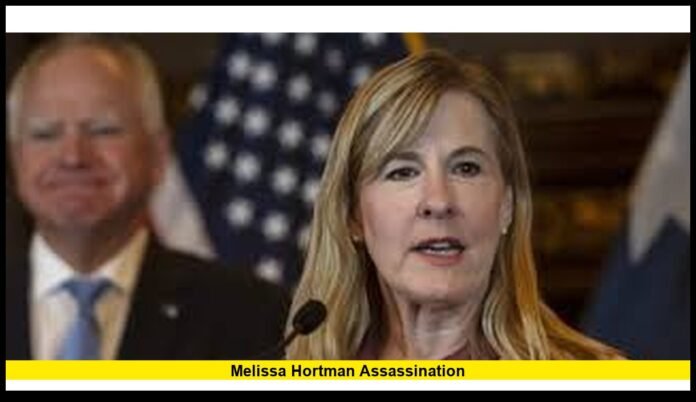

The Melissa Hortman assassination remains one of the most alarming acts of political violence in Minnesota history, leaving a profound impact on state leadership, public safety, and democratic norms. The confirmed facts show that former Minnesota House Speaker Melissa Hortman and her husband, Mark Hortman, were killed in a deliberate, targeted shooting at their Brooklyn Park home on June 14, 2025, during a coordinated attack on elected officials.
The case continues to unfold in federal court, while its effects still shape conversations about security, governance, and political discourse across the United States.
The Early Morning Attacks
The violence began in the early hours of June 14, when a gunman targeted the private residences of Minnesota lawmakers.
Shortly after 2:00 a.m., State Senator John Hoffman and his wife were shot multiple times inside their Champlin home. Emergency responders transported both victims to the hospital, where they underwent life-saving surgery. Despite the severity of their injuries, both survived.
Investigators later confirmed that the shooting was not random. It was part of a broader plan aimed at elected officials.
Within a short time, the suspect traveled south to Brooklyn Park.
The Fatal Shooting in Brooklyn Park
At the Brooklyn Park residence, Melissa Hortman and her husband were shot inside their home. Law enforcement officers responding to the scene found both victims deceased.
Authorities quickly determined that the killings were targeted and politically motivated. The nature of the attack immediately elevated the investigation to a multi-agency response involving state and federal authorities.
The loss of a sitting legislative leader sent shockwaves through Minnesota’s political system.
Emergency Alerts and Community Lockdown
Following confirmation of multiple shootings, officials issued shelter-in-place alerts across several northern suburbs of Minneapolis.
Residents were urged to stay indoors as police searched for the suspect. Schools, government buildings, and public facilities adjusted operations as a precaution.
The scale of the response reflected the seriousness of the threat and the concern that additional attacks could occur.
Arrest of the Suspect
The manhunt concluded the following day with the arrest of 57-year-old Vance Luther Boelter.
Authorities confirmed that Boelter was taken into custody without further violence. He was later transferred into federal custody due to the nature of the crimes.
Law enforcement officials stated that the swift arrest prevented additional harm and brought immediate stability to the region.
Who Was Melissa Hortman
Melissa Anne Hortman served Minnesota in public office for nearly two decades.
First elected to the Minnesota House of Representatives in 2004, she represented House District 34B and steadily rose through party leadership ranks. Her legislative career was marked by a strong command of policy details and procedural discipline.
In 2019, she became Speaker of the Minnesota House, a role she held through early 2025.
Hortman was known for her ability to manage closely divided chambers, maintain caucus unity, and move complex legislation forward.
Her Influence on Minnesota Policy
Throughout her career, Melissa Hortman helped shape major policy initiatives.
Her work focused on:
- Paid family and medical leave
- Education funding and school support
- Reproductive health protections
- Environmental and climate policy
- Worker and labor rights
Colleagues often described her leadership style as firm but methodical. She emphasized preparation and accountability.
Her legislative footprint remains embedded in Minnesota law.
Mark Hortman’s Role and Loss
Mark Hortman lived largely outside the public spotlight.
Friends described him as a devoted spouse and a steady presence behind the scenes of Melissa Hortman’s public life. His death alongside his wife underscored how political violence can reach beyond public officials to harm families.
The loss of both Melissa and Mark deepened the sense of tragedy felt across the state.
Details of the Federal Case
Following his arrest, Boelter was indicted on multiple federal charges.
The charges include:
- Murder counts related to the deaths of Melissa and Mark Hortman
- Attempted murder charges connected to the Champlin shooting
- Firearms-related offenses
- Additional charges linked to politically motivated violence
Prosecutors confirmed that the charges carry the potential for life imprisonment if convictions are secured.
As of today, the case remains active, with pretrial proceedings ongoing.
Planning and Execution of the Attack
Court records show that the suspect allegedly planned the attacks in advance.
Investigators stated that the suspect targeted specific officials and traveled between locations during the early morning hours. Authorities also confirmed that the suspect impersonated a law enforcement officer during at least one encounter, allowing him to approach victims without immediate suspicion.
These details reinforced the conclusion that the attack was deliberate and targeted.
Survivors and Recovery
State Senator John Hoffman and his wife survived the Champlin shooting after extensive medical treatment.
Both required surgery and prolonged recovery. Their survival provided investigators with crucial information during the early stages of the case.
No children were present at either home during the attacks.
Statewide Mourning
News of the assassinations spread quickly.
Flags were lowered to half-staff across Minnesota. Vigils took place in cities and towns throughout the state, drawing thousands of residents.
Public officials from across the political spectrum condemned the violence and emphasized unity during a period of grief.
Lying in State at the Capitol
Later in June, Melissa and Mark Hortman lay in state at the Minnesota State Capitol.
The ceremony allowed the public, lawmakers, and state employees to pay their respects. It marked one of the rare occasions such an honor was extended to a legislative leader.
The event symbolized the depth of Hortman’s influence and service.
Impact on the Minnesota Legislature
The assassination created an immediate vacancy in House District 34B.
A special election was held in September 2025 to ensure continued representation for the district. Legislative operations continued, though daily routines shifted in response to security concerns.
Some meetings moved online temporarily, and lawmakers became more cautious about public appearances.
Security Changes for Lawmakers
In the months following the attack, Minnesota lawmakers reviewed safety protocols.
While officials emphasized the importance of accessibility, new considerations emerged regarding personal safety. Changes included:
- Increased coordination with local law enforcement
- Security assessments for lawmakers’ residences
- Updated guidance for public events
The attack highlighted vulnerabilities faced by state legislators nationwide.
Broader National Implications
The Melissa Hortman assassination intensified national conversations about political violence.
State and local officials often operate without dedicated security, making them particularly vulnerable. The attack reinforced calls for improved threat assessment and prevention strategies.
Experts emphasized early reporting of threats and better coordination between agencies.
Why the Case Continues to Matter
Months later, the case remains a reference point in discussions about democracy and safety.
The assassination disrupted governance, altered security norms, and left a lasting emotional impact on colleagues and constituents.
It also served as a reminder that political disagreements must never escalate into violence.
Melissa Hortman’s Enduring Legacy
Melissa Hortman’s influence continues through the laws she helped pass and the leaders she mentored.
Her approach to governance emphasized preparation, responsibility, and institutional respect. Those values continue to shape Minnesota’s legislative culture.
Even in death, her work remains part of the state’s political framework.
Current Status of the Legal Process
As of today, federal proceedings against the accused gunman continue.
Pretrial motions are ongoing, and no trial verdict has been reached. Court security remains elevated due to the seriousness of the charges.
The justice process continues to move forward.
Looking Ahead
Minnesota continues to adapt in the months following the attack, with its political institutions operating under a heightened awareness of risk while reaffirming commitments to public accessibility. Lawmakers have acknowledged that the tragedy permanently altered how safety is viewed within state government, prompting careful adjustments rather than abrupt closures of civic spaces.
Inside the State Capitol, the impact of the assassination remains visible. Memorial elements honoring Melissa Hortman now serve as a daily reminder of both her leadership and the consequences of political violence. Legislators have spoken privately and publicly about the need to lower the temperature of political discourse, emphasizing respect, restraint, and responsibility in debate. These conversations have increasingly shaped how leadership frames legislative sessions and public remarks.
Security practices have evolved as well. While officials have avoided detailing specific measures, lawmakers confirm that protocols surrounding public meetings, committee hearings, and constituent events are under continuous review. The goal has been to enhance preparedness without undermining the openness that defines state-level governance. Personal safety planning for legislators and staff has also become more routine, reflecting lessons learned from the attack.
The effects of the assassination extend beyond security. Policy discussions related to public safety, political threats, and the protection of democratic institutions now carry added urgency. The tragedy has influenced how lawmakers consider legislation tied to violence prevention, civic responsibility, and accountability, even when those measures are debated quietly rather than through sweeping public proposals.
Communities across Minnesota continue to process the loss through memorials, public forums, and civic engagement efforts. Many residents have described a renewed determination to participate in local government, viewing involvement as a way to honor Hortman’s legacy and reject intimidation through violence.
As the legal case proceeds and time passes, the assassination stands as a defining moment in modern Minnesota history. Its influence persists not only in courtrooms and legislative halls but also in how the state understands leadership, service, and the shared obligation to protect democratic participation from harm.
The Melissa Hortman assassination continues to shape conversations about leadership, safety, and democracy—its impact endures as the pursuit of justice moves forward.