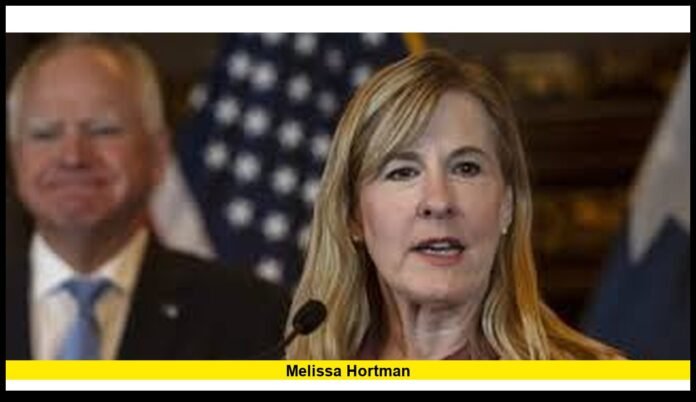

Melissa Hortman remains a defining figure in American state politics, and melissa hortman continues to shape public conversation in 2026 as Minnesota navigates the political, legal, and cultural consequences of her life and death. Her career as a legislative leader, followed by her assassination, has left a lasting imprint on governance, public safety, and political accountability across the state.
This article presents a clear, factual account of Melissa Hortman’s career, the confirmed events surrounding her death, and the developments that continue to influence Minnesota’s political landscape today.
Who Was Melissa Hortman
Melissa Hortman was a longtime Minnesota lawmaker, attorney, and leader within the Democratic–Farmer–Labor Party. She served in the Minnesota House of Representatives for more than twenty years, representing her district through multiple redistricting cycles and periods of divided government.
Born on May 27, 1970, Hortman built her political career steadily. She entered the legislature in 2005 and rose through leadership ranks based on her command of policy detail, disciplined approach to negotiations, and ability to manage closely divided chambers.
Her most prominent role came in 2019, when she became Speaker of the Minnesota House. She held that position until 2025, making her one of the longest-serving speakers in modern state history.
A Leadership Style Built on Process and Stability
Melissa Hortman was widely known for valuing legislative process. Colleagues described her as methodical, prepared, and calm under pressure. During years when partisan control of the House shifted or remained evenly split, she played a central role in preventing prolonged gridlock.
Her leadership approach focused on:
- Maintaining order during contentious floor debates
- Ensuring committee work followed procedural rules
- Negotiating budgets that kept state government operating
- Prioritizing institutional stability over short-term political wins
She earned respect from allies and opponents alike for keeping negotiations focused on outcomes rather than rhetoric.
Policy Influence and Legislative Priorities
Throughout her career, Hortman was involved in shaping legislation on education funding, healthcare access, environmental protections, and workforce development. While policy disagreements were frequent, few disputed her understanding of the legislative process or her ability to guide bills through complex negotiations.
She often served as a bridge during divided government, working to assemble coalitions that could pass budgets and avoid shutdowns. Her final legislative sessions were marked by intense negotiations under narrow margins, requiring constant compromise.
The Assassination That Shook Minnesota
On June 14, 2025, Melissa Hortman and her husband, Mark Hortman, were shot and killed at their home in Brooklyn Park, Minnesota. Authorities determined the attack was politically motivated.
The same night, another Minnesota lawmaker and his spouse were also shot and seriously injured in a related incident. Law enforcement later confirmed the attacks were connected.
The killings sent shockwaves through Minnesota and prompted immediate national attention. Flags were lowered, legislative sessions were paused, and memorials formed across the state.
Suspect Arrest and Charges
The suspect, Vance Luther Boelter, was arrested after an extensive manhunt. Investigators allege he impersonated a police officer to carry out the attacks.
He faces multiple state and federal charges, including murder, attempted murder, stalking, and impersonating law enforcement. He has entered not-guilty pleas and remains in custody as court proceedings continue into 2026.
Authorities have emphasized that the case is being handled through the judicial system and that no evidence supports claims of broader political involvement beyond the accused individual.
Renewed Attention in 2026
Melissa Hortman returned to national headlines in early 2026 following the circulation of false claims about her death on social media. A video shared by former President Donald Trump promoted conspiracy theories suggesting political figures were connected to the assassination.
State officials, legal authorities, and lawmakers rejected those claims, stating clearly that they were unsupported by facts. The incident reignited debates about misinformation and the responsibility of public figures when sharing unverified content.
Family Response and Public Appeals
Hortman’s children, Colin and Sophie Hortman, issued public statements addressing the false narratives. They emphasized that their mother’s final legislative actions were part of budget negotiations intended to keep the state government functioning.
Their statements highlighted the personal toll misinformation takes on families and called for respect for verified facts. The family’s response resonated widely, drawing bipartisan expressions of support.
Bipartisan Condemnation of Misinformation
Minnesota leaders from both parties publicly condemned the spread of conspiracy theories surrounding Hortman’s death.
Tim Walz described the circulation of the video as dangerous and irresponsible. Democratic lawmakers echoed those concerns, warning that misinformation can escalate political tensions and undermine trust in institutions.
Several Republican officials also rejected the false narratives, stressing that exploiting a violent tragedy for political purposes crossed ethical lines. This bipartisan response was notable in an otherwise polarized political climate.
Impact on the Minnesota Legislature
Hortman’s death left a leadership gap within the Minnesota House of Representatives. While a special election in September 2025 filled her vacant seat, the institutional impact of losing an experienced speaker was significant.
Lawmakers had to adjust to new leadership dynamics while continuing to manage budget negotiations and legislative priorities. Committee structures, floor management, and negotiation strategies evolved in her absence.
Security Changes for Lawmakers
Following the assassination, Minnesota lawmakers approved enhanced security measures to protect elected officials.
These included:
- Updated threat assessment protocols
- Expanded coordination with local law enforcement
- Revised security guidance for lawmakers at the Capitol and at home
The changes reflected growing national concern about threats against public officials and acknowledged that modern political risks often originate online before escalating.
Minnesota’s Shifting Political Landscape
The broader political environment in Minnesota has been shaped by multiple factors since 2025.
Governor Tim Walz’s decision not to seek reelection in 2026 followed months of political pressure tied to investigations into state programs and heightened scrutiny fueled by misinformation. While unrelated to Hortman’s case, the controversy surrounding her death contributed to an already tense climate.
Open-seat races, leadership changes, and shifting alliances have made Minnesota politics more unpredictable as the state prepares for upcoming elections.
Ongoing Court Proceedings
The legal case against Vance Boelter continues through state and federal courts. Pretrial motions, hearings, and procedural steps remain active.
Officials have urged the public to rely only on verified court information and avoid speculation. The case remains one of the most closely watched criminal proceedings in Minnesota in recent years.
Public Memory and Historical Significance
Melissa Hortman is widely remembered as one of the most consequential legislative leaders in modern Minnesota history. Her influence extends beyond individual policy victories to the way she shaped the culture and function of the state legislature during an era marked by narrow majorities and heightened partisanship. Memorials, formal tributes, and moments of recognition within the Capitol continue to reflect the respect she earned across institutional lines.
Public remembrance of Hortman has increasingly emphasized her role as a stabilizing force during uncertain political periods. Lawmakers and civic leaders often point to her ability to manage divided government without sacrificing procedural integrity, viewing her tenure as an example of how state legislatures can remain effective even amid national polarization. Her name is frequently invoked in discussions about leadership standards, negotiation ethics, and the importance of institutional continuity.
Historians and political analysts also place her career within a broader historical context. They cite her leadership as illustrative of a transitional period in state politics, when traditional legislative norms were tested by rising ideological conflict and external pressures from national political movements. Hortman’s approach to governance is often contrasted with more confrontational styles, highlighting how her emphasis on process and restraint helped preserve functionality during volatile moments.
Over time, her legacy has taken on deeper symbolic meaning. Beyond her legislative accomplishments, Melissa Hortman is remembered as a figure whose life and death reshaped conversations about political violence, public service, and democratic responsibility. Her historical significance now lies not only in what she achieved, but in how her story continues to inform Minnesota’s understanding of leadership, resilience, and the costs of political extremism.
Legacy: What Melissa Hortman Represents Today
Melissa Hortman today represents both the highest ideals of public service and the sobering consequences of escalating political hostility in modern American politics. Her career showed how deep institutional knowledge, respect for legislative process, and disciplined negotiation can sustain effective governance even during periods of divided government and intense partisan pressure. She demonstrated that leadership rooted in preparation and restraint can keep institutions functioning when consensus is difficult and stakes are high.
Her approach to governance continues to be cited as a model for lawmakers navigating polarized environments. By prioritizing outcomes over rhetoric and process over personality, she helped maintain stability in moments when legislative breakdown seemed possible. For many colleagues, her work illustrated how durable democratic systems depend on leaders willing to absorb political risk in order to protect institutional integrity.
Her assassination permanently reshaped how her legacy is understood. It exposed the growing risks faced by public officials at all levels of government and forced renewed scrutiny of how political rhetoric, online misinformation, and conspiracy-driven narratives can escalate into real-world violence. In its aftermath, discussions about lawmaker safety, ethical use of political platforms, and responsibility in public communication gained new urgency.
Today, Melissa Hortman stands as both an example of principled leadership and a warning about the costs of eroding civic norms. Her legacy continues to influence debates about accountability, truth, and the protection of democratic institutions, reinforcing the idea that public service carries not only authority, but profound responsibility.
Why Melissa Hortman Still Matters in 2026
Melissa Hortman’s story continues to shape conversations about leadership, truth, accountability, and the responsibilities of public service in the United States. Her legacy endures not just in the laws she helped shape over two decades, but in the ongoing national and state-level debates that her life and death have sparked.
In 2026, her relevance has deepened amid widespread concern about the impact of misinformation on public discourse. After false claims about her assassination circulated on social media, bipartisan political leaders in Minnesota united in condemning the spread of unverified narratives. That rare moment of cross-aisle agreement underscored a broader recognition that political dialogue—especially when it turns to matters of life, death, and public trust—must be anchored in verified fact rather than speculation. Her name became central to discussions about how public officials and influential voices should wield their platforms responsibly.
At the same time, the criminal proceedings against the individual accused of killing Melissa and her husband continue to draw attention. Those legal developments have kept her story in the public eye and have reinforced the importance of due process and the rule of law. The fact that the case remains active in both state and federal courts highlights the gravity of the violence that took her life and the seriousness with which the justice system is treating it. Her story is frequently referenced in commentary about threats to public officials and the need for vigilance and protection in an era of increasing political hostility.
Melissa Hortman’s experience has also influenced policy discussions in Minnesota and beyond. Lawmakers have revisited protocols for lawmaker safety, updated threat assessment strategies, and strengthened collaboration with law enforcement agencies to prevent future violence against elected officials. Her assassination became a case study in balancing open governance with necessary precautions, prompting other states to review their own practices.
Most importantly, Hortman’s legacy continues to remind citizens and leaders alike of the human dimensions of political life. She is remembered not only for her legislative achievements but also for the dignity with which she approached governance. Her commitment to civic responsibility serves as a benchmark in debates about how political actors should conduct themselves, how media should cover public figures, and how communities should respond to crisis and conflict.
In 2026, Melissa Hortman still matters because her story encapsulates both the promise and the peril of public service—and because it continues to inform critical conversations about the health and future of American democracy. Her life and death stand as powerful reminders that leadership grounded in principle and truth has lasting impact, even in the face of profound tragedy.
Melissa Hortman’s legacy continues to resonate across Minnesota—share your thoughts and join the conversation as this story continues to unfold.