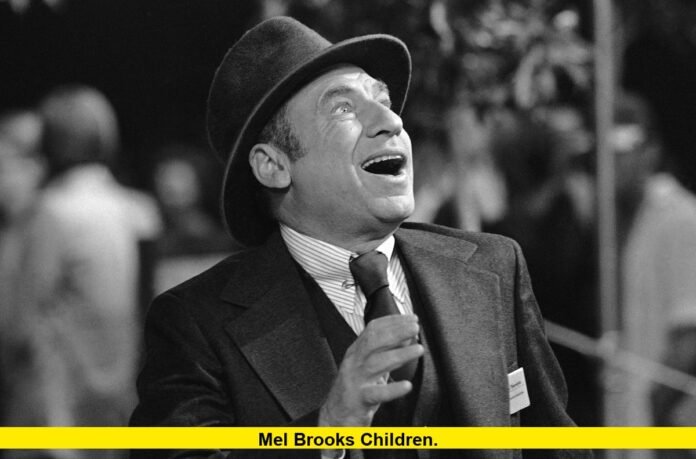

Mel Brooks children have long drawn interest from fans who want to understand the family behind one of the most influential figures in American entertainment. As Mel Brooks approaches his 100th year, his legacy is being celebrated across film, television, and popular culture, bringing renewed attention not only to his career but also to the lives of his four children. Each has followed a distinct path, shaped by creativity, discipline, and a unique relationship with a father whose work defined modern satire.
This in-depth profile explores who they are, what they do, and how they have built their own identities while growing up in the shadow of an iconic name.
A Family Rooted in Entertainment History
Mel Brooks was born Melvin Kaminsky in Brooklyn, New York, in 1926. Over decades, he became a defining voice in American comedy, creating timeless films, Broadway productions, and television work that reshaped satire and parody. His personal life included two marriages and four children, all of whom were raised in environments deeply connected to storytelling, performance, and the arts.
Three of his children were born from his first marriage to Florence Baum: Stefanie, Nicholas, and Edward. His fourth child, Maximilian, was born from his marriage to acclaimed actress Anne Bancroft. Together, they form a family whose stories intersect with film, literature, and behind-the-scenes creative work.
Stefanie Brooks: The Eldest and the Industry Professional
Stefanie Brooks, born in 1956, is the oldest of Mel Brooks’ children. Growing up in New York, she was exposed early to film sets, production meetings, and the realities of working in entertainment. Rather than becoming a constant on-screen presence, she built a career largely behind the camera.
Stefanie has worked in casting and production, contributing to major studio films and learning the business side of filmmaking. She also appeared in select acting roles earlier in her career, but her long-term focus remained on helping shape projects from within the industry. Her work reflects a practical, grounded approach to creativity, emphasizing collaboration and organization over celebrity.
Nicholas “Nicky” Brooks: Writer and Producer
Born in 1957, Nicholas Brooks, known as Nicky, pursued a more direct path into filmmaking and writing. Educated in film and storytelling, he developed screenplays and produced independent projects that allowed him to explore character-driven narratives.
Nicky has spoken openly about growing up with a famous father and how that environment influenced his understanding of storytelling, discipline, and creative pressure. His work often focuses on emotional realism and human conflict, offering a contrast to the broad comedy style that made his father famous. Through writing and production, he established a professional identity rooted in craft rather than public attention.
Edward “Eddie” Brooks: Director and Visual Storyteller
Edward Brooks, born in 1959, chose a quieter but equally creative route. Known as Eddie, he gravitated toward directing and visual storytelling, working primarily on short films and smaller narrative projects.
Eddie’s work emphasizes atmosphere, pacing, and character psychology. Rather than pursuing mainstream commercial success, he focused on developing personal projects that allowed him full creative control. His approach reflects a deep respect for filmmaking as an art form, shaped by early exposure to his father’s dedication to precision, timing, and structure.
He is also a family man, and through his daughter’s work in journalism, the tradition of storytelling continues into another generation.
Maximilian “Max” Brooks: Bestselling Author and Cultural Commentator
Max Brooks, born in 1972, is the son of Mel Brooks and Anne Bancroft and is the most publicly recognized among Mel Brooks’ children. Educated in history and film, Max initially worked in television writing before finding his voice as a novelist.
He achieved international success with his novel World War Z, a work that combined speculative fiction with political, social, and military analysis. The book became a global bestseller and was later adapted into a major motion picture. He has since written additional novels, graphic works, and essays, often blending historical research with imaginative storytelling.
Max’s writing style is markedly different from his father’s comedic voice, yet it carries the same commitment to structure, clarity, and cultural observation. He has also spoken publicly about the influence of both his parents, describing a household where artistic standards were high and intellectual curiosity was encouraged.
Different Paths, Shared Foundations
Although Mel Brooks’ children pursued different careers, they share common foundations: exposure to the discipline of creative work, respect for storytelling, and an understanding of the demands of public life. Their upbringing balanced artistic freedom with the realities of a profession that requires resilience and adaptability.
Each child chose a path aligned with personal strengths. Stefanie gravitated toward production and organization, Nicky toward writing and emotional narrative, Eddie toward visual direction, and Max toward literature and large-scale conceptual storytelling. None relied solely on their family name; instead, each built credentials through education, training, and professional experience.
The Influence of Family and Legacy
The family’s history is also marked by the long and celebrated marriage between Mel Brooks and Anne Bancroft, whose partnership combined two powerful creative forces. Their home life emphasized reading, discussion, and respect for craft. That environment shaped Max Brooks directly and influenced the broader family dynamic.
Mel Brooks has often spoken about the importance of humor as a survival tool, shaped by his early life and career struggles. His children, in turn, have described learning about perseverance, humility, and the value of continuous learning. The legacy passed down is not just one of fame, but of work ethic and creative integrity.
Public Interest and Ongoing Recognition
As Mel Brooks continues to receive honors and renewed attention for his lifetime achievements, curiosity about his family naturally grows. Documentaries and retrospectives have included interviews and reflections from his children, offering insight into the private life of a public figure.
These appearances highlight a family that values honesty and perspective, acknowledging both the privileges and challenges of growing up in an iconic household. The children’s stories add depth to the understanding of Mel Brooks not only as an entertainer, but as a father and mentor.
A Multigenerational Creative Line
The influence of Mel Brooks extends beyond his own career into the work of his children and even grandchildren. From film sets and writers’ rooms to novels and documentaries, the family continues to contribute to American storytelling in varied forms.
Rather than replicating their father’s comedic style, Mel Brooks’ children expanded the family’s creative reach into drama, literature, and visual art. This diversity reflects a broader view of creativity, one that values multiple voices and forms of expression.
Looking Ahead
As audiences continue to revisit classic films and discover new projects connected to the Brooks legacy, interest in the family’s story remains strong. The lives of Mel Brooks’ children illustrate how creativity can evolve across generations, adapting to new mediums while honoring foundational principles of storytelling and craft.
They stand as examples of how a legendary name can inspire rather than define, encouraging individual paths while maintaining a shared respect for the power of narrative.
What part of the journey of Mel Brooks children do you find most compelling? Join the conversation and stay connected for more insights into iconic families and their lasting influence.