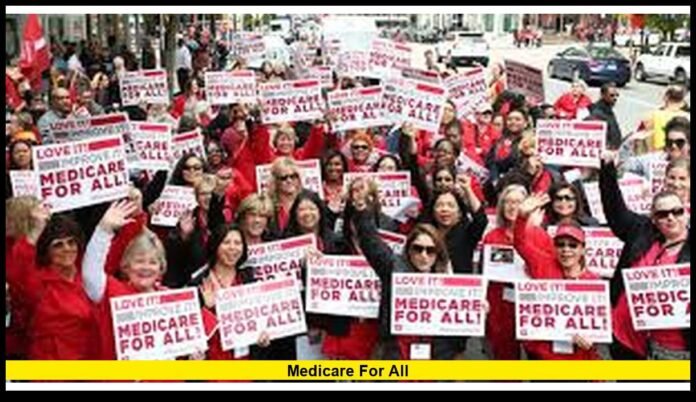

Medicare for All is once again drawing strong attention from lawmakers, advocacy groups, and millions of Americans who struggle with rising health care costs and inconsistent coverage. As health-care debates intensify in 2025, the idea of a universal, single-payer system is being pushed into the spotlight — even as current federal policies continue to leave gaps for many across the country.
What Is Behind the Renewed Push for Medicare for All
Interest in Medicare for All has persisted because the American health-care system remains deeply fragmented. Many people still rely on employer-based insurance, private plans, marketplace plans under the Affordable Care Act (ACA), Medicaid, and Medicare. This patchwork design often leaves people uninsured or underinsured, burdened by high premiums, deductibles, copays, and benefit gaps such as limited dental, vision, or long-term care coverage.
Supporters of Medicare for All argue that a single public insurance program would simplify coverage, ensure every resident receives essential care, and reduce administrative overhead. In recent months, some members of Congress along with health-care activists and grassroots organizations have called for serious consideration of Medicare for All as they point to persistent gaps in access and growing out-of-pocket costs.
At the same time, public sentiment appears to be shifting. Surveys over the past year suggest that a substantial portion of Americans support exploring options for universal health-care coverage. Many cite medical debt, denied claims, surprise bills, and the complexity of navigating insurance networks as major reasons to back change.
The Current Reality: Why Many Americans Still Lack Reliable Coverage
Although the United States spends more on health care per capita than any other developed country, millions remain uninsured or underinsured. Estimates in recent years show that roughly 25 to 30 million Americans still lack any form of health insurance. Even among those with coverage, many struggle with high deductibles, limited coverage for mental health, dental, vision or long-term care, and restrictions on procedures or medications.
Additionally, employment instability and economic hardships have worsened the problem for many households. With rising inflation, cost of living, and layoffs in certain sectors, employer-based insurance has become increasingly uncertain. Marketplace plans under the ACA help some, but premiums and deductibles often remain too high for low- and middle-income families. Medicaid provides a safety net for others, but eligibility varies by state and many people still fall through the cracks — especially in states that have not expanded coverage.
Health-care expenses continue to be a leading cause of bankruptcy or financial strain for many U.S. households. Even insured individuals may face large out-of-pocket costs for hospital care, prescription drugs, or long-term care. These challenges help explain why interest in Medicare for All has intensified once again.
What Would Medicare for All Change — And What It Would Offer
Under the most widely discussed Medicare for All proposals, the U.S. health-care system would undergo a major transformation:
- Universal coverage: Every resident would gain coverage automatically — no dependence on job status, income level, or age.
- Comprehensive benefits: Coverage would extend to hospital visits, inpatient and outpatient care, mental health services, prescription medication, dental, vision, long-term care, reproductive health, and preventive services.
- No premiums, deductibles or copays: Instead of shifting costs onto patients, the system would be publicly funded. Health care would become a right rather than a commodity.
- Reduced administrative overhead: By eliminating the need for multiple private insurers, paperwork and overhead costs would shrink, potentially enabling resources to focus on actual medical care.
- Simplicity and equity: With one standard plan, all Americans — regardless of income or employment — would receive the same core health coverage.
Advocates argue that this would drastically reduce medical bankruptcies, increase timely care for chronic illnesses, and ensure equitable access to preventive care and major treatments alike.
Why Adoption of Medicare for All Remains Challenging
Despite growing interest, several significant barriers stand in the way of implementing Medicare for All in the near future:
Political hurdles
The structure of Congress — including divided party control in many chambers — makes passage of sweeping health-care reform difficult. Some lawmakers remain strongly opposed to any plan that would require eliminating or drastically reducing private insurance. Others worry about the political consequences of increased government spending or tax reforms required to fund universal care.
Fiscal concerns
Transitioning to a fully single-payer model would require very large upfront investments. Though supporters argue long-term savings would offset those costs, many analysts point to the uncertain short-term financial impact. The shift would likely require new taxes, reallocation of federal and state budgets, or both. In times of pressure on the federal budget, these proposals face serious scrutiny.
Opposition from insurers and stakeholders
Private insurers, pharmaceutical companies, and portions of the medical industry might resist a single-payer system because of potential revenue losses or reduced profits. Their political influence and lobbying efforts can hinder legislative momentum for bold reforms.
Public skepticism and complex transition concerns
Even among supporters, some people worry about how quickly such a fundamental transformation could be implemented. Questions remain about how to transition existing employer-based plans, how to fund the system sustainably, and how to maintain quality and timely access during a massive overhaul.
Recent Developments Underscore the Need for Reform
In 2025, federal policy developments have highlighted many of the systemic shortcomings that fuel interest in Medicare for All:
- Premiums and out-of-pocket costs under existing programs — including traditional Medicare, employer-based plans, and marketplace insurance — continue to rise. This leaves many middle-class families squeezed by high expenses despite having “coverage.”
- State-level Medicaid coverage remains fragmented and uneven across the country. States that did not expand Medicaid under the ACA leave millions ineligible for affordable coverage.
- Prescription drug pricing remains a major burden. Many Americans struggle to afford costly medications, particularly for chronic conditions. High copays or coverage denials contribute to gaps in care.
- Long-term care, dental, vision, mental health, and reproductive health coverage often remain partial or missing entirely in many insurance plans. These gaps disproportionately impact vulnerable populations including seniors, low-income families, and people with chronic illnesses.
These conditions continue to drive public frustration. Anecdotes of medical debt, surprise hospital bills, denied claims, and lack of access to specialty care have multiplied — fueling growing support for comprehensive reform.
What Supporters Are Doing: Advocacy, Polling, and Grassroots Pressure
Supporters of Medicare for All — including grassroots organizations, community health advocates, and some progressive lawmakers — have increased efforts to bring the issue to the forefront:
- Town-hall meetings, community forums, and online campaigns are raising awareness about gaps in existing coverage. Personal stories about medical debt, denials, and unaffordable care are being shared widely.
- Polls conducted in the past year show growing public favor for universal health care — particularly among younger Americans, people with unstable employment, and those burdened by high medical costs.
- Healthcare professionals and public health experts have voiced support for simplifying the system, reducing administrative burdens, and prioritizing patient care over complex billing and insurance logistics.
- Some think tanks and policy groups have begun modeling potential cost and savings scenarios that show strong long-term financial benefits from a simplified, universal system. While these models vary, they have helped frame Medicare for All as a viable long-term approach instead of an idealistic dream.
Could Incremental Reforms Undermine the Push for Systemic Change?
As discussions continue, some policymakers argue for incremental reforms instead of a full overhaul. Proposals in 2025 include:
- Expanding subsidies or reducing out-of-pocket costs for marketplace plans.
- Broadening Medicaid eligibility in additional states.
- Strengthening protections for people with pre-existing conditions, ensuring they cannot be denied coverage.
- Regulating hospital and drug pricing to reduce the cost burden on patients.
While such reforms could improve access and affordability for many, they also risk reducing pressure for systemic change. By making piecemeal improvements, policymakers might undercut momentum toward a full Medicare for All system. For many advocates, this is cause for concern — they argue that only a comprehensive solution can truly guarantee equitable, nationwide care.
What the Numbers Suggest: Why Universal Coverage Matters
Statistics reinforce why many Americans believe Medicare for All deserves serious consideration:
- Tens of millions of uninsured Americans remain in the country, even after decades of reform efforts.
- Millions more live with underinsurance — high deductibles, limited coverage, or large out-of-pocket costs that force them to delay or skip care.
- Medical debt remains one of the leading causes of personal bankruptcy in the U.S.
- Preventive care, mental health services, dental and vision care are often inaccessible or too expensive for vulnerable populations.
- Even those nearing retirement face uncertainty: with rising costs in Medicare premiums, many fear inadequate coverage as they age.
These problems aren’t just isolated to a few states or communities — they span across income levels, age groups, and regions. They illustrate how, despite spending more on health care than most countries, the U.S. system often fails many of its own residents.
What It Would Take to Make Medicare for All Work in Practice
Transitioning to Medicare for All on a national scale would require careful planning, public trust, and financial commitments. Key steps would likely include:
- Developing legislation that outlines funding, benefits, and transition timelines.
- Designing a scalable infrastructure to replace private insurance, including billing, provider payment, and administrative systems.
- Engaging stakeholders — from doctors and hospitals to pharmaceutical companies, insurers, patients, and taxpayers — to build consensus and ensure quality care.
- Setting up fair taxation or revenue sources to fund universal coverage without overburdening individuals or businesses.
- Rolling out benefits in phases, ensuring existing patients, Medicare beneficiaries, Medicaid enrollees, and uninsured individuals transition smoothly.
Supporters believe these challenges can be overcome, and that the long-term benefits — improved access, financial stability, equity — outweigh the difficulties of implementation.
What’s Next — And Why the Debate Will Only Grow
Going forward, several factors suggest that Medicare for All will remain central to national health-care debate:
- Economic instability, rising cost of living, and job insecurity continue to impact insurance coverage.
- Aging population and growing number of people with chronic conditions increase demand for coverage that includes long-term and preventive care.
- Public frustration over surprise medical bills, claim denials, and rising premiums fuels demand for systemic change.
- Grassroots organizing, patient advocacy, and social media amplify personal stories that highlight insurance failures and demand fairness.
- Policymakers will face pressure from voters who prioritize health-care security, especially among younger and working-class Americans.
At the same time, the obstacles remain significant. Overhauling a deeply entrenched and complex system takes political will, financial planning, and stakeholder cooperation. The tension between incremental reforms and systemic overhaul is likely to shape the next several years of debate.
Ultimately, the future of Medicare for All will depend on collective will: whether enough Americans, policymakers, and health-care providers believe that a universal, equitable system is worth the effort and investment.
Share your views on Medicare for All — and how you believe America’s health-care system should evolve.