
Maybe Happy Ending Broadway continues to hold a powerful position in the American theater landscape in 2026, standing as one of the most emotionally resonant and artistically respected musicals currently playing in New York City. With its ongoing Broadway run, major award recognition, Grammy acknowledgment, and an upcoming national tour, the production has moved beyond early acclaim into long-term cultural relevance.
For U.S. audiences, the musical represents a shift in what Broadway can be—intimate rather than oversized, emotionally precise rather than flashy, and quietly impactful instead of spectacle-driven. As the 2026 season unfolds, Maybe Happy Ending Broadway remains a benchmark for originality and modern storytelling.
A Musical Built on Emotion, Not Excess
At its core, Maybe Happy Ending Broadway tells a deeply personal story set against a futuristic backdrop. The musical follows Oliver and Claire, two obsolete helper robots living in a near-future Seoul after being abandoned by their human owners. No longer needed, they exist in isolation, holding onto memories and routines that once gave them purpose.
Their chance meeting sparks a relationship that grows slowly and cautiously. What develops is not a grand romance, but a tender exploration of companionship, shared memory, and emotional discovery. Though the characters are machines, their experiences mirror very real human fears—being forgotten, losing relevance, and longing for connection.
This emotional grounding is central to why audiences connect so strongly with the show. The futuristic setting never overshadows the humanity at the center of the story.
A Distinctive Voice on Broadway
In a Broadway environment often dominated by large revivals and star-driven productions, Maybe Happy Ending Broadway offers something noticeably different. The show relies on restraint rather than scale. Its storytelling unfolds through quiet scenes, subtle humor, and emotionally honest musical moments.
Instead of overwhelming audiences with choreography or visual effects, the production invites viewers to lean in. Silence, stillness, and simplicity play just as important a role as music and dialogue. This approach has helped the show stand out during the 2026 Broadway season, which includes a wide range of high-profile openings and reimagined classics.
The musical’s structure supports this intimacy. With no intermission and a focused runtime, the story feels continuous and immersive, allowing audiences to remain emotionally engaged from beginning to end.
Continued Broadway Presence in 2026
As of early 2026, Maybe Happy Ending Broadway continues its acclaimed run at the Belasco Theatre in New York City, maintaining a consistent weekly performance schedule that includes both evening shows and matinees. This steady rhythm has allowed the production to remain accessible to a wide range of audiences, from first-time Broadway visitors and tourists to local theatergoers and devoted fans returning for repeat viewings. The flexibility of the schedule has also helped the show remain competitive during a crowded Broadway season filled with high-profile openings and revivals.
Ticket availability currently extends well into the year, a clear indicator of both sustained demand and producer confidence in the musical’s longevity. Even after a highly successful awards season, the show has avoided the common post-awards slowdown that affects many productions. Instead, it continues to attract new audiences who may have discovered the musical through word of mouth, critical acclaim, Broadway Week promotions, or its Grammy-nominated cast recording.
What sets Maybe Happy Ending Broadway apart in 2026 is its ability to feel current rather than nostalgic. While many productions rely on established titles or star power to maintain momentum, this musical continues to draw interest based on its storytelling alone. Each week brings in audiences who are seeking something emotionally resonant and original, reinforcing the idea that the show is not simply surviving on past recognition but actively building its audience in real time.
Its continued success also highlights a broader shift within Broadway. The sustained performance of Maybe Happy Ending Broadway demonstrates that original musicals—when rooted in authenticity, emotional clarity, and strong creative vision—can thrive alongside long-running franchises and celebrity-driven revivals. In doing so, the show has become a living example of how modern Broadway can balance commercial viability with artistic integrity, even deep into a competitive season.
Awards Recognition That Changed the Trajectory
The trajectory of Maybe Happy Ending Broadway shifted dramatically during the 2024–2025 awards season. By the time the Tony Awards arrived, the musical had already built strong momentum through word of mouth and critical praise.
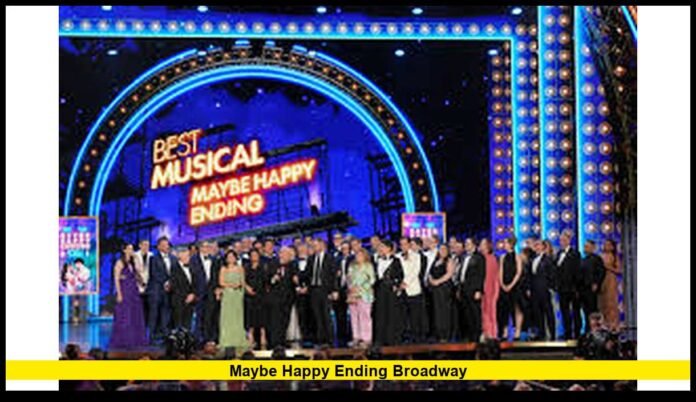
That momentum culminated in a dominant showing at the Tony Awards, where the production earned six major wins, including Best Musical. These honors elevated the show from a respected newcomer to one of the most significant Broadway titles of its generation.
The awards did more than boost ticket sales. They validated a creative approach that prioritized emotional storytelling and originality, encouraging audiences who might otherwise overlook a quieter musical to take notice.
Grammy Recognition Extends the Impact
The show’s influence has not been limited to live performance. In 2026, the original Broadway cast recording received a Grammy nomination in the Best Musical Theater Album category, further cementing the musical’s place in contemporary theater culture.
The recording captures the delicate balance that defines the show. Its arrangements emphasize clarity and emotion, allowing listeners to experience the characters’ inner lives through music alone. Rather than relying on bombastic numbers, the album highlights nuance, vulnerability, and progression.
For many fans, the cast recording has become a way to revisit the story, notice details missed during live performances, and form a deeper emotional connection to the characters. The Grammy nomination underscores the musical’s strength as both a theatrical and recorded work.
Broadway Week and Ticket Accessibility
Accessibility has played a key role in sustaining the show’s popularity. In early 2026, Maybe Happy Ending Broadway was included in NYC Broadway Week, a citywide promotion offering two-for-one ticket deals during a traditionally slower period.
Running from January 20 through February 12, the promotion allowed audiences to experience a Tony-winning musical at a reduced cost. For many theatergoers, especially first-time attendees or younger audiences, this initiative provided an opportunity to see the show that might otherwise feel out of reach.
Even with discounted pricing, demand remained strong, reflecting the show’s continued relevance and appeal. The Broadway Week inclusion reinforced the idea that Maybe Happy Ending Broadway is not only critically admired but also accessible to a broad audience.
Casting Stability and Performance Continuity
Strong performances have always been central to the show’s success. The role of Oliver, in particular, has become closely associated with emotional depth and subtlety, requiring an actor capable of conveying vulnerability beneath a restrained exterior.
After a limited casting transition in late 2025, the production returned to a stable lineup that continues into 2026. This consistency has helped preserve the emotional rhythm of the show, ensuring that returning audiences encounter a familiar and reliable experience.
Claire’s role remains equally vital. Her journey from guarded isolation to emotional openness anchors the story, and her performance has consistently been highlighted as one of the production’s strengths.
Cultural Conversations and Broader Impact
As Maybe Happy Ending Broadway gained visibility, it also became part of larger cultural discussions surrounding representation, casting practices, and evolving expectations in American theater. These conversations reflected broader industry shifts rather than overshadowing the production itself.
The show’s creators have emphasized that the story’s themes transcend background and identity, focusing instead on universal emotional experiences. Regardless of differing viewpoints, the discussions surrounding the show contributed to its prominence and relevance within the cultural conversation.
Importantly, these dialogues highlighted how modern Broadway productions are increasingly expected to engage thoughtfully with the world beyond the stage.
International Roots and Global Appeal
While Broadway has amplified the show’s visibility, Maybe Happy Ending has always had an international identity. Its origins outside the United States continue to influence its tone and perspective, offering American audiences a narrative that feels both fresh and familiar.
In 2026, the musical’s international success remains strong, with performances abroad selling out and drawing enthusiastic audiences. This global reach reinforces the universality of its themes and its ability to connect across cultures.
The parallel success of the Broadway production and international performances illustrates the musical’s broad emotional appeal.
National Tour Launch in Fall 2026
One of the most anticipated developments for U.S. audiences is the upcoming national tour scheduled to begin in fall 2026. The tour will bring Maybe Happy Ending Broadway to major cities across the country, expanding access far beyond New York.
The tour launch represents a significant milestone. For many theater fans, touring productions provide the primary opportunity to experience acclaimed Broadway shows live. The decision to take Maybe Happy Ending on the road reflects confidence in its ability to resonate with diverse regional audiences.
As additional tour dates and casting details are announced, interest is expected to grow steadily throughout the year.
A Defining Presence in the 2026 Broadway Season
The 2026 Broadway season is notable for its diversity. Revivals, experimental works, and star-led productions all compete for attention. Within this crowded field, Maybe Happy Ending Broadway continues to stand out—not through spectacle, but through sincerity.
Its ongoing run, combined with national expansion and continued recognition, positions the musical as more than a seasonal success. It has become a reference point for what modern Broadway storytelling can achieve when emotion leads the way.
Audiences increasingly seek experiences that feel personal and reflective. This shift has worked in the show’s favor, allowing it to remain relevant even as new productions arrive.
Why the Musical Continues to Matter
Several factors explain why Maybe Happy Ending Broadway continues to resonate in 2026:
- A focus on emotional authenticity over visual excess
- Original storytelling in a landscape crowded with familiar titles
- Continued accessibility through promotions and touring plans
- Recognition across both theater and music industries
- Themes that reflect contemporary feelings of isolation and connection
Together, these elements have helped the musical sustain momentum well beyond its opening season.
Looking Ahead
With its Broadway run still active in early 2026, a national tour confirmed for fall, and significant recognition in both the theater and recording industries, Maybe Happy Ending Broadway is positioned for a future that extends well beyond this year. The show’s combination of emotional depth and artistic precision has helped it resonate not just with New York audiences but with theatergoers nationwide. This broad appeal has encouraged producers to plan a robust touring schedule that will bring the musical to major markets across the United States, including cities such as Los Angeles, Chicago, Washington D.C., Tampa, San Francisco, and Providence.
The confirmed national tour represents a major milestone for the production. While Broadway remains its artistic home, the road production will allow audiences outside New York to experience the story live — something many have eagerly awaited. Early interest in the tour has been high, with advance ticket registrations and fan engagement already showing strong signs that the show’s appeal will carry into regional theaters and performing arts centers across the country.
In addition to its touring momentum, conversations within the theater community continue to reflect the show’s influence on new musical development. Emerging playwrights, composers, and directors increasingly cite Maybe Happy Ending Broadway as an example of how emotionally focused, character-driven storytelling can thrive in today’s theatrical climate. Its success has encouraged risk-taking in other original musicals, helping broaden the landscape of what contemporary Broadway productions can achieve.
The show’s Grammy nomination for Best Musical Theater Album further indicates that its impact is not limited to the stage. The recording has enabled fans to engage with the musical’s score repeatedly, deepening audience connection to the characters and story. This kind of cross-platform reach — thriving both live and in recorded form — supports the idea that Maybe Happy Ending will remain culturally relevant beyond its initial Broadway lifespan.
Rather than fading after awards season or settling into a nostalgic legacy, Maybe Happy Ending Broadway has evolved into a lasting presence. Its continued popularity, critical respect, and planned expansion into touring markets reflect a production with staying power. The musical continues to invite audiences into a quiet, profoundly emotional space where small moments carry great meaning, proving that heartfelt storytelling can shape the future of American musical theater in enduring ways.
Have you experienced Maybe Happy Ending Broadway, or are you planning to see it during its Broadway run or upcoming tour? Share your thoughts and stay connected for future updates.