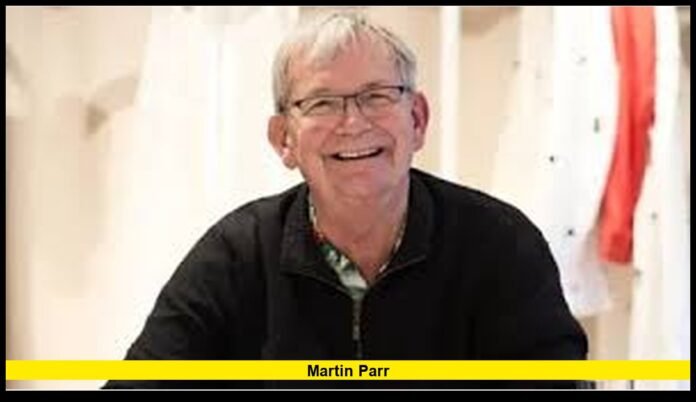

Martin Parr is once again at the center of worldwide attention following confirmation of his death at age 73. Martin Parr’s passing has prompted a renewed look at his career, his most recent creative projects, and the institutions responsible for preserving his work. His influence stretches across continents, and in the United States his photographs remain staples in galleries, university programs, and private collections. As news of his death continues to circulate, interest in his final years and long-term legacy has intensified, making this an important moment to understand how his work shaped modern documentary photography.
Parr built a reputation unlike any other photographer of his generation. His distinct approach to color, composition, and human behavior created a visual vocabulary that countless artists have borrowed from. Now, with the final chapter of his life officially closed, galleries, museums, and publishers are preparing for a surge in attention surrounding the full scope of his creative output.
A Career That Redefined Documentary Photography
Martin Parr emerged in the 1970s when black-and-white documentary work dominated photography classrooms and exhibitions. His choice to embrace bold, saturated color set him apart. Instead of treating color as a distraction or novelty, he used it as a central storytelling device. This stylistic decision helped define many of his most famous bodies of work.
Early in his career, Parr concentrated on everyday life in Britain. He photographed small towns, modest families, beachgoers, and public gatherings. Rather than idealizing these scenes, he captured them with directness and honesty. His eye for detail offered a deeper look at social habits and cultural shifts that often went unnoticed.
One of his most widely recognized projects, The Last Resort, placed him firmly on the global photography map. The images portrayed British seaside vacations with humor and sharp observation. Crowded beaches, melting ice cream, and colorful swimsuits all became part of a larger commentary on leisure, class, and family life. The work brought praise, debate, and lasting influence.
From that point forward, Parr continued developing his interest in public rituals, consumption, and tourism. His photographs, while sometimes humorous, also revealed subtle truths about how people behave when they think no one is paying attention.
Global Reach and a Distinct American Connection
While Martin Parr often focused on European settings, his work resonated strongly with U.S. audiences. Key themes—consumer culture, travel, identity, and social behavior—bridged cultural divides. American galleries frequently exhibited his work, and his books became essential reading for photography students nationwide.
Many American photographers credit Parr with encouraging them to explore color in bold ways. His willingness to document crowded, messy, or unglamorous scenes helped shift documentary style toward more candid, unfiltered imagery. His approach influenced everything from street photography to editorial campaigns.
U.S. institutions also recognized the value of his work early on. Museums have exhibited his images in retrospectives, thematic shows, and photography festivals across major cities. Collectors in the United States continue to seek first-edition books, signed prints, and rare publications from his early years.
Final Years and Continued Creative Output
Despite health challenges in recent years, Martin Parr remained active in photography, publishing, and public appearances. He continued participating in exhibitions, book releases, and panel discussions. His later work maintained the hallmarks of his earlier style—bright colors, direct framing, and scenes rooted in everyday life.
In 2025, Parr was spotlighted at major photography events where curated selections of his images reminded viewers why his vision endured. Large print displays, book signings, and archival exhibitions showcased his craft and reinforced his position among the most influential documentary photographers of the last half-century.
A significant part of his late-career activity involved publishing new books. One of his more notable recent publications featured personal reflections, behind-the-scenes insights, and selections from decades of image-making. Readers praised the honesty and clarity with which he discussed his motivation and artistic process.
The Martin Parr Foundation’s Critical Role
To ensure long-term preservation of his work, Parr established an independent foundation dedicated to British and Irish photography. Over time, this foundation grew into one of the most respected photography organizations in the region. It houses Parr’s archive, supports exhibitions, publishes photobooks, and provides access to researchers and enthusiasts.
With his passing, the foundation becomes even more important. It holds thousands of images, prints, drafts, and documents that chart the evolution of Parr’s ideas. These materials will inform future books, retrospectives, and research projects. For U.S. scholars and curators, the foundation offers an essential resource for understanding how Parr’s work connects to broader global trends.
The foundation’s educational efforts also ensure that photographers discovering Parr for the first time can engage with his work in an informed and meaningful way. Its programs, workshops, and publications deepen the conversation around visual storytelling, cultural observation, and documentary ethics.
How Museums and the Photography World Are Responding
News of Parr’s death sparked immediate reactions throughout the photography community. Curators, educators, and fellow artists shared statements recognizing his impact. Many highlighted how his images blended humor with critical insight. Others reflected on how his work encouraged them to observe the world with sharper attention.
Museums are expected to plan new exhibitions that explore Parr’s complete body of work, from early black-and-white experiments to his most iconic color series. These retrospectives often draw large crowds, especially in the United States where Parr’s influence remains strong. His images resonate with viewers who appreciate their honesty, eccentricity, and vivid detail.
Photobook collectors are also preparing for heightened interest in Parr’s rare editions. Original copies of his earlier works are likely to become even more valuable. Publishers may also revisit key titles, producing updated editions to meet renewed demand.
Parr’s Signature Themes and Techniques
Several recurring elements define Martin Parr’s photographic style:
Use of Bold, Saturated Color
Parr’s preference for bright, vivid tones helped set the emotional tone of his images. Color communicated as much as subject matter.
Close-Up Framing
He often moved close to his subjects, creating images that felt immediate and personal. This closeness provided a sense of familiarity and intensity.
Humor and Irony
Parr captured unexpected moments that revealed human quirks. His humor was never cruel, but it did draw attention to contradictions in everyday situations.
Social Commentary
Although his images could be playful, they also offered deeper commentary on topics such as tourism, class structure, and consumer habits.
Focus on Ordinary Life
Instead of chasing dramatic events, Parr sought meaning in daily routines. This made his work relatable and universal.
Influence on Future Generations
New generations of photographers continue to study Parr’s body of work. His images encourage artists to experiment with color, embrace candid imperfections, and examine the social landscape around them. Photography programs across the United States often include his books in their curricula.
Editors and art directors also draw inspiration from Parr’s distinctive compositions when planning magazine spreads, documentary projects, and advertising campaigns. His photographic language changed how stories are told visually, influencing work beyond fine art and into commercial fields.
Why His Legacy Matters Today
Martin Parr’s death closes the chapter on a career that consistently challenged viewers to look more closely at the world around them. His ability to find meaning in ordinary places helped broaden the definition of documentary photography. At a time when visual storytelling evolves rapidly, Parr’s work remains a steady reference point for clarity, humor, and human connection.
U.S. audiences will continue engaging with his images as exhibitions, reprints, and retrospectives emerge in the coming years. His influence will not fade quickly. Instead, scholars, photographers, and the general public will revisit his work with renewed appreciation.
Final Reflection
Martin Parr leaves behind an extraordinary visual legacy filled with humor, honesty, and deep observation. His images will continue to inspire discussion, analysis, and admiration as new audiences discover the depth and brilliance of his approach to photography.
Share your thoughts below and tell us which of his works resonates most with you.