
Martin Luther King facts continue to shape how Americans understand civil rights, democracy, and peaceful social change. His life and work are among the most thoroughly documented in U.S. history, and the verified record remains unchanged today. From his early years in segregated Georgia to his role in transforming federal law, Dr. King’s actions produced measurable outcomes that still affect daily life across the country. This article presents a fresh, factual account focused entirely on Martin Luther King facts, written for a U.S. audience and grounded in confirmed history.
Early Life Shaped by Segregation
Martin Luther King Jr. was born on January 15, 1929, in Atlanta, Georgia. He grew up in a society structured by racial separation, where segregation governed schools, neighborhoods, transportation, and public spaces. His family played a central role in shaping his values. His father was a prominent Baptist minister who emphasized self-respect and moral responsibility. His mother, a trained educator, instilled discipline and a love of learning.
As a child, King experienced racial discrimination firsthand. Friendships with white children ended abruptly due to segregation rules. Public humiliations, such as being denied service or forced to sit in separate areas, left a lasting impact. These experiences did not harden him toward hatred. Instead, they sparked questions about justice, fairness, and human dignity that would guide his life’s work.
Academic Excellence and Moral Formation
Among the most important Martin Luther King facts is his academic achievement at a young age. He entered college early and graduated from Morehouse College with a degree in sociology. At Morehouse, King was exposed to ideas linking education with social responsibility. Faculty mentors encouraged him to see leadership as service rather than status.
He went on to study theology, earning a divinity degree and later completing doctoral studies in systematic theology. His academic work focused on ethics, moral philosophy, and social systems. These studies shaped his ability to connect religious principles with constitutional values. They also helped him communicate complex ideas in clear, relatable language that resonated with diverse audiences.
King’s education provided more than credentials. It gave him intellectual discipline, historical awareness, and a framework for addressing injustice without resorting to violence.
Entering Public Leadership
In the mid-1950s, King accepted a pastoral role at a church in Montgomery, Alabama. At the time, he was in his mid-twenties and relatively unknown outside local religious circles. That changed quickly when a local act of resistance ignited a community-wide response.
The arrest of Rosa Parks in December 1955 led Black residents of Montgomery to organize a boycott of the city’s bus system. Community leaders selected King to lead the effort because of his calm presence and ability to unify people with differing views. What began as a local protest soon became a national turning point.
The Montgomery Bus Boycott
The Montgomery Bus Boycott stands as one of the most well-known Martin Luther King facts because of its length, discipline, and outcome. For more than a year, tens of thousands of residents refused to ride segregated buses. Participants walked long distances, organized carpools, and endured economic and physical intimidation.
King’s leadership during this period was steady and deliberate. He urged participants to remain peaceful even when faced with threats and violence. His home was bombed, yet he publicly called for restraint and unity. The boycott ended when the Supreme Court ruled that segregation on public buses was unconstitutional.
This victory demonstrated that sustained, nonviolent action could defeat entrenched systems of discrimination. It also established King as a national leader.
Commitment to Nonviolent Action
Nonviolence was the foundation of King’s strategy. He viewed it as both a moral principle and a practical method for achieving change. Nonviolence required courage, self-control, and organization. Protesters were trained to resist the urge to respond to hostility with force.
This approach exposed the brutality of segregation without mirroring it. Images of peaceful demonstrators facing aggression forced the nation to confront the reality of racial injustice. Nonviolence also made it harder for opponents to justify repression.
King’s approach appealed to Americans across political and religious lines. It framed civil rights as a shared moral issue rather than a narrow political demand.
Organizing a National Movement
King played a central role in organizing civil rights efforts beyond Montgomery. He helped form a national organization that coordinated protests, voter registration efforts, and public education campaigns across the South. Churches became organizing centers, and local leaders were trained to sustain movements in their own communities.
This structure allowed the movement to grow without depending on a single location or event. It also emphasized local leadership and collective action rather than individual fame.
Confrontation in Birmingham
The Birmingham campaign of 1963 marked a decisive moment in the civil rights struggle. Birmingham was known for strict segregation policies and aggressive resistance to change. King and other leaders organized marches and boycotts to challenge discriminatory practices.
Authorities responded with mass arrests and violent crowd control tactics. Images of children and adults being attacked while remaining peaceful were broadcast nationwide. Public reaction was swift and intense.
King’s arrest during the campaign led him to write a widely circulated message defending civil disobedience. He argued that unjust laws must be confronted directly and that waiting for gradual change only prolonged injustice. The Birmingham campaign shifted national opinion and increased pressure for federal action.
The March on Washington
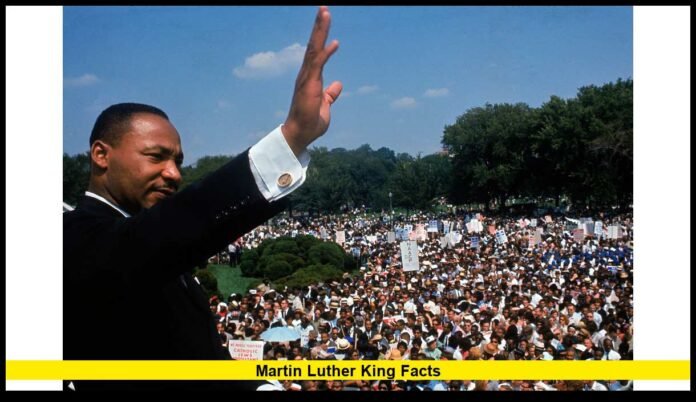
In August 1963, hundreds of thousands of Americans gathered in Washington, D.C., to demand equal rights and economic opportunity. The demonstration was one of the largest in U.S. history and reflected broad public support for civil rights reform.
King’s address at the Lincoln Memorial became the defining moment of the event. His speech connected the struggle for civil rights to the nation’s founding ideals. It emphasized unity, justice, and shared responsibility.
The march reinforced the urgency of civil rights legislation and demonstrated that peaceful mass action could influence national policy.
Impact on Federal Law
King’s leadership helped create the conditions necessary for major legislative change. The Civil Rights Act of 1964 outlawed segregation in public accommodations and addressed employment discrimination. The Voting Rights Act of 1965 targeted barriers that prevented minority citizens from exercising their right to vote.
These laws reshaped American democracy. They expanded access to public spaces, strengthened workplace protections, and safeguarded voting rights. Their core provisions remain central to civil rights enforcement today.
International Recognition
In 1964, King received the Nobel Peace Prize for his leadership in nonviolent resistance. He was the youngest recipient at the time. The award recognized not only his personal efforts but also the broader movement for equality in the United States.
King donated the prize money to support civil rights work. This decision reflected his belief that progress depended on collective action rather than personal reward.
Broader Vision in His Final Years
In the final years of his life, King expanded his focus to include economic justice and poverty. He argued that legal equality meant little without access to jobs, housing, and fair wages. He also criticized the impact of war on social progress.
These positions were controversial and cost him political support. Despite this, King remained consistent in his belief that justice required addressing the root causes of inequality.
Assassination and National Response
Martin Luther King Jr. was assassinated on April 4, 1968, in Memphis, Tennessee. He was 39 years old. His death shocked the nation and led to widespread grief and unrest.
In the days that followed, Congress passed long-delayed housing legislation. The moment underscored both the resistance King faced and the influence of his leadership.
National Recognition and Ongoing Legacy
Martin Luther King Jr. Day is observed each year as a federal holiday. It honors his contributions and encourages community service. Schools, institutions, and public spaces across the country bear his name.
King’s speeches and writings continue to be studied and quoted. His methods influence modern movements advocating peaceful protest and civic engagement. The verified record of his life remains a guide for those seeking change through nonviolent means.
Essential Martin Luther King Facts
- Born January 15, 1929
- Assassinated April 4, 1968
- Age at death: 39
- Leader of the Montgomery Bus Boycott
- Advocate of nonviolent resistance
- Nobel Peace Prize recipient
These facts remain constant across historical records and continue to define his legacy.
Martin Luther King Jr.’s life shows how moral conviction, disciplined action, and collective effort can transform a nation’s laws and conscience.
Join the conversation below or stay connected as we continue covering history that still shapes America today.