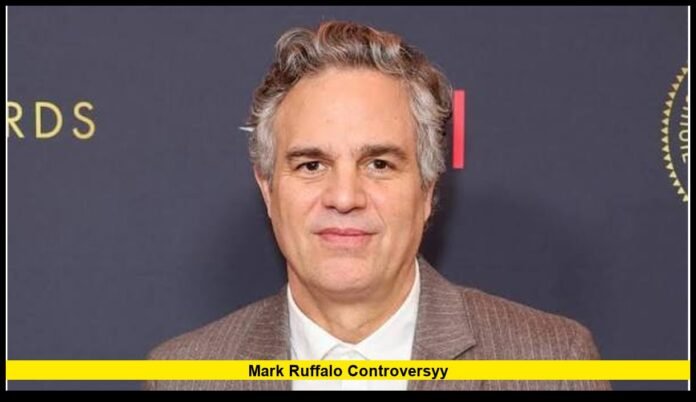

The Mark Ruffalo controversy is drawing renewed attention in Hollywood after Paramount Skydance publicly condemned the actor over comments he made while criticizing the company’s proposed acquisition of Warner Bros. Discovery. Ruffalo has rejected allegations that his remarks were antisemitic, saying his criticism was aimed at political decisions, corporate relationships, military technology and media consolidation rather than Jewish people.
The dispute has quickly become bigger than a disagreement between an actor and a movie studio. It now touches on the proposed Paramount-Warner Bros. transaction, Oracle’s business ties to Israel, the war in Gaza, the boundaries of political speech and the increasingly tense debate over antisemitism in Hollywood.
Ruffalo has been an outspoken political activist for years, particularly on environmental issues, human rights and the Israeli-Palestinian conflict. His latest statements have placed him under intense scrutiny because they connect a highly controversial international conflict with one of the biggest corporate transactions in the entertainment industry.
Why Mark Ruffalo Is Facing Backlash
The immediate dispute centers on Ruffalo’s criticism of the proposed Paramount Skydance acquisition of Warner Bros. Discovery.
The transaction, valued at roughly $110 billion, would combine two enormous entertainment businesses and bring major movie studios, television networks, streaming platforms and other media assets under one corporate structure.
Ruffalo has strongly opposed the deal.
His concerns include the potential concentration of media ownership, possible job losses and questions about editorial independence. He has also raised concerns about the connections between Paramount leadership and Oracle, the technology company associated with Larry Ellison.
Ruffalo has argued that Oracle’s business activities and relationships with Israel deserve public scrutiny when considering the larger corporate structure surrounding the proposed acquisition.
Paramount strongly objected to his characterization of those relationships.
The company accused Ruffalo of invoking antisemitic tropes and criticized his use of terms such as “genocide” and “apartheid” in connection with Israel.
Ruffalo subsequently pushed back forcefully, calling the accusation unfair and maintaining that criticism of a government, corporation or military policy should not be confused with hostility toward Jewish people.
That disagreement has become the central issue surrounding the latest dispute.
What Ruffalo Said About Oracle
Oracle is an important part of Ruffalo’s argument.
The company was founded by billionaire Larry Ellison, whose son David Ellison is Paramount Skydance’s chairman and chief executive. Oracle has also had business relationships involving Israel and Israeli military technology, which Ruffalo highlighted while making his case against the Paramount-Warner Bros. transaction.
Ruffalo’s argument is that these corporate relationships deserve examination because technology companies can have significant influence beyond conventional entertainment businesses.
His critics believe he went too far in the way he connected those relationships to Israel and the Ellison family.
Paramount’s response focused specifically on the language Ruffalo used and the manner in which he connected the people involved.
The company said it does not tolerate prejudice and objected to what it considered inappropriate rhetoric surrounding a commercial transaction.
Ruffalo rejected that interpretation.
He has argued that his comments were about power, politics, corporate responsibility and the consequences of military technology. He has also emphasized that disagreement with Israeli government policy does not amount to hostility toward Jewish people.
The clash has consequently become a debate about both substance and language.
Ruffalo’s Opposition to the Paramount-Warner Bros. Deal
Ruffalo’s opposition to the Warner Bros. acquisition did not begin with his latest social-media comments.
He has previously been among prominent Hollywood figures expressing concern about the proposed transaction.
The potential combination would create an entertainment company with enormous influence across film, television, streaming and news.
Supporters of the deal argue that a larger company could compete more effectively in an increasingly difficult global entertainment market. They contend that scale is necessary to compete against technology companies and other major media businesses.
Opponents see the situation differently.
They worry that combining two major Hollywood companies could reduce competition and give one corporate organization greater control over entertainment distribution.
There are also concerns about employment.
Hollywood has already gone through several years of restructuring, layoffs, consolidation and changes in theatrical distribution. Ruffalo and other critics have argued that another major merger could place additional pressure on workers and creative professionals.
Editorial independence is another concern.
When a small number of companies control a large percentage of major entertainment and news properties, critics argue that corporate priorities can influence which stories receive attention and how media organizations operate.
Ruffalo has repeatedly presented the merger as a question of corporate power rather than simply a Hollywood business transaction.
The Legal Fight Over the Merger
The controversy is also unfolding while the Paramount-Warner Bros. transaction faces legal challenges.
A coalition of U.S. states has challenged the proposed deal on antitrust grounds. The states argue that the combination could harm competition and affect consumers, employees, theaters and other businesses.
That legal battle gives the merger a significance far beyond Hollywood.
If the transaction ultimately proceeds, Paramount Skydance would become one of the most powerful entertainment companies in the United States.
If regulators or courts block it, the decision could become an important example of how the government approaches consolidation in the modern media industry.
Ruffalo has used those broader concerns to explain why he believes celebrities and entertainment workers should speak publicly about the transaction.
His critics, meanwhile, argue that political arguments about Israel should not be inserted into a corporate merger dispute.
That disagreement is one reason the story has become so contentious.
Why Antisemitism Is at the Center of the Debate
The allegation of antisemitism is particularly significant because Ruffalo has previously been criticized for statements concerning Israel.
The actor has long supported Palestinian rights and has publicly criticized Israeli government policies.
During the 2021 Israel-Palestine conflict, Ruffalo apologized after describing Israel’s actions as genocide. He later acknowledged that his wording had been inaccurate and inflammatory.
Despite that apology, he continued speaking about the conflict.
His public activism intensified following the Hamas attack on Israel in October 2023 and the subsequent Israeli military campaign in Gaza.
Ruffalo supported calls for a ceasefire and appeared publicly with an Artists for Ceasefire message during the 2024 Academy Awards.
He has also signed or supported initiatives focused on Palestinian rights and criticism of Israeli government policies.
Those positions have made him a prominent Hollywood voice on the issue, but they have also made him a frequent target of criticism.
The latest dispute is therefore part of a longer history rather than an isolated incident.
Ruffalo Rejects the Accusation
Ruffalo has been clear in rejecting the allegation against him.
His position is that criticism of Israeli policies, military actions or companies doing business with Israel should not automatically be classified as antisemitic.
He has pointed toward his relationships with Jewish friends and colleagues while arguing that his political views should not be interpreted as hostility toward Jewish people.
The distinction is central to the current debate.
Supporters of Ruffalo believe that political criticism involving Israel should remain possible without being treated as prejudice.
Critics argue that certain rhetoric can invoke harmful stereotypes even when the speaker claims to be criticizing a government or corporation.
Both sides have found support within Hollywood.
Actors including John Cusack and Paul Walter Hauser have publicly expressed support for Ruffalo, while other commentators and Jewish organizations have criticized his remarks.
The dispute has therefore become another example of the deep divisions within the entertainment industry over Israel, Gaza and political speech.
Other Hollywood Figures Have Defended Ruffalo
The reaction to the controversy has not been one-sided.
John Cusack publicly expressed solidarity with Ruffalo, defending his right to criticize the proposed merger and the political issues surrounding it.
Hannah Einbinder has also defended Ruffalo. Einbinder, who is Jewish and has been outspoken about Palestinian rights, argued that criticism directed at specific political and corporate actions should not automatically be interpreted as an attack on Jewish identity.
That support is important because the controversy is not simply divided along obvious political lines.
Some Jewish entertainers and public figures have strongly criticized Ruffalo, while others have defended his position and rejected the idea that criticism of Israel is inherently antisemitic.
The disagreement demonstrates how complicated the issue has become inside Hollywood.
Is Mark Ruffalo Being Punished Professionally?
One of the biggest questions surrounding the controversy is whether Ruffalo will face professional consequences.
At this point, there has been no confirmed announcement that he has been removed from Marvel or Disney projects because of the Paramount dispute.
Ruffalo remains closely associated with the Marvel Cinematic Universe, where he plays Bruce Banner and the Hulk.
He has also maintained a substantial film career outside superhero movies and has received major recognition for dramatic performances.
Online speculation about actors being fired or blacklisted can spread quickly, especially when political controversies become viral.
However, speculation is not the same as a confirmed career decision.
Unless a studio, production company, agency or Ruffalo himself announces a professional change, claims that he has been fired or blacklisted should be treated cautiously.
The immediate consequences of the controversy are primarily public and political rather than a confirmed change to his employment.
The Bigger Question About Celebrity Activism
The dispute raises a broader question about the role of celebrities in political debates.
Actors have enormous audiences, and social media allows them to communicate directly with millions of people without going through traditional media organizations.
Supporters believe celebrities have the same right as anyone else to speak about political and humanitarian issues.
Critics counter that public figures with enormous platforms have a responsibility to choose their language carefully, particularly when discussing subjects involving ethnic or religious communities.
Ruffalo has embraced activism throughout his career.
He has spoken about climate change, environmental protection, human rights and international conflicts. His political statements have sometimes attracted criticism, but they have also helped establish him as one of Hollywood’s more politically active actors.
The current dispute puts that activist identity under a particularly bright spotlight.
What Happens Next for Ruffalo and Paramount?
The controversy is unlikely to disappear immediately.
The proposed Warner Bros. acquisition remains a major business and legal story, and Ruffalo has shown no indication that he intends to stop criticizing the transaction.
Paramount, meanwhile, has made clear that it strongly disagrees with his characterization of the deal and the language he used when discussing Israel and Oracle.
The merger’s legal status could ultimately determine how long the broader fight remains in the public spotlight.
If the transaction moves forward, Ruffalo and other critics may continue questioning its implications for Hollywood workers, consumers and media independence.
If it is blocked, the debate could shift toward what the decision means for future consolidation in the entertainment industry.
Meanwhile, the dispute over antisemitism is likely to continue independently of the merger.
That part of the story has become a larger conversation about the difference between criticism of Israeli policy and language that critics consider antisemitic.
The Latest Outlook
The current dispute surrounding Ruffalo is significant because it brings together several of Hollywood’s most sensitive issues at once.
There is a massive corporate merger, a major international conflict, questions about military technology, concerns about media consolidation and a fierce debate over political language.
For Ruffalo’s supporters, the episode demonstrates why actors and other entertainment professionals should be willing to challenge powerful corporations.
For his critics, the controversy demonstrates the risks of using highly charged language when discussing Israel, Jewish identity and business relationships.
The Mark Ruffalo controversy therefore remains unresolved on several fronts.
Ruffalo has rejected Paramount’s accusation and continues to defend his right to criticize the policies and corporate relationships he considers problematic. Paramount has stood by its condemnation of his remarks. Other Hollywood figures have taken positions on both sides, ensuring that the debate continues beyond the original social-media dispute.
For audiences following the story, the most important distinction is between confirmed developments and online speculation. There is currently no confirmed indication that Ruffalo’s Marvel career has been terminated because of the dispute, while the Paramount-Warner Bros. transaction continues to face serious scrutiny.
As Hollywood undergoes another period of consolidation, the clash involving Ruffalo could ultimately become part of a much larger debate over who controls the entertainment industry, how celebrities use their platforms and where the boundaries of political criticism should be drawn.
What do you think about the latest Mark Ruffalo dispute? Share your opinion in the comments and keep following for new developments from Hollywood.