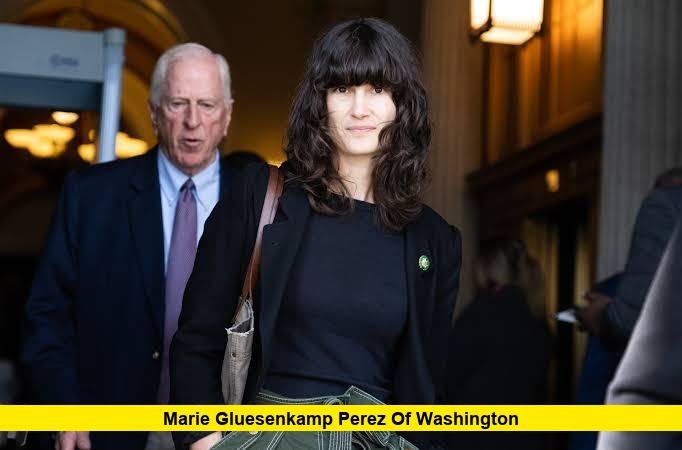

Marie Gluesenkamp Perez of Washington is facing criticism from some House Democrats after she joined Republicans in supporting a key procedural vote that helped advance the GOP’s legislative agenda. The move surprised Democratic leaders and triggered a debate over party unity, bipartisan cooperation, and the role of moderate lawmakers in a closely divided Congress.
The Washington Democrat’s vote came during a House battle over a procedural rule that set up debate on several Republican-backed measures. The vote passed 210-208 after Perez and Democratic Rep. Jared Golden of Maine joined Republicans, allowing Speaker Mike Johnson’s agenda to move forward despite opposition from some members of his own party.
The decision immediately created tension inside the Democratic caucus. House Minority Leader Hakeem Jeffries said Democratic leadership was not informed ahead of time and described the action as a significant breach of trust. Party leaders indicated that they would review the situation and consider possible responses.
Marie Gluesenkamp Perez’s Controversial House Vote
The dispute centers on a House procedural vote, often called a “rule,” that determines how lawmakers debate and consider upcoming legislation. These votes are typically controlled by the majority party and rarely receive support from members of the opposing party.
Perez’s decision to support the Republican-led rule drew attention because Democrats usually oppose procedural moves that help advance the other party’s legislative priorities.
The vote allowed several Republican-backed proposals to move ahead, including measures on issues such as elections, education policy, and environmental regulations. It also opened debate on a resolution targeting socialism, a measure Republicans have promoted as part of their broader political messaging.
For Democratic leaders, the concern was not only about the specific legislation involved but also about maintaining party strategy during a politically competitive period.
Why Marie Gluesenkamp Perez Supported the Measure
Perez explained that her decision was connected to the opportunity to advance legislation affecting working communities and industries. She highlighted concerns about regulations impacting people who depend on natural resources and local industries for their livelihoods.
The Washington lawmaker emphasized that communities involved in fishing and other working waterfront industries need a voice in federal policymaking. She argued that lawmakers should consider the experiences of people directly affected by government decisions.
Her position reflects a political approach that often differs from some members of her party. Perez has built a reputation as a moderate Democrat representing a competitive district where voters include a mix of political viewpoints.
Democratic Leaders React to the Decision
The response from Democratic leadership was swift.
Jeffries and other senior Democrats expressed frustration that Perez and Golden supported the Republican procedural move without informing party leadership beforehand. They argued that members of the caucus should communicate major strategic decisions that could affect the party’s position.
Jeffries said the matter required further discussion and suggested that the caucus rules process could examine what happened.
The reaction highlights a broader challenge for House Democrats: balancing party unity with the independence of lawmakers representing competitive districts.
Moderate Democrats often face pressure to work across party lines, especially when they believe a bipartisan agreement could benefit their constituents. Progressive members, however, have argued that supporting Republican procedural moves can weaken Democratic negotiating power.
A Moderate Democrat in a Competitive District
Marie Gluesenkamp Perez represents Washington’s 3rd Congressional District, a politically competitive area that has received national attention because of its shifting voter landscape.
Since entering Congress, Perez has positioned herself as a Democrat focused on practical solutions, manufacturing, rural communities, and issues affecting working families.
Her voting style has sometimes placed her apart from the Democratic leadership position. Like other moderate lawmakers, she has argued that elected officials should focus on results rather than strict party alignment.
That approach can create challenges within a party caucus, especially when a vote has symbolic importance beyond the legislation itself.
House Democrats Debate Party Unity and Bipartisan Cooperation
The controversy surrounding Perez’s vote reflects a larger debate within both political parties about cooperation and strategy.
Democratic leaders often argue that maintaining unity is essential when facing Republican majorities. They believe coordinated voting strengthens their ability to negotiate and oppose policies they disagree with.
Moderate Democrats counter that lawmakers must also represent the views of their individual districts. They argue that voters often expect representatives to find common ground rather than follow party positions on every issue.
The disagreement is especially significant ahead of future elections, when lawmakers in competitive districts must appeal to a broad range of voters.
Political Impact of the House Vote
The vote placed Perez at the center of a national political conversation about the future direction of the Democratic Party.
Republicans viewed the support from Perez and Golden as evidence that some Democrats are willing to work with them on certain issues. Democrats critical of the move viewed it as a setback for caucus discipline.
The situation also demonstrates how narrow House margins can give individual lawmakers significant influence. A small number of votes can determine whether legislation advances or fails.
In a closely divided chamber, lawmakers from competitive districts can become key figures because their decisions may determine the outcome of major votes.
What Comes Next for Marie Gluesenkamp Perez
The fallout from the vote could continue as Democratic leaders discuss how to respond.
However, Perez’s supporters argue that independent decision-making is part of representing constituents effectively. They say lawmakers should have the ability to support policies they believe help their districts, even when those choices do not align perfectly with party leadership.
The controversy also highlights the challenges faced by members who try to balance local priorities with national party expectations.
As Congress continues working through major policy debates, Perez’s voting decisions will likely remain closely watched by both Democrats and Republicans.
Marie Gluesenkamp Perez of Washington has become a central figure in a new debate over party loyalty, bipartisan cooperation, and the role of moderate lawmakers in today’s divided Congress. What do you think about her decision to cross party lines on the House vote? Share your thoughts and stay updated on the latest developments.