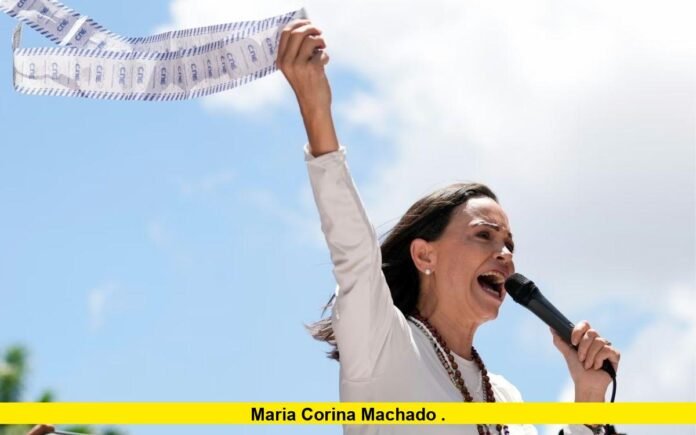

maria corina machado has emerged as one of the most consequential political figures in Venezuela at a moment of extraordinary national upheaval. As dramatic developments reshape the country’s leadership and future direction, her role as a longtime opposition leader and international symbol of democratic resistance has taken on renewed importance for Venezuelans and global observers alike.
Venezuela is experiencing one of the most turbulent periods in its modern history. Military activity, political arrests, and international intervention have converged to alter the balance of power that defined the country for more than a decade. At the center of this shifting landscape stands Maria Corina Machado, whose leadership, resilience, and global recognition have positioned her as a central figure in discussions about Venezuela’s next chapter.
A Nation in Sudden Transition
In early January 2026, Venezuela entered a new phase of political crisis following a rapid escalation involving military operations and the removal of President Nicolás Maduro from power. The events unfolded swiftly, with reports of explosions near key military sites and the detention of Maduro and his wife, who were taken out of the country.
The sudden collapse of the central leadership created a power vacuum that immediately raised questions about governance, stability, and the path forward. While elements of the former administration continued to contest the legitimacy of the intervention, the structure that had sustained Maduro’s rule was severely disrupted.
For millions of Venezuelans facing years of economic hardship, political repression, and mass migration, the moment felt historic. It also placed unprecedented attention on opposition leaders who had spent years challenging the regime from within and outside the country.
Maria Corina Machado’s Long Road to Influence
Maria Corina Machado’s political career has been defined by consistency and confrontation with authoritarian power. As the founder and leader of the Vente Venezuela movement, she became known for her uncompromising stance against both Hugo Chávez and Nicolás Maduro.
Unlike other opposition figures who pursued dialogue or electoral compromises, Machado maintained a hard-line position rooted in democratic principles and institutional reform. She argued that Venezuela’s political crisis could not be resolved without dismantling authoritarian structures and restoring the rule of law.
Her refusal to soften her position led to repeated political retaliation. She was barred from holding public office and disqualified from participating as a presidential candidate, despite winning overwhelming support in opposition primaries. These actions elevated her status among supporters while increasing the risks she faced personally.
Life Under Threat and Leadership in Hiding
For extended periods, Machado lived under constant threat. Surveillance, intimidation, and the arrest of allies forced her into hiding within Venezuela. Despite these conditions, she continued directing opposition strategy, issuing statements, and maintaining international communication networks.
Her ability to lead while underground became a defining chapter in her public image. Supporters viewed her as a symbol of defiance, while critics saw her as polarizing. Regardless of perspective, her influence did not diminish during this period. In fact, it expanded as international attention focused on the human cost of political repression in Venezuela.
Her situation highlighted the broader risks faced by activists, journalists, and civil society leaders across the country, reinforcing the urgency of political change.
Global Recognition and the Nobel Peace Prize
In 2025, Maria Corina Machado received one of the world’s most prestigious honors when she was awarded the Nobel Peace Prize. The recognition marked a significant moment not only for her personally but also for Venezuela’s opposition movement.
The award acknowledged her sustained efforts to promote democratic values, human rights, and peaceful political transition under extreme conditions. It also brought renewed global focus to Venezuela’s prolonged crisis and the voices challenging authoritarian rule.
Machado dedicated the recognition to the Venezuelan people, emphasizing their endurance and resilience. The award elevated her international standing and strengthened her credibility as a leader capable of representing democratic aspirations beyond national borders.
A Changed Political Landscape After Maduro
The removal of Nicolás Maduro fundamentally altered Venezuela’s political terrain. With the central figure of the former government no longer in power, attention shifted to transitional possibilities and the formation of new leadership structures.
In this environment, Maria Corina Machado’s experience and moral authority became increasingly relevant. Her supporters argue that her consistency, personal sacrifices, and international legitimacy make her a natural figure to help guide Venezuela toward democratic reconstruction.
At the same time, the situation remains complex. Venezuela faces institutional breakdown, economic instability, and deep political polarization. Any transition will require careful coordination among domestic actors, civil society, and international partners.
Machado has repeatedly emphasized the importance of restoring democratic institutions rather than replacing one concentration of power with another. Her public statements have focused on rebuilding trust, guaranteeing rights, and ensuring accountability.
Balancing International Pressure and National Sovereignty
One of the most debated aspects of Venezuela’s current moment is the role of international intervention. While many Venezuelans welcomed the end of Maduro’s rule, concerns remain about sovereignty and long-term stability.
Maria Corina Machado has historically supported strong international pressure against authoritarianism while stressing that Venezuela’s future must ultimately be decided by its people. This balancing act places her in a nuanced position as the country navigates external involvement and internal decision-making.
Her challenge lies in translating international support into a sustainable, inclusive political process that addresses humanitarian needs and prevents further division.
What Lies Ahead for Venezuela
Venezuela now stands at a crossroads. The collapse of an entrenched regime creates opportunity, but also risk. Rebuilding institutions, restoring economic stability, and ensuring justice for past abuses will take time and leadership rooted in legitimacy.
Maria Corina Machado’s journey from opposition figure to global symbol of democratic resistance reflects the broader struggle of Venezuelans seeking a future defined by freedom and accountability. Whether she assumes a formal leadership role or continues to shape the process through influence and advocacy, her presence will remain central to the national conversation.
Her story mirrors Venezuela’s own: marked by hardship, resilience, and the possibility of renewal.
How Venezuela navigates this historic moment will shape generations to come—share your perspective and stay connected as the story continues to unfold.