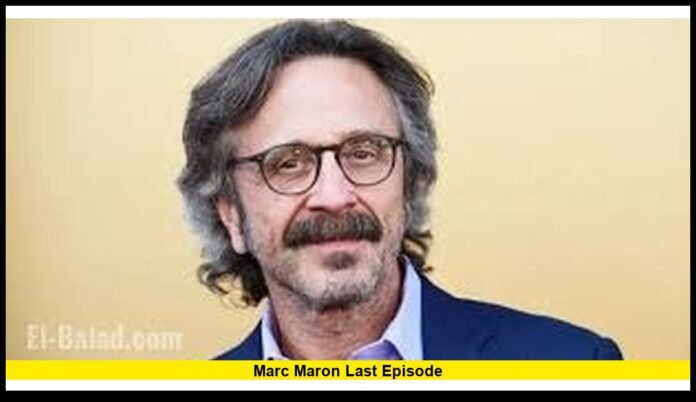

The Marc Maron last episode of WTF with Marc Maron aired on October 13, 2025, and it wasn’t just a goodbye—it was a historic moment for podcasting in the United States. After 16 years and more than 1,600 episodes, Maron chose to close his legendary show with a thoughtful, full-circle conversation with former President Barack Obama. The final episode encapsulated everything the series represented: vulnerability, intelligence, humor, and cultural relevance.
Listeners tuned in not just to hear one last conversation but to witness the closing chapter of a show that helped define the modern podcasting landscape. For many, it felt like saying goodbye to a trusted friend whose voice had been a steady presence for over a decade.
A Full-Circle Conversation with Barack Obama
Maron’s choice of guest for his last episode was no coincidence. In June 2015, Obama’s appearance in Maron’s garage became one of the most talked-about podcast moments in history. That conversation, recorded in Maron’s modest Los Angeles home, elevated podcasting into mainstream American consciousness overnight. Ten years later, they reunited in Washington, D.C., to reflect on that journey, their personal growth, and the cultural shifts since then.
Their conversation was warm and candid. Obama spoke about how the media landscape has fragmented, but how meaningful conversations still matter. Maron, meanwhile, reflected openly on his decision to end the show, discussing how his relationship to the work had evolved over time. There were moments of humor, moments of introspection, and moments that felt like two old friends acknowledging the passage of time.
The setting itself was symbolic: from Maron’s garage to the nation’s capital. It was a literal and metaphorical journey, representing the transformation of a niche project into a cultural institution.
Why Marc Maron Chose to End the Podcast
The decision to bring WTF to a close was not sudden. Maron had spoken publicly about it months in advance, making it clear that this was a carefully considered choice rather than an abrupt exit.
Creative Completion
After interviewing thousands of guests—from comedians and musicians to filmmakers, politicians, and cultural icons—Maron felt the show had reached its natural conclusion. He often described it as “a body of work” rather than a never-ending stream of content. The Marc Maron last episode was designed to be a deliberate, intentional endpoint.
Emotional and Physical Exhaustion
For over a decade, Maron maintained a demanding production schedule, often releasing two episodes per week. Each conversation required emotional investment. By 2025, he and his producer Brendan McDonald admitted they were tired. Maron explained that continuing indefinitely would risk burning out and diminishing the quality of the show.
Ending on Their Own Terms
Maron made it clear that there was no pressure from networks, sponsors, or audiences to stop. This was entirely his and McDonald’s decision. They agreed that the best way to honor the show’s legacy was to end it gracefully, with a proper farewell rather than letting it fade away quietly.
The Journey to the Last Episode: A Timeline of Landmark Moments
The Marc Maron last episode wasn’t just an isolated event—it was the culmination of a rich history that helped shape the cultural landscape. Below is a timeline of defining moments that led to this historic finale:
| Year | Guest/Event | Significance |
|---|---|---|
| 2009 | Launch of WTF in Maron’s garage | A personal project born out of career uncertainty and a need for honest conversations |
| 2010 | Robin Williams interview | A moving and vulnerable discussion that showcased the emotional depth of podcasts |
| 2010 | Louis C.K. two-part reconciliation | A raw public conversation between two comedians mending their fractured friendship |
| 2012 | Todd Glass coming out episode | A powerful moment in LGBTQ+ media and comedy history |
| 2015 | Barack Obama in Maron’s garage | A watershed moment that brought podcasting into mainstream American media |
| 2020 | Maron’s episodes during the pandemic | Honest reflections on grief, fear, and resilience that resonated widely |
| 2025 | Obama returns for the final episode | A full-circle farewell that marked the end of an era |
These milestones illustrate how WTF with Marc Maron became more than just a show. It became a chronicle of cultural change, artistic honesty, and the evolving American conversation.
The Emotional Weight of the Final Episode
The Marc Maron last episode carried a unique emotional gravity. From the opening moments, listeners could sense that this wasn’t a typical interview. Maron didn’t hold back about his mixed feelings: pride in the show’s accomplishments, sadness at its conclusion, and curiosity about what might come next.
Obama, known for his thoughtful and measured style, offered perspective on endings and transitions. He acknowledged Maron’s impact on American culture, highlighting how his show gave space for nuanced conversations at a time when much of media was moving toward sound bites and polarization.
As the episode drew to a close, Maron’s final sign-off was understated but heartfelt. He thanked his listeners for their support, referenced his beloved cats, and ended with his familiar phrase: “Cat angels everywhere.” For longtime fans, it was a nod to the personal touches that made the show feel intimate and real.
Why the Marc Maron Last Episode Matters
The end of WTF with Marc Maron is not just the end of a popular podcast—it’s the end of an era that shaped the cultural fabric of podcasting itself.
Redefining the Interview Format
Before Maron, most interviews were short, promotional, and polished. Maron pioneered the long-form, unscripted, emotionally honest conversation style that many podcasts emulate today.
Bridging Comedy and Culture
Maron’s background in stand-up gave him a unique ability to disarm guests. He blended humor with depth, creating space where celebrities could share genuine thoughts rather than rehearsed sound bites.
Giving Voice to Vulnerability
From artists discussing creative struggles to public figures addressing personal pain, WTF consistently offered moments of human honesty. It built a sense of intimacy that traditional media rarely achieves.
Influencing a Generation of Podcasters
Many of today’s most successful podcasters cite Maron as an influence. His style proved that authenticity resonates with audiences, and that podcasts could be both deeply personal and culturally significant.
Listener Reactions Across the Country
Fans across the United States flooded social media with emotional responses to the Marc Maron last episode. For many, the podcast wasn’t just entertainment—it was a companion through different stages of their lives.
- Longtime listeners shared how they grew up with the podcast, listening during commutes, workouts, and quiet evenings.
- Comedians and artists publicly thanked Maron for providing a platform where they could be vulnerable without judgment.
- Media critics praised the ending as a model for how cultural landmarks should conclude: thoughtfully and on their own terms.
Some fans compared the ending to the conclusion of a beloved TV series or book. It was personal. It was emotional. It mattered.
What Comes Next for Marc Maron
Ending the podcast does not mean Marc Maron is disappearing from public life. He remains active in stand-up comedy, acting, and other creative pursuits. While he has not announced any plans for a new podcast, he has made it clear that he’s taking time to reflect before jumping into another project.
He described this period as a “pause, not a retirement.” After 16 years of consistent podcasting, Maron is giving himself the space to explore what comes next without the pressure of weekly production schedules.
The Legacy of the Last Episode
The Marc Maron last episode will be remembered as a cultural touchstone. It represents the end of one of the most influential podcasts ever produced, but its impact will continue to shape media for years to come.
- It set a new standard for authenticity in media.
- It documented key cultural conversations of the early 21st century.
- It showed how endings, when done intentionally, can be just as meaningful as beginnings.
For many, the final episode was not a goodbye, but a “thank you.” A thank you to Maron for years of honesty, humor, and companionship through the voices of others.
The Marc Maron last episode is more than a farewell—it’s a historic moment that honors the power of conversation, vulnerability, and intentional endings. What are your favorite memories from the show? Share them below and join the discussion.