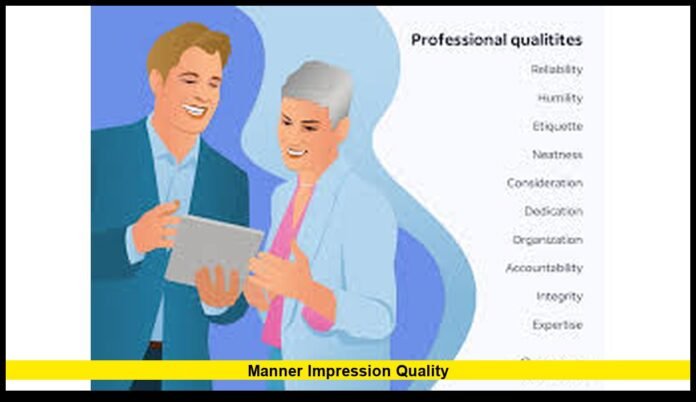

Manner impression quality has become a defining factor in hiring decisions, customer satisfaction, workplace performance, and personal branding across the United States in 2026. Employers, digital platforms, and service organizations now evaluate how individuals communicate, behave, and present themselves because first impressions strongly influence trust and long-term outcomes.
From job interviews to customer interactions, behavior-driven perception plays a measurable role. Modern performance systems increasingly include impression-based metrics alongside technical skills.
Understanding Manner Impression Quality
Manner impression quality refers to the perception created through communication style, behavior, and professional presence.
It blends three essential components:
- Manner: Tone, etiquette, responsiveness, and interpersonal behavior
- Impression: The immediate perception formed during interaction
- Quality: Consistency, credibility, and professionalism over time
Organizations now view these elements as practical performance indicators rather than subjective traits.
In today’s workplace, impression quality affects:
- Hiring outcomes
- Promotion decisions
- Client trust
- Team collaboration
- Brand reputation
Why Employers Are Focusing on Impression Quality
U.S. hiring trends continue to highlight communication behavior as a critical evaluation factor. Employers consistently report that strong technical skills alone no longer guarantee success.
Candidates demonstrating strong manner impression quality typically show:
- Clear and structured communication
- Professional virtual presence
- Emotional awareness in conversations
- Consistent tone across written channels
- Reliable client interaction behavior
The growth of hybrid and remote work accelerated this shift. Many first impressions now occur digitally.
Technology Is Making Impression Quality Measurable
Digital workplace tools increasingly track behavioral signals during communication.
These tools evaluate:
- Response speed
- Tone patterns
- Participation balance in meetings
- Language clarity
- Interaction consistency
Customer service platforms also monitor politeness indicators and empathy markers.
Organizations use these insights mainly for coaching, training, and performance improvement rather than replacement of human judgment.
Customer Experience Depends on Behavioral Perception
Customer experience strategies now rely heavily on manner impression quality because interaction style directly affects loyalty.
Service teams measure:
- Greeting tone
- Problem-resolution approach
- Consistency across chat, phone, and email
- Professional language use
- De-escalation behavior
Companies increasingly connect positive behavioral consistency with retention, repeat purchases, and satisfaction scores.
Industries with frequent client interaction place the strongest emphasis on these metrics.
Digital Presence Shapes Professional Impression
Professional perception no longer forms only in the workplace. Online activity plays a major role.
Recruiters and organizations often review:
- Public communication tone
- Professional responses in discussions
- Video presentation style
- Conflict handling behavior
- Consistency across platforms
Content creators and professionals depend on impression quality to maintain credibility and audience trust. Brand collaborations frequently require communication standards.
Behavioral consistency now outweighs visual presentation in many professional contexts.
Training Programs Are Expanding Nationwide
Workforce training programs across the U.S. increasingly include impression-quality development.
Common training areas include:
- Workplace communication
- Virtual etiquette
- Customer empathy
- Feedback delivery
- Cross-cultural communication
- Conflict resolution
Leadership programs emphasize behavioral presence because management roles rely heavily on perception and communication clarity.
Career readiness initiatives in colleges also integrate these skills.
Industries Where Impression Quality Matters Most
Several industries use structured evaluation frameworks for behavioral interaction.
| Industry | Application |
|---|---|
| Healthcare | Patient communication feedback |
| Finance | Client advisory trust building |
| Retail | Customer satisfaction scoring |
| Technology | Collaboration effectiveness |
| Hospitality | Guest experience ratings |
| Education | Classroom communication reviews |
These environments depend on trust, clarity, and relationship building.
Remote Work Permanently Changed First Impressions
The shift toward remote work transformed how impressions form.
Today, first impressions frequently happen through:
- Video meetings
- Messaging platforms
- Email communication
- Virtual interviews
- Customer chat systems
Written tone and responsiveness now carry the same weight as face-to-face interaction.
Managers increasingly link digital communication behavior with productivity and teamwork outcomes.
Core Behaviors That Strengthen Impression Quality
Improving manner impression quality involves consistent, observable actions.
Key behaviors include:
- Speaking clearly and concisely
- Demonstrating active listening
- Maintaining professionalism under pressure
- Following up reliably
- Communicating respectfully during disagreement
- Structuring responses logically
Consistency creates stronger perception than occasional excellence.
How Organizations Measure Impression Quality
Companies are moving toward structured evaluation frameworks.
Common measurement areas include:
- Tone professionalism
- Clarity of communication
- Responsiveness
- Empathy signals
- Behavioral reliability
- Adaptability across situations
Many HR platforms now integrate these metrics into performance dashboards.
Customer experience software also combines impression quality with satisfaction data to guide training.
Impact on Career Advancement
Career progression increasingly depends on how individuals are perceived, not only what they produce.
Performance reviews often consider:
- Leadership communication style
- Stakeholder interaction quality
- Conflict management approach
- Reliability in high-pressure discussions
Decision-makers frequently view behavioral presence as a differentiator among equally skilled professionals.
Networking success also depends heavily on early interaction quality.
Future Direction: From Soft Skill to Core Metric
Workplace trends indicate that manner impression quality will continue evolving into a core business metric.
Expected developments include:
- Expanded behavioral analytics tools
- Standardized communication scoring in hiring
- Greater integration into performance systems
- Increased training investment
- Higher importance for remote leadership roles
Organizations increasingly connect behavioral consistency with productivity, retention, and brand perception.
This shift positions impression quality as a long-term professional priority.
Manner impression quality now sits at the center of workplace communication, customer experience, and personal reputation. As digital interaction grows, consistent professional behavior continues to shape opportunities and long-term success.
What factors influence your first impression of someone professionally? Share your thoughts and stay updated on workplace trends.