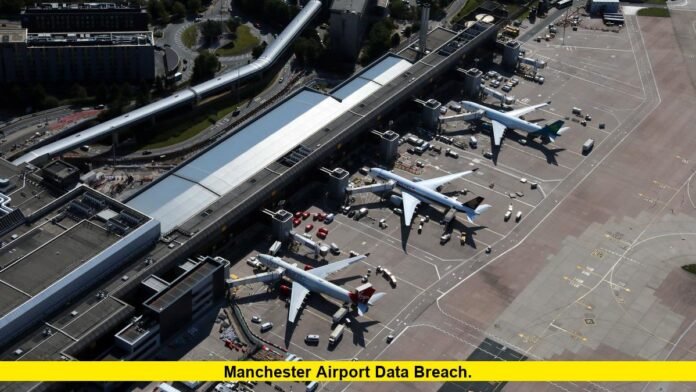

The Manchester Airport data breach has become a major cybersecurity incident involving customer information connected to Manchester Airport and two other airports operated by Manchester Airports Group (MAG). The company confirmed in late August 2026 that an unauthorized third party obtained customer data associated with airport Wi-Fi registrations, car park bookings, lounge bookings and Fast Track services. The incident has since developed further, with reports that stolen information connected to millions of customers was published online after an extortion attempt.
The incident has attracted significant attention because of the reported scale of the exposure. MAG has said that passenger safety, aviation security and airport operations were not compromised. The information involved is primarily personal and contact information rather than banking or payment information.
What Happened in the Manchester Airport Data Breach
Manchester Airports Group announced the cybersecurity incident on August 27, 2026. MAG operates Manchester Airport, London Stansted Airport and East Midlands Airport, meaning the incident was not limited to Manchester Airport alone.
According to MAG, an unauthorized third party obtained customer information associated with several services across the three airports. These included airport Wi-Fi registrations as well as information connected with car parking, lounge and Fast Track bookings.
MAG said it acted to contain the incident after becoming aware of the unauthorized access. The company restricted access to affected systems, brought in specialist cybersecurity advisers and notified relevant authorities.
The incident did not disrupt airport operations. Flights, passenger processing and other core airport activities continued operating normally.
MAG has also emphasized that the affected systems did not hold customers’ bank or payment details. This distinction is important because the breach involves personal information, but there is no official indication that customers’ credit card or bank account information was accessed.
How Many Customers Were Affected
The number most widely associated with the Manchester Airport data breach is approximately 8.7 million customers.
MAG has confirmed that a significant quantity of customer data was obtained, while reporting about the incident has put the affected population at around 8.7 million people across Manchester, Stansted and East Midlands airports.
The majority of the affected information reportedly relates to email addresses collected through airport Wi-Fi registrations. Other customer records may contain additional information associated with airport services.
It is important not to interpret the 8.7 million figure as meaning that every individual had every type of personal information exposed. The information associated with different customers can vary depending on which airport service they used.
Reports following the initial disclosure have also described the publication of allegedly stolen data by the group claiming responsibility for the attack. However, specific claims made by threat actors about the precise contents, size or technical details of stolen databases should be distinguished from information officially confirmed by MAG.
What Information Was Exposed
MAG has confirmed that the information accessed included several categories of customer data.
These include:
- Email addresses
- Phone numbers
- Vehicle registration numbers
- Postcodes
- Information associated with airport Wi-Fi registrations
- Information connected with car park, lounge and Fast Track bookings
The exact information associated with an individual customer depends on the services that person used.
The company has specifically stated that neither MAG nor the affected system held customers’ bank or payment details. There is also no official confirmation from MAG that passport information or aviation-security information was accessed.
Some reports have discussed additional information allegedly contained in material published by the attackers. Those claims should not automatically be treated as an official description of the Manchester Airport data breach. The confirmed position remains that customer information connected to the services identified by MAG was obtained.
Manchester Airport Operations Were Not Compromised
One of the most important aspects of the incident is the distinction between customer information systems and airport operational systems.
MAG has stated that the cybersecurity incident did not affect airport operations. Passenger safety and aviation security were also not compromised.
This means the breach should primarily be understood as a customer-data security incident rather than an attack that brought Manchester Airport’s aviation infrastructure to a halt.
Airport passengers have therefore been able to continue traveling as normal. Existing bookings were also not automatically canceled or invalidated because of the cybersecurity incident.
The situation demonstrates why a data breach does not necessarily mean that an organization’s physical operations have been shut down. A company can experience unauthorized access to customer information while its essential operational systems continue functioning.
What Is a Data Breach?
A data breach occurs when information held by an organization is accessed, obtained, disclosed or exposed without authorization.
A breach can happen in different ways. Criminal attackers may gain unauthorized access to computer systems, employees may accidentally disclose information, or a security weakness may allow someone to obtain data that they were not supposed to access.
The type of information involved can also vary considerably. A breach might expose names and email addresses, while another incident could involve passwords, financial information, medical records or other sensitive information.
In the Manchester Airport case, the confirmed information includes contact details and information associated with airport services. The fact that payment information was not held in the affected system significantly distinguishes this incident from breaches involving stolen credit card or banking information.
A data breach can nevertheless create risks even when financial information is not involved. Email addresses, phone numbers, postcodes and travel-related information can potentially make fraudulent communications more convincing.
Why the Exposed Information Matters
Personal information such as an email address or phone number may appear less sensitive than a credit card number, but it can still have value to criminals.
Attackers can potentially use legitimate-looking details to make phishing attempts appear more credible. For example, someone who knows that an individual has used an airport service may be able to create a message that appears related to travel, parking, a booking or another airport-related matter.
Vehicle registration information and postcodes can also provide additional context about a person. When several pieces of information are combined, they can potentially create a more detailed profile than any individual piece of data would provide.
For this reason, customers affected by the Manchester Airport data breach should remain cautious about unexpected communications even if they do not believe their financial information was exposed.
Latest Update on the Manchester Airport Data Breach
The incident has developed beyond the initial August disclosure.
In early September 2026, cybersecurity reporting indicated that the threat group FulcrumSec had claimed responsibility for the attack and published data it said had been stolen from Manchester Airports Group. Multiple cybersecurity publications reported that information associated with millions of customers had been released following an unsuccessful extortion attempt.
The reported publication of stolen information makes the incident more serious from a privacy and fraud-risk perspective because information that has already been obtained by unauthorized parties may be copied or redistributed.
However, not every technical claim made by the alleged attackers has been independently confirmed by MAG. The company has officially confirmed the cybersecurity incident and unauthorized access to customer data, but claims about the precise method used to enter systems, the complete size of the stolen material and every category allegedly contained in the published data should be treated separately from MAG’s confirmed statements.
The latest verified picture is therefore that a significant customer-data breach occurred, approximately 8.7 million customers have been reported as affected, and information associated with airport services was obtained. Reports subsequently indicated that stolen data was published online.
What Affected Customers Should Do
Customers who have received a notification from MAG should take reasonable precautions against follow-up scams.
The most important step is to treat unexpected emails, text messages and phone calls with caution. A message that contains a person’s real email address, phone number, travel details or other personal information should not automatically be considered legitimate.
Customers should:
- Avoid clicking unexpected links in emails or text messages.
- Avoid opening unexpected attachments.
- Be cautious about anyone requesting passwords, banking information or payment details.
- Verify airport-related communications through independently accessed official channels.
- Use strong, unique passwords for important online accounts.
- Enable two-factor authentication wherever it is available.
- Monitor accounts for unusual activity and report suspicious communications.
MAG has specifically warned customers that it will not unexpectedly request payment-card information, banking information or passwords.
People should also be particularly careful with messages claiming that an airport booking requires an urgent payment, cancellation fee or account verification. The exposure of customer information can make fraudulent messages appear more convincing.
What the Breach Means for Existing Airport Bookings
The cybersecurity incident did not invalidate customers’ existing bookings.
MAG has stated that upcoming bookings remain valid and that the incident did not affect airport operations. The company also indicated that customers wishing to change or cancel bookings because of the incident could do so without a charge under its stated arrangements.
This is an important distinction for travelers. A compromised customer-information system does not automatically mean that flight reservations, airport parking arrangements or other services have been canceled.
Travelers should continue to follow the normal instructions associated with their bookings while remaining alert for fraudulent messages that attempt to exploit the breach.
Who Is Responsible for the Incident?
MAG has described the incident as unauthorized access by a third party.
Later reporting attributed the attack to FulcrumSec, an extortion-focused hacking group. The group reportedly attempted to pressure MAG into paying a ransom and subsequently published stolen information after the demand was not accepted.
The ransom amount has not been publicly disclosed by MAG.
It is important to distinguish attribution reported by cybersecurity researchers and media organizations from information officially confirmed by the affected company. While the broader cyber incident is confirmed, detailed claims about the attackers’ identity, methods and complete data holdings should be treated cautiously unless independently verified.
Why the Manchester Airport Data Breach Is Significant
The incident is significant because of both its scale and the nature of the organization involved.
Manchester Airport is one of the United Kingdom’s busiest airports, and MAG operates multiple major airports. A cybersecurity incident involving customer systems can therefore affect people who interacted with different airport services over an extended period.
The reported 8.7 million affected customers also illustrates how seemingly routine information collected for services such as Wi-Fi access, parking and airport upgrades can become valuable when aggregated.
The incident is a reminder that data security is not limited to protecting passwords and financial information. Contact details, location information, vehicle registrations and records associated with travel can also require strong protection.
Public Interest and Cybersecurity Concerns
The Manchester Airport data breach has generated broader public interest because it occurred at a time when cyberattacks against major organizations and infrastructure operators remain a significant concern.
For consumers, the most immediate concern is the potential misuse of exposed information. For businesses, the incident highlights the importance of protecting customer databases, controlling access to third-party services and limiting unnecessary exposure of personal information.
The incident also demonstrates why organizations need clear procedures for detecting unauthorized access and communicating with customers quickly after a breach is discovered.
MAG said it moved to contain the incident, engaged cybersecurity specialists and notified relevant authorities. The investigation and response remain important for determining precisely how the unauthorized access occurred and what additional measures may be required.
Latest Position for Customers
As of the latest available information on September 7, 2026, the Manchester Airport data breach remains a significant customer-data security incident involving Manchester Airports Group and its three airports: Manchester, London Stansted and East Midlands.
The confirmed information includes email addresses, phone numbers, vehicle registrations and postcodes connected with airport Wi-Fi registrations, parking, lounge and Fast Track services.
Approximately 8.7 million customers have been reported as affected. Subsequent reports indicate that data associated with the incident was published by the attackers after an extortion attempt.
There is no official indication that the incident compromised passenger safety or aviation security, and MAG has stated that airport operations remain unaffected. There is also no official confirmation that customer bank or payment details were accessed; MAG has said those details were not held in the affected system.
Customers who have been contacted should remain vigilant for phishing, impersonation and other scams that may use genuine personal information to appear credible.
Final Thoughts
The Manchester Airport data breach is a major example of how a cybersecurity incident involving customer-service systems can affect millions of people without disrupting airport operations.
The most important confirmed facts are that unauthorized access occurred, customer information connected with Manchester, Stansted and East Midlands airports was obtained, and approximately 8.7 million customers have been reported as affected. The exposed information includes email addresses, phone numbers, vehicle registrations and postcodes, while MAG has said that bank and payment details were not held in the affected system.
With reports that stolen information has subsequently been published, affected customers should remain alert to suspicious communications. A data breach does not automatically mean that every customer will experience fraud, but exposed personal information can increase the risk of convincing phishing and impersonation attempts.
The situation may continue to develop as investigations progress and additional verified information becomes available.
Stay alert to verified updates on the Manchester Airport data breach and share your experience or information in the comments if you have been affected.