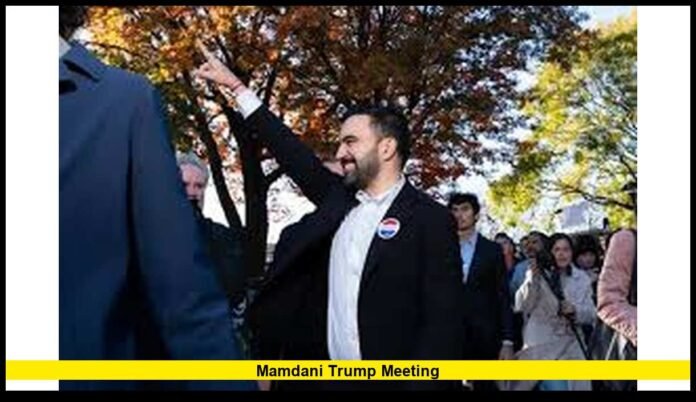

The Mamdani Trump meeting has become one of the most closely watched political moments of the season, drawing national attention as New York City Mayor-elect Zohran Mamdani steps into the White House for his first formal conversation with President Donald Trump. The meeting brings together two leaders with sharply different visions at a time when the city is preparing for major transitions. With public expectations high and policy stakes even higher, this conversation represents far more than a ceremonial handshake.
A Turning Point for the Mayor-Elect
Zohran Mamdani enters this meeting amid unusually intense public focus. His victory surprised many observers and energized voters who supported his platform centered on affordability, economic fairness, and strengthening social programs. As he prepares to assume office, he has emphasized that building a working relationship with Washington is essential to carrying out his agenda.
From the moment the meeting was announced, speculation surged about how the discussion would unfold. The mayor-elect has described the encounter as an opportunity to advocate for the needs of New Yorkers and to ensure that federal-city cooperation remains stable during his administration. Although he has not softened his policy positions, he has made clear that productive dialogue matters more than political rivalry.
The White House confirmed the meeting shortly after the mayor-elect requested it, signaling recognition of the importance of maintaining communication with the nation’s largest city. For Mamdani, it is a chance to show leadership on the national stage before he even steps into City Hall.
Why the Meeting Carries National Weight
This meeting is not just for New Yorkers. It has implications for urban policy, federal support, and the broader political climate across the country. New York City relies heavily on federal partnerships for funding that supports transportation, emergency response, public safety, and housing programs. Any shift in Washington’s relationship with the incoming mayor could influence billions in resources and long-term planning.
At the same time, the conversation illustrates a striking political contrast. On one side is a mayor-elect with a progressive economic message, built on expanding tenant protections and addressing structural inequality. On the other is a president who shaped his national message around economic nationalism, public safety initiatives, and making federal funding conditional on local cooperation.
The discussion between them highlights the tension—and potential for collaboration—between two sharply different governing philosophies. The outcome may signal how federal-city relationships function in the months ahead.
What Mamdani Hopes to Accomplish
Mamdani has outlined several priorities for the meeting, and all of them tie to the challenges facing New Yorkers:
- Affordability: He aims to address soaring living costs, which have strained families across the five boroughs. Rent instability, limited affordable housing, and uneven wage growth continue to dominate the concerns of residents.
- Public Safety: While supporting strategies that address long-term social needs, he also intends to advocate for programs that strengthen emergency services and improve responses to crises.
- Housing and Economic Support: Federal housing assistance and economic development programs remain crucial for a city balancing budget demands with continued population needs.
- Partnership With Washington: Mamdani wants to establish clear communication pathways, especially on issues where city and federal priorities overlap.
Throughout his comments leading up to the meeting, Mamdani has insisted that his focus remains on representing everyday New Yorkers. He has described the meeting as a necessary step to secure support for the city’s major initiatives. His approach underscores a belief that advocating directly with federal leadership can generate tangible benefits, even in moments of political disagreement.
Where Trump’s Priorities Fit In
President Trump approaches this meeting with his own set of priorities. While he has publicly commented on differences with New York City’s political leadership, he has also pointed to the importance of maintaining a functioning relationship with one of the country’s most influential cities.
Heading into this discussion, several federal objectives may be part of the conversation:
- National Public Safety Strategy: The administration has continued to promote policies that increase federal cooperation with local enforcement agencies.
- Immigration Enforcement: The federal stance on immigration has historically been a major point of conflict with New York, raising questions about how both sides will navigate this issue.
- Economic Policy: A city with global financial influence naturally intersects with federal economic goals, making the topic likely to surface.
- Funding Expectations: The use and distribution of federal grants for transportation, security, and infrastructure remains a priority for the administration.
While the two leaders have clashed publicly before, recent remarks suggest that both are willing to approach the conversation with a degree of pragmatism.
Clashing Ideologies, Shared Responsibilities
The meeting is striking because of the contrasting backgrounds of the two men.
Mamdani built his campaign on grassroots engagement, tenant protections, and equity-driven reforms. His message resonated with voters seeking solutions to affordability challenges and a shift in traditional city policymaking. His rise reflects the growing influence of progressive leadership in major cities.
Trump, on the other hand, approaches issues from a national and security-oriented perspective, emphasizing policies that prioritize federal oversight and economic stability. His leadership style is direct and assertive, shaped by years of public political debates.
Despite these ideological differences, there are undeniable shared responsibilities. Federal programs support public transportation, protect public housing, enhance emergency response systems, and bolster economic growth. If the two leaders find a path toward cooperation, many initiatives could benefit.
Major Themes Expected to Shape the Conversation
1. Federal Funding Stability
New York City’s ability to plan long-term projects depends heavily on consistent federal funding. Budget predictability for housing authorities, public schools, transit upgrades, and emergency programs may be a major point of discussion.
2. Citywide Affordability Challenges
Mamdani is expected to outline how federal assistance can ease the city’s housing crisis. Rising rents and limited supply affect neighborhoods across the boroughs, making it a central issue for the incoming administration.
3. Public Safety and Infrastructure
Both leaders share an interest in improving emergency response and protecting vital infrastructure. From transit modernization to climate resilience, these topics may present opportunities for common ground.
4. Immigration and Community Relations
This remains one of the most sensitive issues between New York City and the federal government. While disagreements are likely, communication could still shape how both sides approach enforcement and community support.
5. Economic Development
With New York serving as a global financial center, the meeting may address how federal policy influences local jobs, investment, and economic recovery.
Potential Outcomes After the Meeting
While neither side has publicly committed to specific announcements, several possibilities are on the horizon:
- A clearer understanding of cooperation on public safety and emergency projects
- Signals about the future of federal housing assistance
- A more stable communication channel between City Hall and the White House
- Commitments to continue discussions on major budget items
- Clarification on how both leaders will navigate policy differences
The tone following the meeting may be just as important as the content. A constructive statement from either side could ease concerns. A more confrontational tone may raise new questions about how city and federal initiatives will interact.
Public Interest and Political Impact
The meeting has already reshaped political conversations among New Yorkers. Supporters of Mamdani see it as a key step toward advancing progressive policies at the city level. Skeptics are watching closely to see how the mayor-elect navigates the national stage.
Nationally, the meeting has captured interest because it reflects the broader conversation about how cities and the federal government negotiate their differences. Many large cities face similar issues: rising housing costs, the need for modern infrastructure, and pressure to support vulnerable residents. The way these two leaders engage could serve as a reference point for future relationships between local and national governments.
Why This Conversation Matters for the Future
The stakes surrounding the meeting extend well beyond one hour in the Oval Office. As the city prepares for a new administration, the mayor-elect must balance campaign commitments with practical governing needs. Strong federal relationships can influence a city’s ability to fund major projects, strengthen public services, and prepare for emergencies.
For the administration, working with New York allows it to shape policy outcomes in areas that affect millions of people and contribute significantly to the national economy. Both sides have something to gain from cooperation—and something to lose if the relationship falters.
The conversation serves as an early indicator of how the incoming mayor will navigate federal politics. It will also shape public expectations for his leadership as he prepares to take office.
Conclusion
The Mamdani Trump meeting marks a defining moment for New York City and an important signal for national politics. With high stakes on both sides, the discussion will help establish how two leaders with opposite visions can navigate shared responsibilities. As New Yorkers and observers across the country watch closely, the outcomes of this meeting may influence the city’s trajectory and federal-city collaboration for years to come.
Share your thoughts below and let us know how you think this major political moment will shape the city’s future.