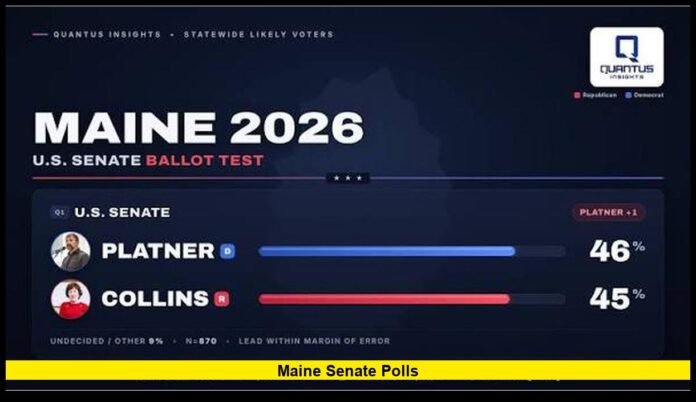

Maine senate polls remain one of the biggest political stories of the 2026 election cycle as voters prepare for a closely watched U.S. Senate race. The campaign changed significantly after Democrats selected former Maine Senate President Troy Jackson as their nominee following Graham Platner’s withdrawal. Republican Senator Susan Collins is seeking another term, setting up a high-profile contest that has attracted attention across the country. Recent polling continues to show a competitive race, making Maine one of the key battleground states in the fight for control of the U.S. Senate.
Why Maine Is a Key Senate Battleground
Every Senate election receives attention, but Maine often stands apart because of its unique political landscape. Unlike many states that consistently favor one political party, Maine has a long tradition of electing candidates from both Republicans and Democrats. Independent voters also make up a significant share of the electorate, and their decisions often determine statewide races.
That political balance has made the 2026 Senate contest one of the nation’s most important elections. National parties, political organizations, and campaign strategists are closely following every development because the outcome could influence the balance of power in Washington.
The state’s electorate is known for rewarding candidates who build strong personal connections with voters rather than relying only on party affiliation. As a result, campaigns in Maine often focus heavily on local concerns instead of national political messaging.
Current Candidates in the Race
The race now features two major candidates.
Susan Collins
Susan Collins has represented Maine in the U.S. Senate since 1997. Throughout her Senate career, she has developed a reputation for working across party lines while remaining one of the most recognizable political figures in the state.
Her experience, statewide organization, and long record in public office provide significant advantages as she campaigns for another six-year term.
Troy Jackson
Troy Jackson officially became the Democratic nominee after party delegates selected him following Graham Platner’s exit from the race.
Jackson previously served as President of the Maine Senate and has spent years representing northern Maine. Before entering politics, he worked as a logger, and he continues to highlight his working-class background during the campaign.
His nomination quickly unified Democratic leaders behind a single candidate heading into the general election.
Latest Maine Senate Polls
Recent public polling shows that the race remains highly competitive.
Most surveys conducted during the election cycle have found only a narrow difference between the Republican and Democratic candidates. Several polls placed the candidates within the margin of error, indicating that neither side has established a decisive lead.
While earlier surveys measured Susan Collins against Graham Platner, newer polling is beginning to reflect the updated Democratic ticket after Troy Jackson became the nominee.
The available numbers suggest that voters remain closely divided, making every campaign event and policy discussion increasingly important as Election Day approaches.
Why Polls Continue to Change
Polling represents a snapshot of public opinion at a specific moment rather than a prediction of the final outcome.
Several factors can influence survey results throughout a campaign.
These include:
- Candidate debates
- Campaign advertising
- Economic conditions
- National political developments
- Voter registration efforts
- Candidate appearances across the state
Because many Maine voters do not firmly identify with either major party, public opinion can shift during the final months before the election.
Susan Collins’ Strengths
As the incumbent senator, Collins begins the campaign with several important advantages.
Years of Experience
Few Senate candidates possess as much experience as Collins. She has represented Maine in Washington for nearly three decades and has built relationships across both political parties.
Statewide Recognition
Almost every voter in Maine is familiar with Collins because of her long public career. High name recognition often benefits incumbents during competitive elections.
Campaign Organization
Years of statewide campaigns have helped Collins build a large network of volunteers, supporters, and campaign staff throughout Maine.
Fundraising
Incumbent senators generally begin campaigns with substantial fundraising advantages, allowing them to advertise earlier and reach more voters across television, digital platforms, and direct mail.
Troy Jackson’s Campaign Strengths
Jackson enters the race with his own set of advantages.
Working-Class Background
Jackson frequently speaks about his experience growing up in northern Maine and working in the logging industry. His campaign emphasizes economic issues affecting families, labor, and rural communities.
Legislative Experience
Serving in the Maine Legislature, including as Senate President, provided Jackson with years of experience handling statewide policy issues.
Democratic Unity
After becoming the Democratic nominee, Jackson quickly received broad support from party leaders, activists, and organizations looking to compete for the Senate seat.
Appeal Beyond Traditional Democratic Areas
Jackson’s background may help him connect with rural voters who have supported candidates from both political parties in previous elections.
Read More – Senate GOP Trust Issues Trump: Why Republican Divisions Are Becoming Harder to Ignore in Washington
Major Issues Influencing Voters
Several important topics continue shaping voter opinions across Maine.
The Economy
Economic concerns remain among the highest priorities for voters.
Many families continue focusing on:
- Household expenses
- Inflation
- Housing affordability
- Utility bills
- Job opportunities
Candidates continue presenting different ideas for strengthening Maine’s economy while supporting businesses and workers.
Healthcare
Healthcare remains a major issue across both rural and urban communities.
Many voters continue paying close attention to:
- Access to healthcare providers
- Rural hospitals
- Prescription drug affordability
- Medicare
- Health insurance costs
Healthcare often becomes one of the deciding factors in statewide elections because it affects residents throughout Maine.
Immigration
Immigration has become a larger campaign issue than in previous Senate races.
The candidates have presented different approaches, giving voters a clear policy contrast as they compare priorities before Election Day.
Energy Costs
Energy prices remain important for many households, particularly during Maine’s long winters.
Campaign discussions frequently include:
- Home heating costs
- Electricity prices
- Energy reliability
- Domestic energy production
Independent Voters Could Decide the Election
Maine has one of the largest groups of independent-minded voters in the country.
Many residents evaluate candidates individually instead of voting automatically for one political party.
Independent voters often consider:
- Leadership experience
- Candidate character
- Economic plans
- Local issues
- Record in public office
Because these voters frequently determine close elections, campaigns spend considerable effort reaching them throughout the state.
Regional Voting Trends
Different regions of Maine often produce different election results.
Southern Maine
Southern communities generally include larger population centers and have become increasingly competitive in statewide elections.
Northern Maine
Northern Maine contains many rural communities where Troy Jackson has built political relationships during his legislative career.
Coastal Areas
Coastal communities frequently feature competitive voting patterns, making them important targets for both campaigns.
Central Maine
Central Maine often includes a mix of urban and rural voters, creating another key battleground during statewide elections.
Campaign Spending Will Increase
As Election Day approaches, campaign spending is expected to grow significantly.
Television advertising, digital outreach, direct mail, and voter contact programs will become increasingly visible across Maine.
Outside political organizations are also expected to devote substantial resources to the race because of its national importance.
Heavy campaign activity usually increases voter awareness while encouraging higher turnout during competitive elections.
The Importance of Debates
Candidate debates often become major moments in statewide campaigns.
Debates allow voters to compare:
- Leadership style
- Policy positions
- Communication skills
- Knowledge of state issues
Strong debate performances can influence undecided voters, especially during the final weeks before Election Day.
How Maine’s Election History Shapes Expectations
Maine has developed a reputation for competitive statewide elections.
The state has repeatedly elected Republicans, Democrats, and independent candidates to major offices.
This tradition reflects the willingness of Maine voters to evaluate each candidate individually rather than relying solely on party labels.
That history helps explain why polling margins often remain narrow throughout Senate campaigns.
What the Poll Numbers Mean
When reviewing polls, it is important to remember that a small lead does not guarantee victory.
Most recent surveys indicate a competitive environment in which relatively small changes among independent voters could affect the outcome.
Political campaigns also monitor internal research, voter outreach, and turnout operations in addition to public polling.
As Election Day moves closer, additional surveys will provide a clearer picture of voter preferences.
What to Watch During the Campaign
Several developments will likely shape public opinion over the coming months.
Key areas include:
- New statewide polling
- Candidate debates
- Campaign advertisements
- Fundraising reports
- Public appearances
- Voter turnout efforts
Each of these developments may influence how voters evaluate the candidates before casting their ballots.
Current Outlook
At this stage of the campaign, the contest remains one of the closest Senate races in the United States.
Susan Collins enters the election with the advantages that come from serving as an incumbent senator and maintaining strong statewide recognition. Troy Jackson begins the general election campaign with extensive legislative experience, broad Democratic support, and a background that appeals to many working-class voters.
The latest maine senate polls continue to reflect a competitive race without a decisive favorite. With independent voters expected to play a major role once again, both campaigns will spend the coming months working to persuade undecided voters across every region of the state.
The outcome will not only determine who represents Maine in the U.S. Senate but will also be closely watched nationwide because of its potential impact on the balance of power in Congress.
The campaign is still unfolding, and upcoming developments will keep this race in the national spotlight. Share your thoughts on the election and check back for the latest updates as the contest continues.