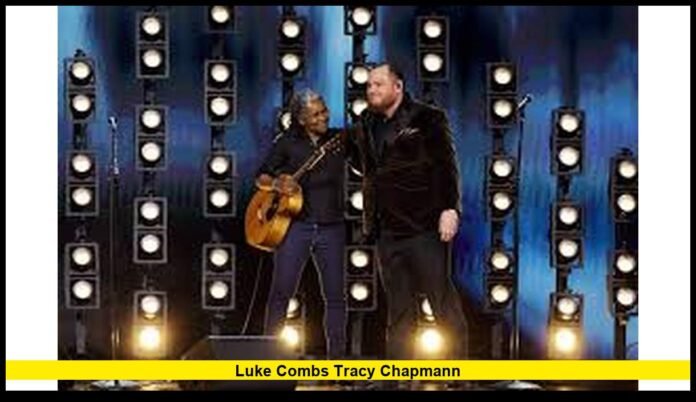

Luke Combs Tracy Chapman became one of the most significant and talked-about pairings in American music after a single song connected two artists from different generations, genres, and audiences. As of today, their shared moment around “Fast Car” remains a defining cultural event, marked by chart success, industry recognition, and a rare live performance that continues to resonate across the U.S. music landscape.
This in-depth report looks closely at how that connection formed, what has happened since, and why the impact still holds weight today.
The Song That Linked Two Careers
The connection between Luke Combs and Tracy Chapman centers entirely on “Fast Car,” a song Chapman wrote and released in 1988. Decades later, Combs recorded the song without altering its lyrics or structure, choosing to preserve the story exactly as it was written.
When the cover was released as a single in 2023, it quickly gained momentum. Country radio embraced it, while listeners outside the genre responded to its emotional honesty. Chapman remained the sole songwriter, maintaining full creative ownership.
That foundation of respect shaped everything that followed.
A Rare Cross-Genre Breakthrough
Luke Combs’ version of “Fast Car” achieved something unusual in modern music. It connected folk storytelling, country radio, and pop listeners without being reworked to fit trends.
The song reached the top of the U.S. Country Airplay chart, creating a historic milestone. Tracy Chapman became the first Black woman to earn a solo songwriting credit on a country No. 1 hit.
The achievement carried both commercial and cultural importance.
Why the Cover Resonated So Strongly
Several factors contributed to the song’s success:
- The lyrics remained unchanged and deeply personal
- The melody stayed simple and familiar
- The delivery focused on emotion rather than production
Listeners recognized the authenticity immediately. The song did not rely on nostalgia alone. It felt current because its themes remain relevant.
That balance helped it cross generational lines.
Tracy Chapman’s Position and Public Response
Tracy Chapman has long avoided the spotlight, making the renewed attention notable. She issued a brief but clear public response expressing appreciation for the new audience discovering her work.
She acknowledged Luke Combs’ respect for the song and welcomed the renewed conversation around it. Her involvement stopped there, consistent with her approach throughout her career.
Chapman allowed the music to lead, not publicity.
Luke Combs’ Perspective on the Moment
Luke Combs repeatedly stated that he viewed “Fast Car” as one of the greatest songs ever written. He described his version as a tribute, not a reinterpretation.
In interviews and public appearances, Combs credited Chapman’s songwriting and emphasized that the story belonged to her. He also highlighted how meaningful it was to share credit rather than claim ownership.
That clarity helped the collaboration avoid controversy.
Awards Season and Industry Attention
The success of the song carried into awards season, drawing attention from across the music industry. “Fast Car” received major nominations tied to its resurgence and performance impact.
The attention culminated at the 2024 Grammy Awards, where one moment stood above the rest.
The Grammy Performance That Captured the Nation
At the Grammy ceremony, Tracy Chapman and Luke Combs performed “Fast Car” together live. Chapman opened the song alone with her acoustic guitar before Combs joined her.
The performance was understated, focused entirely on the song. There were no visual effects or elaborate staging. That simplicity drew praise from viewers and critics alike.
It marked Chapman’s first major televised performance in years and became one of the most widely discussed moments of the night.
Immediate Aftereffects of the Performance
Following the Grammy appearance:
- Streams of Chapman’s original recording surged
- Digital sales of both versions increased
- Social media engagement spiked across platforms
Younger listeners discovered Chapman’s catalog for the first time. Longtime fans revisited her music with renewed interest.
The moment had lasting momentum.
Reinforcing Tracy Chapman’s Legacy
The renewed spotlight reinforced Tracy Chapman’s place in American music history. Her songwriting once again became central to discussions about storytelling, authorship, and authenticity.
“Fast Car” proved its durability across decades without modification. The song’s success reaffirmed that strong narratives do not expire.
Chapman’s influence now clearly spans generations.
What the Moment Meant for Luke Combs’ Career
For Luke Combs, the connection added depth to an already successful career. While known for chart-topping country hits, this moment highlighted his respect for music history.
The song introduced him to listeners who may not typically engage with country music. It also positioned him as an artist willing to step aside and let the song lead.
That distinction continues to shape his public image.
Cultural Meaning of Luke Combs Tracy Chapman
The Luke Combs Tracy Chapman story stands out because it avoided common industry pitfalls. There was no dispute over credit, no rebranding, and no attempt to modernize the lyrics.
Instead, it showed how collaboration can exist without compromise. The pairing became a symbol of artistic respect.
This approach resonated strongly with U.S. audiences.
Impact on Songwriting Recognition
The success of “Fast Car” renewed conversations about songwriting ownership and recognition. Chapman’s full credit and financial benefit were widely noted.
Songwriters across genres pointed to the moment as a reminder of the value of original work. The industry took notice of how proper credit can coexist with commercial success.
The lesson extended beyond this single song.
Radio, Streaming, and Long-Term Performance
Even after its initial chart run, the song maintained presence across radio and streaming platforms. Luke Combs’ version remained a country staple, while Chapman’s original found renewed life.
Playlists across genres featured both recordings, keeping the song in active rotation.
That sustained performance continues today.
Public Reaction and Fan Perspectives
Fans responded emotionally to the collaboration. Many shared personal stories tied to “Fast Car,” explaining how the song shaped different moments in their lives.
The Grammy performance, in particular, drew praise for its sincerity. Viewers described it as grounding and authentic.
The response went beyond typical fan excitement.
Why the Story Still Matters Today
As of today, the Luke Combs Tracy Chapman connection remains relevant because it represents something rare. It shows how modern success can uplift original artistry rather than overshadow it.
The story continues to be referenced in discussions about music ethics, respect, and longevity.
It has become a benchmark moment.
No Follow-Up Collaboration Confirmed
Despite widespread interest, no additional collaboration has been announced. The artists’ connection remains centered solely on “Fast Car.”
Tracy Chapman has not revealed new recording or touring plans. Luke Combs continues to release music and tour independently.
The story stands complete without extension.
A Moment That Didn’t Need Repetition
The power of the collaboration lies in its restraint. It did not require follow-ups, marketing campaigns, or repeated appearances.
One song, one performance, and mutual respect created lasting impact.
That restraint adds to its significance.
How the Industry Continues to Reference the Moment
Music professionals continue to reference the collaboration when discussing:
- Cross-genre success
- Respectful covers
- Songwriter recognition
- Cultural longevity
The moment has become a case study without being overstated.
Its influence remains subtle but strong.
A Shared Chapter in Music History
Luke Combs and Tracy Chapman did not merge careers. They shared a chapter. That chapter highlighted the power of storytelling and authenticity.
Their connection reshaped how audiences view covers and collaborations.
It left a permanent mark.
Final Thoughts on Luke Combs Tracy Chapman
The legacy of Luke Combs Tracy Chapman rests on honesty, respect, and the enduring power of a well-written song. It showed that music can connect generations without changing its message.
What did this moment mean to you as a listener? Share your thoughts and stay engaged as music history continues to unfold.