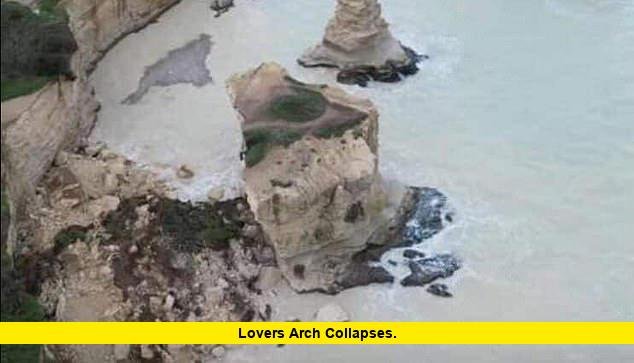

On Valentine’s Day weekend, Italy’s iconic lovers arch collapses into the Adriatic Sea, dramatically reshaping part of the Puglia coastline and stunning visitors from around the world. What had been one of the most photographed natural rock formations on Italy’s Adriatic coast is now a pile of rubble, its absence felt by travelers, locals, and lovers alike.
If you’ve ever visited a scenic place that took your breath away, share that memory in the comments — your story matters.
The natural formation known as Lovers Arch stood at Torre Sant’Andrea near Melendugno, overlooking turquoise waters and limestone cliffs. For years, couples chose this location for marriage proposals, romantic photos, and unforgettable travel memories. Over Valentine’s weekend, though, intense storms, heavy rainfall, and powerful coastal winds finally overwhelmed the already fragile rock structure, sending it crashing into the sea.
Despite its collapse, the story of Lovers Arch highlights enduring themes of nature’s power, coastal change, and the human connection to iconic places people treasure. This article explores what happened, why it matters to tourism and science, and how the region is responding in the wake of this dramatic event.
A Longstanding Symbol of Romance and Tourism
Lovers Arch was more than a geological formation — it was a cultural touchstone. The natural stone arch attracted thousands of visitors annually, drawn by its dramatic silhouette against clear water and its reputation as a place where romantic moments were made and memories captured. Many couples traveled great distances to photograph proposals, honeymoon trips, and anniversaries under its curved shape.
In travel guides and social media posts, the arch was often photographed at sunset, with the Mediterranean light reflecting off the limestone and sea. Its shape and position made it an instantly recognizable setting for postcards and travel blogs focused on southern Italy’s Salento region. Its loss marks the end of an era for one of Italy’s most picturesque natural attractions.
The Storms That Finally Took Their Toll
Over Valentine’s Day weekend, southern Italy was hit by a series of strong storms that brought powerful winds, rough seas, and heavy rain to the Puglia region. These conditions accelerated ongoing coastal erosion — the slow but relentless process by which wind, waves, and water gradually wear down shoreline formations.
Officials say the combination of pounding surf and intense weather weakened the rock’s structural integrity, eventually causing the arch to give way and collapse into the sea. While erosion and weathering were always part of its natural life cycle, the timing and force of recent weather made the collapse sudden and dramatic.
The effects of the severe weather were felt beyond the arch itself. Nearby sections of the coastline showed signs of stress, with visible cracks and loose rock indicating that other formations could be vulnerable to similar collapse in the future. Local authorities have emphasized the need to monitor these areas for public safety.
Voices from the Community: Loss and Reflection
Local leaders described the arch’s collapse as emotionally profound and economically impactful. The mayor of Melendugno said the loss was particularly hard because the site had been woven into the identity of the community’s coastal landscape. For residents, the arch was not just a tourist attraction — it was part of the region’s story, part of its sense of place.
Tourism officials and business owners are now facing a moment of transition. The arch had drawn visitors from around the world, and its loss means that travel itineraries and marketing materials will need to adapt. Some tour operators are highlighting other nearby natural attractions, beaches, and cultural sites to continue drawing international visitors.
Despite the shock of losing a beloved landmark, there is also a sense of resilience. Travelers who have posted photos and reflections online emphasize their memories of the place rather than dwelling solely on its absence — a reminder that experiences and personal connections often outlast physical structures.
Understanding Coastal Erosion and Weather Dynamics
Natural arches like Lovers Arch are temporary by nature, formed over time as rock erodes unevenly. Waves and wind gradually hollow out areas of softer rock while leaving harder sections standing, creating spectacular formations like arches and sea stacks. However, that same process eventually leads to collapse when the supporting rock can no longer hold.
The recent storms that affected Puglia have also highlighted broader patterns of weather extremes in the Mediterranean region. Coastal areas across southern Europe have experienced heavier rains and stronger winds in recent years, raising questions about how climate patterns may be influencing coastal geology and tourism.
Regions that depend on iconic natural features must balance accessibility with safety, planning for both preservation and visitor protection as landscapes evolve. Some coastal areas have begun investing in erosion mitigation efforts, including monitoring, signage, and structural reinforcements where appropriate.
The Future of Melendugno’s Coastline
With the arch gone, local authorities are focusing attention on ensuring that other parts of the coastline remain safe for visitors and residents. Experts are encouraging greater investment in coastal monitoring efforts to track changes and identify areas at risk of further collapse.
Despite the loss of this beloved landmark, Melendugno and the surrounding Salento region remain vibrant destinations with plenty to offer visitors. From historic towns and seaside coves to world-class cuisine and charming local culture, travelers still find reasons to explore this part of Italy.
For many, the collapse of the Lovers Arch serves as a sobering reminder of nature’s power — and a tribute to the memories and moments people shared there. Even as the physical structure has fallen, its legacy will live on through the stories, photos, and personal experiences of those who visited it.
We want to hear your story — how did a place you visited touch your heart? Share your memories below — your voice adds meaning to this moment.