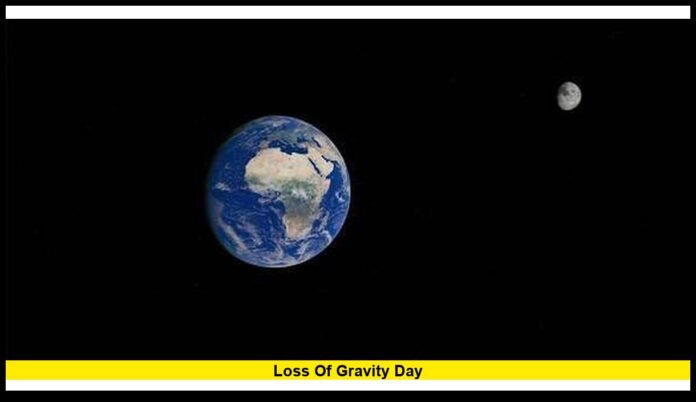

The loss of gravity day claim spreading online has been debunked, with no evidence that Earth will suddenly lose its gravitational force for seven seconds on August 12, 2026. The date is real, but the frightening prediction attached to it is not. What is actually happening today is a major astronomical event: a total solar eclipse crossing parts of the Northern Hemisphere.
The viral story has gained attention through social media posts, videos and dramatic claims about a temporary period of weightlessness. Some versions have suggested that millions of people could die if Earth’s gravity disappeared. Others have connected the prediction to an alleged secret government project.
Those claims have no scientific foundation.
The real August 12 event is the 2026 total solar eclipse. Totality is occurring across parts of Greenland, Iceland, northern Russia, Spain and a small part of Portugal. A much wider area, including parts of the United States, is experiencing a partial eclipse.
For Americans following the viral story, the most important fact is simple: Earth’s gravity is not disappearing.
What Is the Loss of Gravity Day Claim?
The online claim says Earth will experience a brief gravitational failure on August 12, 2026. The most common version says the effect will last seven seconds.
Posts have described a scenario in which people could become weightless, objects could rise from the ground and catastrophic damage could occur. Some versions have used highly dramatic predictions involving millions of deaths.
There is no credible scientific prediction supporting any of these outcomes.
The story became especially popular because August 12 already had an important astronomical event scheduled. That connection made the false claim appear more believable to people who were already searching for information about the eclipse.
However, an eclipse and a gravitational shutdown are completely different phenomena.
The Moon can temporarily block sunlight from reaching parts of Earth. It cannot switch off Earth’s gravitational field.
NASA Has Rejected the Gravity Rumor
NASA has addressed the viral claims and rejected the idea that Earth will lose its gravity during the August 12 eclipse.
The agency’s position is consistent with basic physics. Earth’s gravity comes from its mass. A temporary alignment of the Sun, Moon and Earth does not remove Earth’s mass.
There is therefore no scientific mechanism that would cause Earth’s gravitational attraction to suddenly vanish for seven seconds because of today’s eclipse.
NASA has also not issued a public warning telling people to prepare for a period of weightlessness.
There is no legitimate emergency associated with a supposed gravity failure.
The agency is instead focused on studying the actual solar eclipse and using the event as an opportunity for scientific research.
Why August 12, 2026 Is a Major Astronomy Date
August 12 is significant for a completely different reason.
The Moon is passing directly between the Sun and Earth, creating a total solar eclipse along a narrow path. Observers inside that path can see the Moon completely cover the visible surface of the Sun for a short period.
The total eclipse is crossing Greenland, Iceland, parts of northern Russia, the Atlantic region, Spain and northeastern Portugal.
Outside the path of totality, observers can see a partial eclipse.
That includes parts of the northern United States.
The event is one of the most anticipated astronomical spectacles of 2026, which explains why so much attention has focused on the date.
The eclipse is real.
The supposed gravitational blackout is not.
What Americans Will Actually Experience
The United States is not in the main path of totality for this eclipse.
Instead, portions of the country are seeing a partial solar eclipse. The amount of the Sun covered depends on the observer’s location.
Northern areas generally have a better view than much of the southern United States.
Alaska is among the U.S. regions receiving a notable partial eclipse. Parts of the northern and eastern United States also have an opportunity to observe the Moon crossing the Sun.
The experience will vary by location and local weather.
Some Americans may notice the daylight becoming slightly dimmer during the strongest part of the eclipse. The change can be interesting to observe, but it does not mean Earth’s gravitational force is changing.
Cars will remain on roads.
Buildings will remain on the ground.
People will remain on the ground.
Objects will not suddenly float into the sky.
Why a Solar Eclipse Cannot Remove Earth’s Gravity
The basic explanation is straightforward.
Earth has mass, and mass produces gravity.
The Moon’s position can affect Earth’s gravitational environment in measurable ways, particularly through tidal effects. The Sun also contributes to the gravitational interactions within the Earth-Moon-Sun system.
But those interactions do not cause Earth’s gravitational attraction to disappear.
During a solar eclipse, the Moon blocks some or all of the Sun’s visible light from an observer on Earth.
That is the central event.
The Moon does not remove Earth’s mass.
It does not destroy Earth’s gravitational field.
It does not create a temporary opening through which Earth’s atmosphere or objects can escape.
The eclipse simply changes the alignment and visibility of the Sun from certain locations.
The Seven-Second Claim Has No Scientific Basis
The seven-second figure is one of the most repeated details in the viral story.
Yet there is no established astronomical calculation showing that Earth’s gravity will disappear for seven seconds on August 12.
There is also no recognized scientific event scheduled for today that would create such an effect.
A precise number can make a social-media claim sound authoritative. In reality, attaching a specific duration to an unsupported prediction does not make the prediction scientific.
The same applies to claims about a particular moment when the alleged effect will begin.
There is no verified gravitational countdown.
There is no seven-second window during which people need to brace for weightlessness.
There is no scientific warning that Americans need to take special shelter because of gravity.
What About the Alleged Project Anchor?
Another part of the viral story involves an alleged secret program called Project Anchor.
Social media posts have claimed that the project was created to prepare for the supposed gravitational event. Some versions have even attached an enormous government budget to the story.
Those claims have not been substantiated.
There is no verified evidence that NASA has created a secret program to protect selected people from a temporary disappearance of gravity.
The alleged project has become part of the wider online narrative, but it should not be confused with NASA’s legitimate eclipse research.
NASA really is conducting scientific work around the August 12 eclipse.
That work involves studying the Sun, its corona and Earth’s atmosphere.
It does not involve preparing for a gravitational disaster.
Read More – 7 Second Loss of Gravity: What Really Happens on August 12, 2026
Why the Rumor Spread So Quickly
The story combines a real date with a fictional danger.
That is a powerful formula for social media.
August 12, 2026 was already guaranteed to attract attention because of the eclipse. People around the world have been discussing where they can see totality, how much of the Sun will be covered and how to watch safely.
The viral gravity story placed a frightening prediction alongside those legitimate discussions.
Short videos can then repeat the claim without explaining the physics behind it.
A dramatic headline may attract more attention than a technical explanation.
Once multiple accounts repeat the same statement, readers can mistakenly assume that repetition equals confirmation.
It does not.
A claim needs evidence, not simply a large number of posts repeating it.
The Real Scientific Opportunity on August 12
The genuine eclipse offers scientists an important research opportunity.
During totality, the Moon blocks the bright solar surface. That makes it easier for researchers to study the Sun’s outer atmosphere, known as the corona.
NASA researchers are using specialized equipment and aircraft to collect observations during the eclipse.
Scientific teams are also interested in how the temporary reduction in sunlight affects Earth’s upper atmosphere.
These projects are based on established science and measurable observations.
Nothing about that research suggests that Earth’s gravitational force will disappear.
In fact, the eclipse gives scientists an opportunity to study how Earth and its atmosphere respond to changes in solar radiation while gravity continues operating normally.
Will People Become Weightless During the Eclipse?
No.
People on Earth’s surface will not become weightless because of the eclipse.
The feeling of weightlessness that astronauts experience in space is associated with continuous free fall while orbiting Earth. That situation is fundamentally different from standing on Earth’s surface during a solar eclipse.
A person watching the Moon pass in front of the Sun remains under Earth’s gravitational influence.
The same applies to vehicles, aircraft, buildings, oceans and other objects.
Nothing about the eclipse creates a temporary zero-gravity environment on Earth.
The claim that people will suddenly float for several seconds is therefore unsupported.
Will the Eclipse Affect Earth’s Rotation or Orbit?
The eclipse does not cause Earth to stop rotating or leave its normal orbit.
Earth continues rotating on its axis.
It continues moving around the Sun.
The Moon continues following its orbit around Earth.
These motions are governed by gravitational interactions that do not suddenly disappear during an eclipse.
The alignment that produces an eclipse happens regularly enough for astronomers to calculate these events far in advance.
Scientists can predict where the Moon’s shadow will travel because the movements of the Earth, Moon and Sun are well understood.
That predictability is another reason the viral disaster scenario does not fit established astronomy.
What Happens When Totality Ends?
When the Moon moves far enough across the Sun for direct sunlight to return, totality ends.
The sky gradually brightens.
The Sun becomes visible again from locations within the eclipse path.
Nothing dramatic happens to Earth’s gravitational force.
There is no moment when gravity suddenly switches back on.
It continues throughout the entire event.
For observers outside the path of totality, the eclipse remains partial. The Sun never becomes completely covered from their location.
For observers inside the path, totality lasts only a short time before sunlight returns.
The Eclipse Is Real, but the Disaster Story Is Not
The most important distinction surrounding August 12 is between a genuine astronomical event and an unsupported online prediction.
The total solar eclipse is confirmed.
The path of the eclipse is known.
Scientists have calculated its timing.
Researchers are conducting observations.
Millions of people are watching the sky.
But the predicted disappearance of Earth’s gravity is not part of the event.
There is no confirmed seven-second gravitational blackout.
There is no evidence that people will become airborne.
There is no credible prediction of mass deaths caused by disappearing gravity.
There is no scientific basis for treating August 12 as a doomsday event.
What the Date Really Means for U.S. Readers
For people in the United States, August 12 is a day to observe an unusual celestial event rather than fear a gravitational catastrophe.
Parts of the country can see the partial eclipse, although the percentage of the Sun covered differs by location.
The best experience will depend on the observer’s position and weather conditions.
Anyone watching the partial phase should use proper solar viewing protection. Looking directly at the Sun without suitable protection can cause serious eye damage.
That safety warning is genuine.
The gravity warning is not.
People who cannot see the eclipse because of clouds or location can also follow coverage through legitimate astronomy and space broadcasts.
Why Facts Matter When Viral Space Claims Appear
Space-related misinformation can spread quickly because many astronomical events are difficult for most people to observe directly.
A viewer may not immediately know whether a claim about gravity, planetary alignment or a mysterious cosmic event is scientifically possible.
That makes official information particularly important.
The August 12 story demonstrates how a genuine astronomical event can become the foundation for a false narrative.
The best way to separate the two is to look at what scientists actually predict and measure.
In this case, the evidence points to an eclipse—not a gravitational collapse.
Final Verdict on August 12, 2026
The viral prediction that Earth will temporarily lose gravity on August 12, 2026 is false.
There is no evidence that Earth’s gravitational force will disappear for seven seconds.
There is no confirmed scientific event that will make people float.
There is no credible warning of millions of deaths caused by a temporary gravitational failure.
What is happening today is a rare and spectacular solar eclipse.
The Moon is passing between Earth and the Sun, creating a path of totality across parts of the Northern Hemisphere and a partial eclipse across a much wider region.
For U.S. viewers, parts of the country can witness the partial phase.
The eclipse deserves attention because it is a genuine astronomical event with real scientific value. The frightening gravity story does not.
August 12, 2026 may be remembered for the remarkable sight of the Moon crossing the Sun, but there is no scientific reason to remember it as the day Earth’s gravity disappeared.
Have you seen the viral claims about August 12? Share what you found, and stay tuned for more verified updates on major space events.