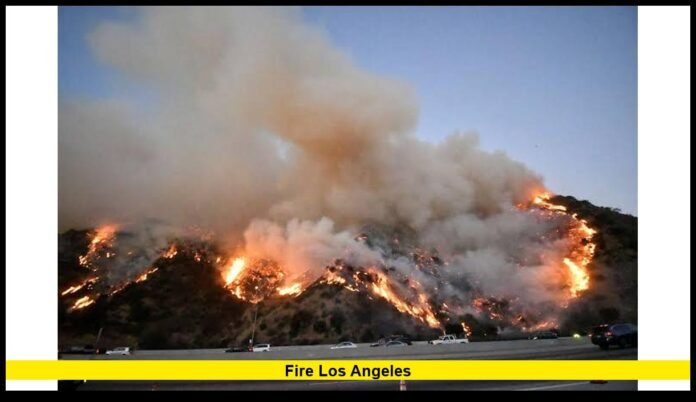

A new Los Angeles fire near the Getty Center sent firefighters into the hills above the 405 Freeway on Wednesday, September 9, as flames spread through dense vegetation in the Sepulveda Pass. The blaze was reported shortly after 4:15 p.m. and grew to about five acres. Fire crews responded from the ground while helicopters dropped water on the flames. An evacuation warning was issued for nearby areas, and the Getty Center was closed as crews worked to control the situation.
The incident developed during a period of very hot conditions across Southern California. Smoke rose above the freeway and became visible across parts of West Los Angeles. Officials said no injuries had been reported in the latest available information, while the cause had not yet been determined.
Brush Fire Breaks Out Near Getty Center
The fire began Wednesday afternoon in the hills close to Getty Center Drive in the Brentwood area. The flames burned through vegetation on the hillside above the 405 Freeway, creating a highly visible plume of smoke over the Sepulveda Pass.
Firefighters quickly moved into the area after the initial report. The response included engines, additional personnel and aircraft capable of dropping water directly onto the burning vegetation.
The fire initially covered a smaller area before reaching approximately five acres. Crews faced thick vegetation and steep terrain while working to keep the flames from moving toward developed areas.
The location added urgency to the response. The Getty Center sits near residential communities and Mount Saint Mary’s University, while the 405 Freeway carries heavy traffic through the pass.
Firefighters Attack the Flames From the Ground and Air
Fire crews used multiple tactics during the response.
Ground firefighters moved toward the fire while aircraft operated above the hillside. Several helicopters dropped water over active flames to slow the spread and support crews working below.
Additional firefighting resources were requested as the incident developed. Extra engines, water resources and hand crews were brought into the response.
The combination of ground and aerial operations is particularly important when a fire develops on a steep hillside. Aircraft can reach sections of terrain that may be difficult for ground crews to access quickly.
Ground crews can then work around the perimeter and focus on preventing flames from advancing into nearby vegetation or developed areas.
The response continued as smoke remained visible above the surrounding communities.
Evacuation Warning Issued for Nearby Areas
Officials issued an evacuation warning as the fire continued to burn.
The warning covered an area roughly bounded by Promontory Road, Sunset Boulevard, the 405 Freeway and Bundy Drive. The affected area included the Getty Center and Mount Saint Mary’s University.
An evacuation warning is different from an evacuation order. A warning tells people in the affected area to prepare to leave if conditions change.
The warning was issued because firefighters were dealing with a vegetation fire close to homes and other structures. Officials wanted residents to remain ready in case the fire moved in an unsafe direction.
The Getty Center was also closed during the incident, and visitors were evacuated from the facility.
Getty Center Closed During Fire Response
The Getty Center became one of the most visible locations connected with the incident.
The museum complex sits on a hillside overlooking the 405 Freeway. When the fire developed nearby, officials closed the facility and moved visitors away from the area.
The closure allowed emergency crews to concentrate on the response while reducing the number of people in the immediate area.
The fire did not result in a reported injury to visitors or staff in the latest available information.
The situation also highlighted the importance of keeping access routes available for emergency vehicles. Large firefighting responses require room for engines, personnel and other equipment.
Smoke Spreads Across West Los Angeles
One of the most noticeable effects of the fire was the large amount of smoke rising above the Sepulveda Pass.
Images from the area showed smoke moving above the 405 Freeway as flames burned through hillside vegetation.
Smoke from a brush fire can become visible from several miles away, particularly when a fire burns on elevated terrain.
The visibility of the plume led many people across West Los Angeles to notice the incident even when they were outside the immediate evacuation-warning area.
The 405 also became an important part of the emergency response because of its proximity to the flames.
Officials continued to manage the incident while emergency vehicles and aircraft operated around the affected area.
405 Freeway Remains a Major Concern During the Response
The fire’s location next to the 405 Freeway made the incident particularly significant.
The freeway passes directly through the Sepulveda Pass and is one of the busiest transportation corridors in Los Angeles.
At the time of the latest available reports, there was no confirmed full closure of the freeway related to the fire.
However, drivers in the area could see smoke and emergency activity around the hillsides.
A brush fire near a freeway can create several safety concerns. Smoke may reduce visibility, emergency vehicles need access to the roadway and changing fire conditions can require temporary traffic controls.
Drivers should avoid stopping in unsafe locations to watch an active fire. Emergency personnel need clear routes to reach the incident.
No Injuries Reported in the Latest Update
No injuries had been reported in the latest confirmed information about the fire.
That included no reported injuries among firefighters or members of the public at the time of the latest reports.
The lack of reported injuries was an important development as crews continued fighting the flames.
Firefighters working on steep terrain face risks from heat, smoke, falling vegetation and rapidly changing fire conditions.
Residents also face risks if they remain too close to an active fire area.
For that reason, evacuation warnings and instructions from emergency officials should be taken seriously even when flames appear distant.
No Confirmed Cause Has Been Released
Officials had not determined the cause of the fire in the latest available update.
Investigators normally need time to examine the area where a fire is believed to have started. A confirmed cause should come from investigators rather than early speculation.
The location near Getty Center Drive generated considerable public attention, but there was no confirmed explanation for the ignition in the latest reports.
Until investigators release a determination, claims about what started the fire should not be treated as established facts.
The immediate priority remained fire suppression and protection of nearby communities.
Homes and Structures Remain a Key Concern
The fire burned in an area close to homes and other developed properties.
Officials issued evacuation warnings because conditions could change and the fire was burning in vegetation near populated areas.
At the time of the latest reports, officials had not confirmed that structures had been damaged by the fire.
The distinction between an evacuation warning and an evacuation order is important. A warning gives residents time to prepare before conditions potentially become more dangerous.
People living within or near the warning area should remain prepared to leave if authorities change the evacuation status.
Residents should also avoid relying on social media rumors when making decisions during an active emergency.
Hot Conditions Increase Fire Concerns
The latest incident occurred while Southern California was experiencing unusually hot weather.
Hot conditions can dry vegetation and create an environment where brush fires become more difficult to control.
The fire’s development in dense hillside vegetation added another challenge for firefighters.
However, hot weather alone does not establish the cause of a particular fire.
Officials had not released a confirmed ignition source for the Getty-area incident.
Fire behavior can also change quickly when weather conditions shift. Wind, humidity and terrain can all affect how flames move.
That makes continued monitoring important during an active response.
Why This Area Requires a Rapid Response
The hills around the Getty Center contain significant vegetation close to developed communities.
Residential neighborhoods sit near the hillsides, while the Getty Center and university facilities are also located nearby.
The 405 Freeway runs through the pass below the affected terrain.
A small brush fire can therefore create a major emergency response even when the initial burned area remains limited.
Firefighters must work to contain flames while also protecting buildings, roadways and people in surrounding areas.
The September 9 response demonstrated that approach. Crews brought in additional resources and used aircraft to attack the flames from above.
Firefighters Continue Working After Flames Slow
Stopping visible flames does not automatically mean that a fire is fully contained.
Firefighters must check the burned area for remaining heat and identify sections where flames could restart.
Crews may continue working around the perimeter after the main flames disappear.
They also need to protect control lines from breaches.
These steps are especially important on hillsides covered with dry or dense vegetation.
For people watching the incident from nearby neighborhoods, a reduction in visible smoke may therefore not mean that the emergency response has ended.
The final status must come from fire officials.
What Residents Near the Fire Area Should Do
Residents near an active fire should stay prepared for changing instructions.
Those inside an evacuation-warning area should be ready to leave if officials issue an evacuation order.
A few basic steps can make an emergency departure easier:
- Keep important medications available.
- Gather identification and essential documents.
- Keep vehicles accessible.
- Make sure household members know the evacuation route.
- Follow official emergency instructions.
- Avoid driving toward the fire.
- Do not block roads needed by emergency crews.
People should also avoid entering restricted areas to photograph or watch the fire.
Active fire zones can contain hazards that are not immediately visible.
Latest Status of the Getty-Area Incident
The latest confirmed reports place the fire at approximately five acres.
The fire was reported shortly after 4:15 p.m. Wednesday near Getty Center Drive.
Firefighters used ground crews and aircraft during the response. Additional resources were requested as crews worked to prevent the flames from spreading.
An evacuation warning covered nearby areas, including the Getty Center and Mount Saint Mary’s University.
The Getty Center closed during the emergency response.
No injuries had been reported in the latest available information.
Officials had not announced a confirmed cause.
The latest reports also did not establish structural damage connected with the fire.
Because the incident was still developing in the most recent reports, its final containment status could change as firefighters complete suppression and assessment work.
Why the Latest Updates Matter
The incident shows how quickly a vegetation fire can become a significant emergency in Los Angeles.
The affected hillside is close to major roads, homes, educational facilities and the Getty Center. That combination requires firefighters to act quickly even when the initial burned area is relatively small.
The aerial response was particularly important because the fire was burning on elevated terrain.
Additional ground resources also allowed firefighters to work on multiple sections of the incident.
Residents should continue watching for official changes to evacuation warnings and other emergency instructions.
Conditions can change quickly during a brush fire, especially when heat and dry vegetation are present.
The most reliable information remains the latest announcement from local emergency authorities.
What Happens Next
Fire crews will need to complete suppression work and check the affected hillside for remaining hot spots.
Officials will also continue assessing the fire perimeter and any potential threats to surrounding properties.
Investigators are expected to examine the origin of the fire as part of the effort to determine how it started.
The final acreage, containment status and cause may change as crews complete their work and investigators gather additional information.
For residents near the Getty Center, the most important issue remains safety.
Anyone inside an evacuation-warning area should be prepared to leave if conditions worsen or officials issue new instructions.
The latest confirmed information indicates that firefighters responded quickly, aircraft were used to attack the flames and no injuries had been reported in the available reports.
Stay alert for verified updates as firefighters continue their work, and share your thoughts or latest confirmed information in the comments.