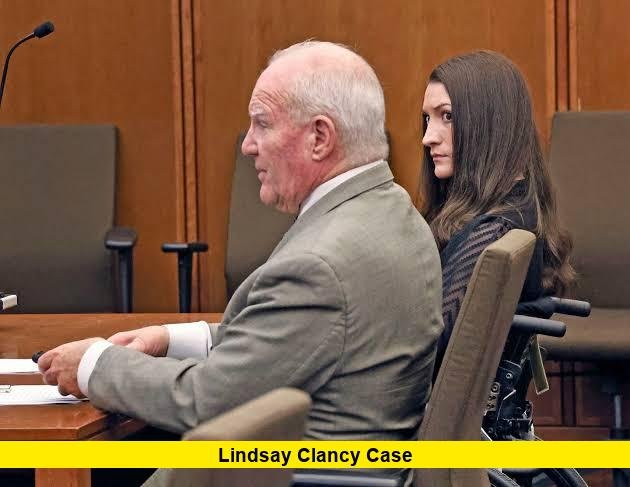

The lindsay clancy case has reached a pivotal moment as the Massachusetts mother accused of killing her three young children stood trial this week in Plymouth Superior Court, more than three years after the tragedy that shocked the country. Jury selection concluded last week, opening statements began on Monday, July 27, 2026, and her ex-husband, Patrick Clancy, took the stand as the prosecution’s first witness. The trial is expected to last as long as eight weeks and will center on one central question: was Lindsay Clancy criminally responsible for the deaths of her children, or was she in the grip of severe postpartum psychosis at the time?
Background of the Case
Lindsay Clancy, a former labor and delivery nurse at Massachusetts General Hospital, is accused of strangling her three children — 5-year-old Cora, 3-year-old Dawson, and 8-month-old Callan — with exercise resistance bands inside the family’s Duxbury, Massachusetts home on the evening of January 24, 2023. Prosecutors say that after killing the children, Clancy jumped from a second-floor window of the Summer Street residence in an apparent suicide attempt. The fall left her paralyzed from the chest down, and she has remained committed to Tewksbury State Hospital since 2023, appearing in earlier court proceedings via video link because of the severity of her injuries.
Clancy has pleaded not guilty to three counts of murder, along with charges of assault and battery and strangulation. She faces life in prison if convicted. Her defense team, led by attorney Kevin Reddington, does not dispute that she caused her children’s deaths. Instead, the defense is pursuing what is commonly known as an insanity plea, formally called a defense of lack of criminal responsibility under Massachusetts law. Reddington has argued that Clancy was suffering from crippling postpartum depression that escalated into postpartum psychosis, and that she was overmedicated in the weeks leading up to the killings, having reportedly been prescribed as many as a dozen or more different psychiatric medications over a short period.
Prosecutors, led by the Plymouth County District Attorney’s office, reject that narrative entirely. They argue the killings were deliberate, premeditated, and carried out with clear intent. According to testimony previewed ahead of trial, prosecutors intend to show that Clancy searched online how long her husband would be away running an errand on the night of the killings, which they say demonstrates planning rather than a psychotic break.
Career or Relevant Information
Before the tragedy, Lindsay Clancy worked as a labor and delivery nurse, a career that colleagues and friends have described as marked by compassion and dedication to new mothers and infants — a detail that has added a painful layer of irony to the case in the eyes of many observers. Those who knew her professionally have described her as a loving mother and well-regarded nurse, testimony that the defense is expected to lean on heavily to support its argument that her actions were the product of illness rather than character.
The lindsay clancy case has also drawn attention to broader medical and legal issues surrounding postpartum psychosis, a rare psychiatric condition that experts estimate affects only one to two out of every thousand women who give birth. The condition can cause delusions, hallucinations, and a profound break from reality in a very small percentage of new mothers. Legal analysts covering the trial have noted that insanity defenses are historically difficult to win in Massachusetts courts, since the burden shifts to prosecutors to disprove the claim once it is properly raised, but such defenses still succeed only in a minority of cases nationwide.
Adding another dimension to the proceedings, Lindsay Clancy and her ex-husband Patrick filed civil lawsuits earlier this year against the medical providers who treated her in the months before the killings. The lawsuits allege that doctors failed to properly diagnose, monitor, and treat what the filings describe as a severe postpartum psychiatric condition. According to court documents, Clancy first sought psychiatric help in September 2022, was prescribed an antidepressant, and later experienced worsening insomnia, racing thoughts, and anxiety after her dosage was increased. The lawsuits argue these symptoms should have signaled a risk of bipolar disorder or medication-induced instability, and that she went days without sleep in the weeks before the deaths. She was hospitalized for psychiatric treatment just weeks before the killings occurred.
Public Interest
Few cases in recent Massachusetts history have generated the level of public fascination and debate that the lindsay clancy case has produced. Much of that attention stems from the deeply unusual dynamic between Clancy and her ex-husband. Patrick Clancy, the father of the three children, has publicly stated on multiple occasions that he forgives his former wife, a position he has repeated in interviews and legal filings, including a widely discussed 2024 magazine profile in which he said he was not married to “a monster” but to someone who became severely ill. That stance has made him a notable witness for both the prosecution and the defense, and legal commentators have suggested his testimony could be pivotal, since jurors may weigh his perspective as someone who lived through the family’s unraveling firsthand.
The case has also been compared publicly to other high-profile instances of postpartum psychosis driving violence, including the cases of Andrea Yates and Sheryl Massip, both of which drew national attention to the intersection of mental illness, motherhood, and the criminal justice system. Attorneys who represented those women have weighed in publicly on how the Clancy case may unfold, with some noting the similarities in the medical arguments being raised even as legal outcomes in such cases vary widely.
Media access has also become a point of legal contention. Judge William Sullivan ruled that the 911 call made by Patrick Clancy the night he discovered his children, along with autopsy photographs, will be impounded and not released publicly or reproduced by media outlets, a decision aimed at balancing the public’s interest in the case with the family’s privacy. The defense has separately argued, without success, that pretrial publicity in Plymouth County made it difficult for Clancy to receive a fair trial, though the court proceeded with jury selection as scheduled.
Latest Updates
As of Monday, July 27, 2026, the trial is officially underway in Plymouth Superior Court. Eighteen jurors, including six alternates, were seated after several days of jury selection that concluded on July 22, 2026. Opening statements began Monday morning, with defense attorney Kevin Reddington telling jurors they would need to see and hear “some of the most horrific things” over the course of the trial. Reddington also used his opening remarks to criticize the Plymouth County District Attorney’s decision to pursue first-degree murder charges, arguing it would prolong suffering for everyone involved.
Following opening statements, prosecutors called Patrick Clancy as their first witness. He testified about the timeline of his relationship with Lindsay, noting they began dating in 2013 and moved in together in September 2015. His testimony is expected to continue and will likely touch on the specific circumstances of the day of the killings, including conversations the couple had before he left the house that evening. Legal analysts anticipate that prosecutors will use his account to argue that Clancy’s actions that day, including researching how long her husband would be away, point toward premeditation rather than a sudden psychotic episode.
The trial is expected to feature extensive expert testimony from psychiatrists on both sides, with the defense presenting evidence aimed at establishing that Clancy suffered a severe mental break driven by postpartum psychosis and medication complications, and prosecutors presenting a counter-narrative built around digital evidence, witness accounts, and the sequence of events on the night of the killings. There is no official confirmation yet as to how long the prosecution’s case will take before the defense begins presenting its own witnesses, though court officials have indicated the full trial could stretch across several weeks given the volume of evidence and the more than 200 potential witnesses listed by both sides.
Final Thoughts
The lindsay clancy case continues to stand out as one of the most closely watched criminal trials in recent Massachusetts history, not only because of the horror of the crimes themselves but because of the complex medical, legal, and emotional questions it raises about postpartum mental illness. The trial puts a rare psychiatric condition under a national spotlight, and its outcome may influence how courts and the public more broadly understand the line between criminal culpability and severe, medically documented mental illness. Whatever the jury ultimately decides, the case has already reshaped public conversations around postpartum psychosis, psychiatric medication management, and how the justice system weighs mental illness against premeditation. As testimony continues in the weeks ahead, additional details are expected to emerge from both prosecution and defense witnesses, and the final verdict may not come for some time given the trial’s expected length.
Stay tuned for continued coverage as testimony unfolds, and share your thoughts on this case in the comments below.