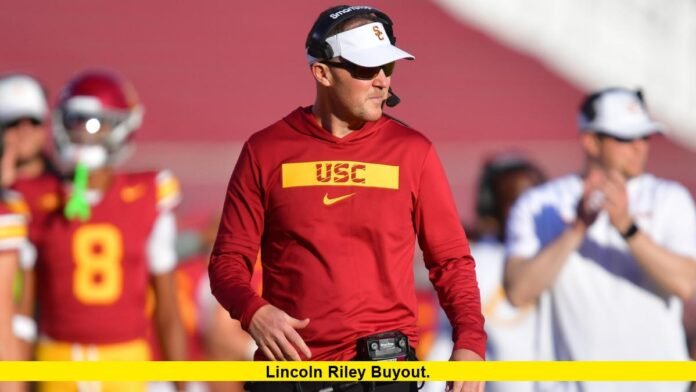

The Lincoln Riley buyout has become one of the most discussed topics in college football, especially among USC Trojans fans and analysts. As of October 2025, Riley’s buyout is estimated to be between $80 million and $90 million, a staggering figure that cements his status as one of the most financially protected coaches in the sport. This massive buyout not only highlights the university’s long-term commitment to its head coach but also shapes every major decision within the program.
The Origin of Lincoln Riley’s USC Contract
When USC successfully pried Lincoln Riley away from the University of Oklahoma in late 2021, it did so with a record-breaking contract designed to make him the face of the Trojans for the next decade. Riley’s deal reportedly spans 10 years and is worth well over $100 million, with additional perks such as housing benefits and private jet access.
At the heart of that agreement lies the enormous buyout clause—an amount so large that it virtually guarantees job security, regardless of short-term struggles. This buyout means that if USC were to fire Riley without cause, the school would owe him close to nine figures in compensation.
Why the Lincoln Riley Buyout Matters
The buyout serves several purposes for both parties:
- Job Security for Riley: It gives him leverage and stability, allowing him to focus on rebuilding USC’s national prominence without fear of early dismissal.
- Recruiting Stability: A long-term commitment signals to recruits that USC’s program will remain consistent under his leadership.
- Institutional Commitment: It shows USC’s willingness to invest in football as a cornerstone of its athletic identity, especially with the move to the Big Ten Conference.
However, it also comes with pressure. With such a large financial commitment, boosters and fans expect results—especially postseason success.
Performance Since Arriving at USC
Lincoln Riley’s first season in 2022 brought immediate optimism. The Trojans finished with an 11–3 record, powered by star quarterback Caleb Williams, who went on to win the Heisman Trophy. USC came close to making the College Football Playoff and re-established itself as an offensive powerhouse.
But the following seasons didn’t match that initial surge. In 2023, the team slipped to an 8–5 record amid defensive struggles. In 2024, the record dipped again, and frustration grew among fans expecting national championship contention. Entering the 2025 season, Riley faces growing scrutiny, and the buyout has become a focal point of the conversation.
The question now being asked: Can USC afford not to keep him?
Understanding the Buyout’s Financial Weight
To put the Lincoln Riley buyout into perspective, it ranks among the largest in college football history. In practical terms, if USC decided to part ways with Riley today, it would owe him approximately $80–90 million.
That figure reflects several factors:
- Guaranteed contract terms that run through the early 2030s.
- Escalating market values for elite coaches, especially after landmark deals at schools like Georgia, Alabama, and Texas A&M.
- Institutional protection designed to prevent other programs from poaching Riley.
This structure ensures that USC’s leadership has limited flexibility. Any decision to dismiss Riley would come with a monumental financial penalty, effectively tying the school’s future to his tenure for the foreseeable future.
The Buyout’s Effect on USC’s Long-Term Strategy
The size of the buyout affects not just the coach but the entire program’s strategy. Here’s how:
- Administrative Caution: USC’s athletic department must weigh every decision carefully, knowing a coaching change could cost tens of millions.
- Booster Relations: Donors and alumni are more likely to remain patient when they understand how costly a dismissal would be.
- Recruiting Perception: High school players and their families view Riley’s contract as a sign of program stability, which can aid recruiting.
At the same time, fans are increasingly aware that this massive buyout could make accountability difficult. If the team underperforms, USC may not have a realistic path to making a change without financial strain.
Comparing Buyouts Across College Football
In 2025, college football buyouts have reached unprecedented levels. Lincoln Riley’s deal is part of a broader trend among major programs that are locking in high-profile coaches with long-term, fully guaranteed contracts.
| Coach | School | Estimated Buyout (2025) | Contract Length |
|---|---|---|---|
| Kirby Smart | Georgia | $100+ million | 10 years |
| Lincoln Riley | USC | $80–90 million | 10 years |
| Dabo Swinney | Clemson | $70 million | 10 years |
| Brian Kelly | LSU | $65 million | 10 years |
| Jimbo Fisher | Former Texas A&M | $75 million (paid in 2023) | 10 years |
This table underscores the financial escalation across the sport. Universities are paying for continuity and brand identity as much as on-field success.
Why USC Won’t Move On Anytime Soon
Given the current circumstances, it’s highly unlikely USC will part ways with Riley in the near future. The athletic department’s leadership remains publicly supportive, citing his recruiting success, offensive innovation, and long-term vision for the program.
Additionally, the move to the Big Ten Conference has introduced a new level of competition. USC’s decision-makers view Riley as the right coach to lead through that transition, even if the short-term results haven’t matched the expectations of fans.
Financially, the buyout’s sheer size makes any immediate change nearly impossible. Unless major donors step in or the contract is renegotiated, Riley’s position is secure through at least the late 2020s.
Rising Pressure for Results
Still, the pressure is undeniable. With such an enormous buyout and one of the highest coaching salaries in college sports, expectations remain sky-high. Fans want playoff appearances, national championship contention, and a defense that can match the offense’s firepower.
As of this season, USC’s goals are clear: compete for a Big Ten title, reach the expanded College Football Playoff, and restore national prestige. If those goals aren’t met, criticism will grow louder—but the buyout will keep Riley in place regardless.
In many ways, the Lincoln Riley buyout serves as both a shield and a spotlight. It protects him from immediate job threats but also magnifies every win and loss.
Looking Ahead
As the 2025 season unfolds, all eyes will remain on Lincoln Riley and the USC Trojans. The combination of his record-setting buyout, evolving roster, and transition to the Big Ten will define both his legacy and the university’s football future.
Whether Riley ultimately delivers the championships USC envisioned or continues to hover below elite status, the buyout ensures that his tenure will remain one of the most closely watched—and financially significant—in college football history.
With stakes this high, USC fans will be watching every play, every season, and every move that justifies one of the largest contracts ever signed in the sport.