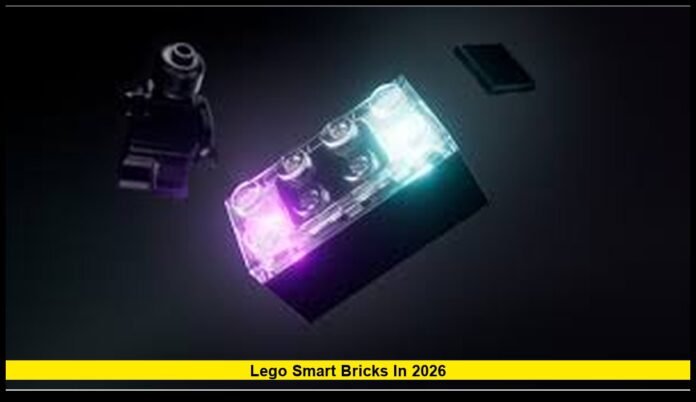

LEGO Smart Bricks are reshaping how creativity, education, and technology merge in 2026. The latest advancements from LEGO have turned simple interlocking blocks into intelligent, connected tools that teach real-world coding, engineering, and problem-solving. This new generation of interactive LEGO products shows how play can inspire learning while preparing young minds for the digital future.
A New Era of Intelligent Building
Over the last few years, LEGO has transformed from a traditional toy company into a leader in educational technology. The company’s smart brick systems, used across both schools and homes, have expanded how children and adults build, learn, and explore science and technology concepts.
These connected components—commonly known as smart bricks—are built around programmable hubs equipped with sensors, Bluetooth connectivity, and microprocessors. When linked with motors and lights, they bring motion and intelligence to physical builds. Builders can create robots, vehicles, and automated machines that respond to their environment in real time.
The concept of smart bricks is simple yet powerful: turning imagination into functional, coded creations. For many students and hobbyists, this marks the point where creativity meets engineering.
How LEGO Is Leading the Smart Toy Revolution
LEGO’s commitment to interactive design continues to expand as technology becomes an everyday part of education and play. The company’s smart systems allow users to connect their physical creations to digital platforms, giving them control through intuitive apps and coding interfaces.
At the center of this innovation are programmable hubs, often referred to as the “brains” of LEGO’s smart systems. Each hub can connect to multiple sensors and motors, creating endless possibilities for experimentation. Builders can program movements, reactions, and even light displays with just a tablet or computer.
LEGO’s interactive ecosystem currently includes:
- LEGO Education SPIKE Prime and SPIKE Essential, designed for hands-on classroom learning.
- LEGO Technic CONTROL+, used in advanced consumer sets to simulate real-world mechanics.
- LEGO Powered Up, a versatile platform for controlling motors and lights across various LEGO themes.
These systems have cemented LEGO’s position as a pioneer in combining play and technology, a balance few toy makers have achieved successfully.
Smart Bricks in the Classroom
Across the United States, schools have embraced LEGO’s smart technology as a practical and engaging way to teach STEM concepts. From elementary through high school, LEGO Education kits help students explore physics, programming, and design in an interactive, hands-on format.
Educators report that students using LEGO smart systems show stronger problem-solving and teamwork skills. The tactile, creative process of building and coding helps learners visualize abstract concepts, from basic loops and sensors to real-world engineering challenges.
Each smart brick, or programmable hub, can control multiple motors and sensors, allowing students to experiment with real data. They can design robots that detect motion, react to colors, and navigate obstacles—all while learning the logic that drives modern technology.
LEGO’s classroom approach encourages:
- Collaborative problem-solving, where students build and test as a team.
- Critical thinking, by having learners debug and optimize their creations.
- Practical coding, through visual programming interfaces that evolve into text-based coding.
This method has proven highly effective in U.S. schools focused on project-based STEM education.
Inside the Technology
What makes these modern LEGO systems truly smart is the internal technology powering them. Each smart brick hub contains a small microprocessor that interprets code and sends commands to connected devices. Bluetooth 5.0 ensures strong, low-latency connections with tablets or computers, allowing precise control.
In addition to processing capability, smart bricks incorporate multiple sensor options, including motion detectors, gyroscopes, and color recognition modules. These sensors collect data from the environment, allowing LEGO creations to react intelligently.
Here’s a breakdown of typical smart components:
| Component | Purpose | Example Function |
|---|---|---|
| Smart Hub | Central control unit | Processes programs and powers motors |
| Motion Sensor | Detects distance and movement | Enables obstacle avoidance |
| Color Sensor | Identifies surface colors | Used in line-following robots |
| Motor | Provides motion and rotation | Drives wheels or arms |
| Light Element | Adds visual feedback | Displays colors or signals |
All components integrate seamlessly with the LEGO Builder and SPIKE apps, ensuring smooth coding experiences across devices.
A Growing Role in STEM Education
The demand for STEM-based learning tools continues to rise in U.S. schools, and LEGO’s smart-brick kits are now part of thousands of classrooms. Educators use them to connect theoretical learning with real-world applications.
Teachers report that LEGO’s smart systems are especially effective for introducing younger students to coding because the visual programming environment is intuitive and fun. As learners progress, they can transition to more complex languages like Python, supported in LEGO’s advanced software versions.
The result is a continuous learning journey—from basic drag-and-drop coding to sophisticated robotics programming—all built on the same familiar LEGO foundation.
Students learn that building and coding aren’t separate skills but parts of a unified creative process. That connection has made LEGO Smart Bricks an essential tool for schools promoting future-ready education.
The Consumer Side: Play That Learns Back
Outside the classroom, LEGO continues to bring smart technology to home play. App-connected Technic and City sets let kids control cranes, vehicles, and trains directly from their phones or tablets.
The smart elements inside these models allow users to experience engineering firsthand. They can control the angle of an excavator arm, the speed of a car, or even the sequence of a robotic motion pattern. Each build reacts like a miniature machine, teaching users how mechanics and software interact.
This form of play encourages curiosity and experimentation. Kids learn that the same coding logic used in their LEGO builds also powers real-world technology like drones, automation systems, and smart appliances.
Sustainability and Innovation
LEGO’s focus on innovation goes hand-in-hand with sustainability. The company continues its transition to eco-friendly materials, aiming for all products, including smart elements, to be produced from sustainable or recycled sources by 2030.
Electronic components are designed for longevity and easy recycling. U.S. consumers can return used or damaged parts through LEGO’s Replay Program, which refurbishes or recycles elements responsibly.
This balance between innovation and environmental responsibility has become a key part of LEGO’s identity. The company recognizes that the future of smart toys must also be sustainable.
LEGO Smart Bricks in Robotics Competitions
LEGO’s educational robotics systems are also central to global student competitions. Teams from around the world build and program robots that perform specific missions, testing their creativity and technical skill.
In the 2025–2026 season, U.S. teams have shown record participation, with thousands of students designing robots powered by LEGO smart hubs. These events highlight how play, coding, and engineering can come together to foster confidence and innovation among young people.
For many students, these competitions are a stepping stone toward careers in engineering, robotics, and technology. LEGO Smart Bricks give them a platform where imagination directly translates into real-world solutions.
A Deeper Connection Between Play and Learning
What makes smart bricks revolutionary isn’t just their technology—it’s the way they change how people think about play. Building is no longer passive or isolated; it’s interactive, analytical, and creative all at once.
By blending digital programming with tactile construction, LEGO provides a learning experience that mirrors how modern engineers work. The same design-thinking mindset that guides professionals can begin with a child exploring what happens when their LEGO car drives faster or their robot reacts to color.
Every experiment, success, and failure becomes a lesson in cause and effect. This form of creative problem-solving develops critical skills far beyond the classroom or playroom.
The Road Ahead for 2026 and Beyond
Looking ahead, LEGO is expected to expand its integration of smart components across more themes and product lines. Future sets may include advanced sensors, augmented reality elements, and adaptive learning software that personalizes play.
As technology continues to shape the way children learn and play, LEGO Smart Bricks stand as a model for how innovation and imagination can coexist. They represent the bridge between physical creativity and digital intelligence, ensuring that play remains both educational and endlessly inspiring.
The ongoing development of these systems signals a future where every LEGO brick has the potential to connect, respond, and teach. Whether in a classroom, a robotics lab, or a living room, smart bricks are redefining what it means to build and learn.
LEGO Smart Bricks continue transforming how people connect creativity with technology, inspiring a generation to build, code, and dream without limits. What would you create if your LEGO build could think for itself? Share your thoughts below.