)
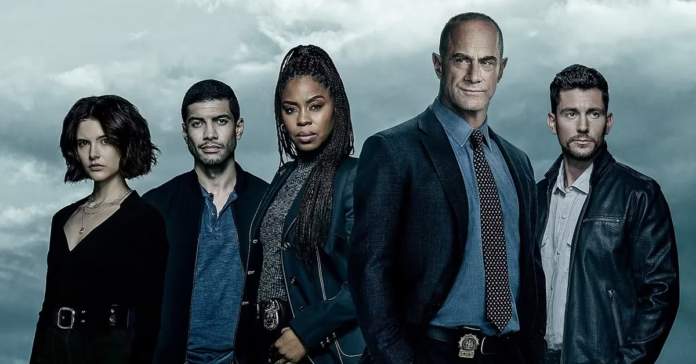
The news hit hard on April 16, 2026: law and order organized crime canceled after wrapping its fifth and final season. Christopher Meloni’s return as the driven Detective Elliot Stabler in this intense spinoff has officially reached its end, sparking an outpouring of disappointment across fan communities who had hoped for more cases from the Organized Crime Control Bureau.
Nearly a year after the season five finale streamed on Peacock in June 2025, the decision brings closure to a series that carved its own path in the long-running Law & Order franchise. While the mothership series and SVU continue strong, this particular branch focused on serialized storytelling about takedowns of powerful criminal organizations.
The cancellation comes as no total surprise to those following the show’s journey. It launched on NBC in 2021 with high expectations, delivering Stabler’s gritty comeback after his exit from SVU years earlier. Over four seasons on broadcast television, it built a dedicated audience drawn to its deeper character arcs and ongoing investigations that spanned multiple episodes.
Season five marked a significant shift when the series moved exclusively to Peacock. The streaming platform delivered a tighter 10-episode run, which some viewers praised for its focused pacing while others missed the weekly network rhythm. The finale left several story threads open, fueling months of speculation about whether the team would regroup for another round.
Social Media Explodes With Mixed Emotions
As reports of the cancellation spread quickly on Thursday, platforms lit up with reactions ranging from heartbreak to frustration. Fans posted screenshots of old episodes alongside messages lamenting the loss of Stabler’s intense interrogations and the unit’s unique dynamic. Many highlighted how the show allowed Meloni to explore layers of the character that felt fresh compared to his earlier years on the original series.
Comments poured in questioning the logic behind ending the show while other Law & Order entries keep expanding. Some users pointed to the frequent changes in leadership behind the scenes, noting the series cycled through multiple showrunners in a short time—an unusual pace even for ambitious television. Others simply expressed sadness over saying goodbye to favorite supporting characters like Sergeant Ayanna Bell, played by Danielle Moné Truitt, whose steady presence anchored many investigations.
The online chatter also revisited standout moments: tense family confrontations for Stabler, complex undercover operations, and occasional crossover energy with SVU that reminded everyone of the broader universe. Hashtags related to the franchise trended as longtime watchers shared clips and called for potential guest appearances to keep the character alive in some form.
The Unique Challenges of Serialized Crime Drama
Unlike the classic procedural format that defines much of the Law & Order brand—where each hour typically resolves a single case—this spinoff leaned into longer narratives. Viewers followed ongoing battles against mafia families, drug rings, and corrupt enterprises that required patience and investment across episodes. That approach delivered richer payoffs for dedicated fans but made it harder to attract casual viewers who prefer standalone stories.
Production hurdles added another layer. With several creative shifts during its run, the series navigated changes that impacted tone and direction at times. The transition to Peacock for the final season altered how audiences discovered and binged the episodes, potentially affecting overall momentum despite solid streaming numbers in certain weeks.
Meloni himself brought undeniable star power. His portrayal of a more seasoned, sometimes volatile Stabler resonated with audiences who grew up watching the character. The actor’s commitment to the role helped sustain interest even as the show experimented with bolder storytelling choices. Supporters argue that his performance alone warranted keeping the doors open longer, especially given the franchise’s history of longevity.
How the Franchise Stands Today
The broader Law & Order world remains a cornerstone of NBC’s programming strategy. The original series continues delivering ripped-from-the-headlines cases, while SVU pushes further into record-breaking territory with its long-running ensemble. These shows maintain the episodic structure that has proven reliable for decades, drawing both live viewers and strong delayed streaming performance.
For Organized Crime, the move to Peacock represented an attempt to evolve the formula and reach different audience habits. Streaming services often favor shorter seasons and serialized content, yet balancing that with the expectations of a established procedural brand proved tricky. The final season still featured strong performances and compelling plots, but the overall numbers apparently did not justify continuing the investment.
Fans can still revisit the entire catalog on Peacock, where all five seasons remain available. Many are already planning rewatches to catch details they might have missed the first time around, particularly in the character relationships that deepened over time.
What the Future Might Hold for Stabler and the Universe
While the task force unit will not return for a sixth season on either platform, the Law & Order franchise has a track record of creative ways to keep popular characters in play. Crossovers have always been a hallmark, offering chances for brief but meaningful appearances that satisfy fans without committing to full seasons.
Meloni’s busy schedule includes other projects, but his deep ties to the Dick Wolf universe leave room for speculation about future guest spots or even new avenues. For now, the focus stays on honoring the work already completed rather than promising what has not been announced.
Industry observers note that television decisions often come down to a mix of viewership data, production costs, and strategic priorities across broadcast and streaming. In this case, the combination of behind-the-scenes turnover and the challenges of serialized storytelling in a procedural-heavy lineup likely tipped the scales.
Why Fans Feel the Loss So Deeply
This spinoff succeeded in giving Stabler a second act that felt earned. It allowed exploration of his personal struggles, professional evolution, and the moral complexities of pursuing justice against sophisticated criminals. Supporting cast members brought depth to the squad room, creating a sense of family that many viewers connected with on an emotional level.
The cancellation serves as a reminder of how television landscapes continue shifting. What worked on network TV in 2021 evolved by 2025 on streaming, reflecting broader changes in how stories get told and consumed. Yet the passion from the fan base underscores the show’s impact during its run.
As the dust settles on this announcement, conversations will likely turn toward celebrating the highlights rather than dwelling on the end. From explosive season premieres to quiet character moments that landed with power, the series left its mark on the franchise.
Viewers who discovered the show later or binged it all at once often comment on its addictive quality once the arcs start building. That momentum kept many coming back even through the platform changes.
In the end, the Organized Crime Control Bureau closes its chapter with five solid seasons of television that delivered on intensity and character focus. The Law & Order machine rolls on without it, but the conversations sparked by Stabler’s latest chapter will echo among fans for some time.