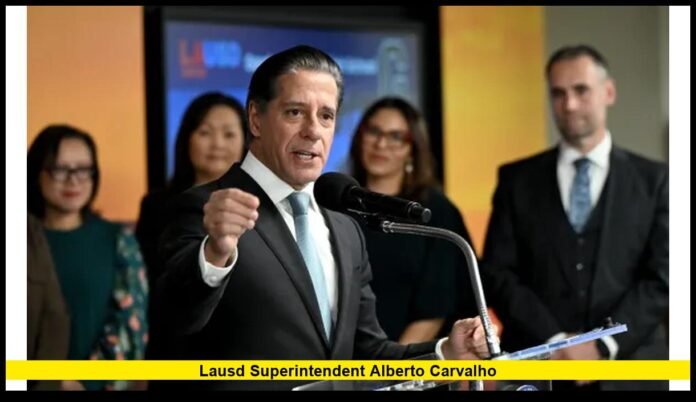

LAUSD superintendent Alberto Carvalho remains at the center of major decisions shaping the Los Angeles Unified School District as 2026 unfolds, with ongoing focus on academic recovery, financial planning, student safety, and long-term modernization across one of the largest public school systems in the United States.
His leadership continues to draw national attention as districts across the country confront enrollment decline, funding pressure, and evolving classroom technology.
Leadership Background
Alberto Carvalho became superintendent of Los Angeles Unified School District in February 2022 after a widely watched national search.
He previously led Miami-Dade County Public Schools for more than ten years, where he gained recognition for improving graduation rates and expanding equity initiatives.
Career highlights include:
- Early career as a classroom teacher
- Rapid rise through district leadership roles
- Reputation for hands-on management style
- Strong public communication during crisis and reform efforts
His move to Los Angeles signaled a push for aggressive academic improvement and operational change.
Key Priorities Guiding the District
Carvalho’s agenda focuses on stabilizing student outcomes while preparing schools for long-term structural change.
Core priorities include:
- Strengthening literacy and math performance
- Expanding career and technical education
- Improving attendance rates
- Supporting student mental health
- Modernizing technology use
- Addressing budget sustainability
These priorities continue to shape policy decisions and board discussions.
Academic Recovery Remains Central
Academic recovery still drives district strategy following pandemic learning disruption.
Recent efforts emphasize early literacy and targeted intervention.
Major initiatives:
- Expanded tutoring for elementary students
- Additional instructional time opportunities
- Data tracking for student progress
- Focus on attendance improvement
District leadership frames academic recovery as a multi-year effort that requires consistent measurement and adjustment.
Achievement gaps remain a major focus.
Budget Pressure and Financial Planning
Financial planning remains one of the most complex responsibilities facing Carvalho.
Key financial realities:
- Ongoing enrollment decline
- Reduced pandemic relief funding
- Rising staffing and operational costs
- Need to protect classroom investment
The district has explored cost-control strategies while attempting to avoid direct classroom impact.
Budget approaches include:
- Reviewing under-enrolled schools
- Efficiency audits across departments
- Strategic hiring adjustments
- Long-term financial forecasting
These decisions continue to generate public debate.
Student Safety and School Climate
Student safety remains a visible pillar of Carvalho’s leadership.
District efforts focus on both physical safety and emotional well-being.
Recent actions include:
- Expanded campus supervision staffing
- Updated emergency preparedness procedures
- Increased counseling and mental health services
- Programs addressing bullying and digital behavior
Leadership messaging emphasizes prevention, rapid response, and community partnerships.
Career Pathways and Workforce Readiness
A defining feature of Carvalho’s strategy is linking education directly to career outcomes.
Programs continue to grow across high schools.
Examples include:
- Career technical education expansion
- Internship partnerships with employers
- Dual enrollment with colleges
- Skilled trades and certification programs
The district aims to ensure students graduate with clear post-secondary options.
This workforce approach reflects broader national education trends.
Technology Strategy and AI Integration
Technology policy has become a major focus of district planning.
Leadership has prioritized responsible classroom technology adoption while protecting academic integrity.
Key areas of work:
- Guidance for artificial intelligence use in schools
- Teacher training for digital tools
- Device access for students
- Cybersecurity protections
Digital learning strategy continues to evolve as technology changes rapidly.
Labor Relations and Public Leadership Style
Carvalho’s leadership style remains highly visible and direct, often placing him at the center of district conversations.
Recurring discussion areas include:
- Contract negotiations
- Staffing decisions
- Resource allocation transparency
- School consolidation conversations
He frequently presents updates at board meetings and engages with community stakeholders.
This public approach shapes how reforms are received.
Enrollment Decline and Campus Planning
Enrollment decline remains a structural challenge affecting facilities, staffing, and funding.
District planning has focused on long-term sustainability.
Current strategies:
- Evaluating under-utilized campuses
- Redesigning programs to attract families
- Expanding magnet and specialized schools
- Adjusting facility usage
Campus planning remains one of the most sensitive policy areas under Carvalho’s leadership.
National Influence of Carvalho’s Leadership
Carvalho continues to be one of the most prominent urban school superintendents in the United States.
His work influences broader education discussions involving:
- Large district recovery strategies
- Equity-focused reform
- Skills-based education models
- Technology governance in schools
Because of LAUSD’s scale, policy decisions often draw national attention.
What to Watch in 2026
Several developments will shape the next phase of Carvalho’s tenure:
- Updated academic performance results
- Budget revisions tied to enrollment trends
- Continued expansion of workforce programs
- Technology and AI policy refinement
- Potential facility restructuring decisions
Balancing financial constraints with academic improvement will remain a key measure of leadership effectiveness.
Why the Role Matters Nationally
Los Angeles Unified School District educates hundreds of thousands of students, making superintendent decisions nationally significant.
Carvalho’s leadership reflects major trends shaping public education:
- Long-term academic recovery
- Financial restructuring in large districts
- Career readiness expansion
- Responsible AI adoption
- Student well-being initiatives
The district’s direction often signals broader shifts in U.S. education policy.
Conclusion
The leadership of lausd superintendent alberto carvalho continues to influence how one of America’s largest school systems responds to academic, financial, and technological change. His strategy centers on measurable academic progress, sustainable budgeting, student safety, and preparing learners for modern workforce demands.
What changes do you think matter most in LAUSD right now — academic recovery, budget strategy, or school modernization? Share your thoughts and follow future updates.