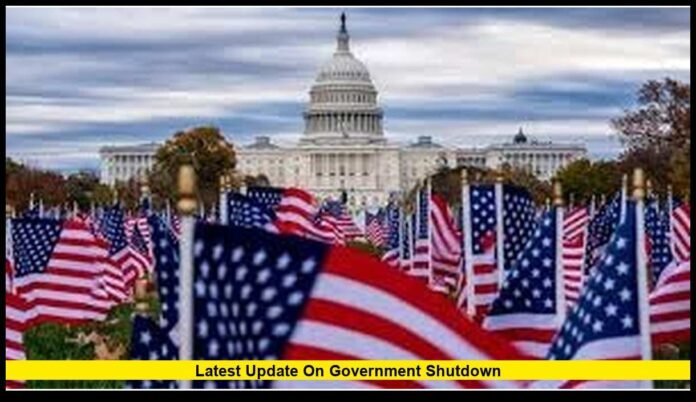

The latest update on government shutdown brings cautious optimism to millions of Americans waiting for relief after more than five weeks of political stalemate. As of today, the U.S. government remains partially closed, marking the longest shutdown in the nation’s history. However, a crucial turning point has arrived—House leaders have confirmed that lawmakers will hold a final vote on Wednesday, November 12, 2025, to approve a bipartisan Senate-passed funding bill that could end the shutdown within days.
With growing financial pressure on federal workers, small businesses, and state governments, the country’s attention now turns to the U.S. Capitol, where the upcoming vote could determine whether the government reopens or the crisis deepens even further.
The Current Situation: What’s Happening Right Now
The latest update on government shutdown shows that the House of Representatives is preparing to consider the Senate-approved continuing resolution (CR), which passed with a 60–40 bipartisan vote earlier this week. The measure provides temporary funding for federal agencies through January 30, 2026, giving Congress additional time to negotiate a comprehensive, long-term budget plan.
House Speaker Mike Johnson (R-LA) announced late Monday that the chamber will reconvene on Wednesday morning for debate, followed by a full floor vote by evening. The bill, if passed without amendments, would be sent to the President’s desk immediately for signing.
President Joe Biden has already confirmed that he will sign the bill as soon as it reaches his desk, ensuring that government operations can resume quickly—possibly within 48 to 72 hours after passage.
What the Senate’s Funding Bill Includes
At the heart of the latest update on government shutdown is the temporary spending measure designed to restart core government functions while avoiding a deeper budget crisis. The bipartisan agreement focuses primarily on funding continuity, avoiding the inclusion of polarizing policy riders that have derailed previous negotiations.
Key components of the funding bill include:
- Funding Extension: Keeps all federal departments and agencies funded through January 30, 2026.
- Back Pay for Federal Employees: Guarantees that all furloughed and unpaid workers will receive their full compensation retroactively.
- Support for Essential Services: Restores funding for programs such as SNAP, WIC, and veterans’ benefits.
- National Security Provisions: Includes short-term funding for defense operations, cybersecurity initiatives, and homeland security measures.
- Disaster Relief Aid: Allocates billions for recovery efforts following recent hurricanes and wildfires across southern and western states.
- Healthcare and Education: Provides temporary extensions for key health and education grants.
Despite these measures, the bill does not address all points of contention. Conservative lawmakers wanted deeper spending cuts, while progressives argued for stronger protections for healthcare subsidies and climate funding. However, both sides ultimately agreed that reopening the government must take priority over ideological differences.
Timeline of Events Leading to the Vote
To fully understand this latest update on government shutdown, it’s essential to look back at how the situation unfolded over the past six weeks:
| Date | Event |
|---|---|
| October 1, 2025 | The federal government shuts down after Congress fails to pass a new budget before the fiscal year deadline. |
| October 10, 2025 | Federal agencies begin furloughing workers as negotiations stall. |
| October 25, 2025 | Public pressure mounts as the shutdown passes the four-week mark. |
| November 5, 2025 | Senate leaders announce progress on a temporary funding framework. |
| November 10, 2025 | Senate passes bipartisan continuing resolution (60–40 vote). |
| November 12, 2025 | House of Representatives scheduled to vote on the measure. |
| November 13–14, 2025 | If passed, the President expected to sign the bill, officially ending the shutdown. |
This timeline reflects a month of negotiations, frustration, and mounting consequences for everyday Americans.
How the Shutdown Has Affected the Nation
Federal Workers and Contractors
The most visible impact of the shutdown has been on federal employees. More than 900,000 workers have missed multiple paychecks, while thousands of contractors who rely on government projects have lost income without assurance of reimbursement.
Air traffic controllers, TSA agents, and law enforcement officers continue to work without pay, creating stress and burnout across critical sectors. The Office of Personnel Management confirmed that many workers have taken part-time jobs or relied on local food banks to survive the shutdown.
Everyday Americans
The shutdown’s effects extend far beyond Washington, D.C. Families who depend on federal assistance programs like SNAP and WIC have faced reduced benefits, and delays in processing applications have left many without food assistance.
National parks, museums, and monuments remain closed, costing local economies millions in lost tourism revenue. Tax refunds, loan applications, and passport processing have been delayed, frustrating citizens across the country.
Economic Consequences
Economists estimate that the shutdown has already cost the U.S. economy over $32 billion, with losses mounting each day it continues. Consumer confidence has plummeted, and business sectors tied to federal contracts—such as defense, infrastructure, and technology—have experienced major slowdowns.
A recent report by the Congressional Budget Office (CBO) projected that each week of continued shutdown adds roughly $1 billion in lost productivity, while the ripple effects may take months to reverse even after reopening.
Political Divisions and the Path Forward
Inside the House
Speaker Mike Johnson faces a difficult challenge balancing the demands of his divided caucus. Hardline conservatives continue to demand spending cuts and structural reforms, while moderates are urging a quick resolution to restore normalcy.
In a statement issued Tuesday morning, Johnson said, “We can debate the future of government spending after we reopen the doors of government itself. Right now, our obligation is to the American people, not partisan politics.”
If Johnson can secure enough Republican votes, alongside expected Democratic support, the bill could pass comfortably. However, any amendments or procedural hurdles could delay progress and risk extending the shutdown further.
The Senate’s Role
Senate Majority Leader Chuck Schumer and Minority Leader Mitch McConnell have both urged the House to pass the bill unchanged. Schumer described the legislation as “a necessary step to restore stability,” while McConnell called it “a win for common sense and governance.”
The White House Response
President Biden has maintained steady pressure on Congress, emphasizing the human cost of the shutdown. “Every day that passes without action is another day that families struggle to pay their bills,” he said. “It’s time to end this.”
Public Reaction Across the Nation
Americans have grown increasingly frustrated as the shutdown continues to disrupt daily life. According to the latest national poll:
- 71% of Americans blame Congress for the shutdown.
- 54% specifically blame House Republicans for the delay.
- 84% say reopening the government should be Congress’s top priority.
Public protests have erupted in several major cities, including Washington, New York, and Los Angeles, with federal employees and small business owners calling for immediate action.
Social media campaigns under hashtags like #EndTheShutdown and #PayTheWorkers have gained millions of interactions, amplifying the call for accountability.
What Happens After the Bill Passes
Should the House pass the bill on November 12, the following sequence will likely occur:
- The President Signs the Bill: Within 24 hours of passage, the bill is expected to be signed into law.
- Government Reopens: Agencies will begin recalling furloughed employees and resuming operations within 48 to 72 hours.
- Back Pay Distribution: Federal workers are expected to receive missed paychecks within five business days.
- Restoration of Services: Programs like SNAP, Medicare, and veterans’ benefits will return to normal schedules.
- Economic Rebound: Analysts expect a short-term boost in spending as federal paychecks are issued and businesses regain stability.
However, the bill’s temporary nature means the funding debate will resume soon, with another deadline looming at the end of January 2026. Lawmakers must still confront deeper disagreements about long-term fiscal priorities.
The Broader Implications for American Politics
The latest update on government shutdown underscores how gridlock has come to define U.S. politics. The prolonged closure has weakened public trust in Congress and raised questions about leadership accountability.
If the House succeeds in passing the bill, it could signal a rare moment of bipartisan cooperation. If it fails, the consequences for both parties could be severe heading into the 2026 election cycle.
- For Republicans: The shutdown has exposed internal divisions and tested Speaker Johnson’s control over his caucus.
- For Democrats: They’ve largely unified behind reopening the government but risk criticism for conceding on policy priorities.
- For the President: A swift resolution could boost his approval ratings and reinforce his administration’s commitment to stability.
Political analysts warn that repeated shutdowns could erode public confidence in democratic institutions and make future negotiations even more volatile.
The Human Stories Behind the Shutdown
Beyond the politics and numbers, the shutdown has deeply affected ordinary people across the country.
Federal Workers:
“I’ve worked for the government for 12 years, and I’ve never seen anything like this,” said a furloughed park ranger in Colorado. “I love my job, but missing two paychecks has put my family in survival mode.”
Small Business Owners:
A Maryland-based IT contractor shared, “Every contract we had with the Department of Defense is frozen. We’re bleeding money every day this continues.”
Parents and Families:
One mother in Texas described the strain of delayed WIC benefits: “We’ve had to stretch every dollar. If this vote fails again, I don’t know how we’ll get by next month.”
These personal accounts reveal the real cost of congressional inaction—millions of Americans living with uncertainty and financial stress.
Looking Ahead: Challenges Beyond the Shutdown
Even after the government reopens, major challenges remain:
- Long-Term Budget Negotiations: Congress must still address broader fiscal disputes before the January 2026 deadline.
- Healthcare Funding: Lawmakers will revisit the issue of healthcare subsidies, which remain excluded from the temporary deal.
- Debt and Deficit Management: The national debt continues to rise, sparking ongoing debates over spending and taxation.
- Public Confidence: Restoring faith in government efficiency will require sustained cooperation and transparency.
Conclusion
The latest update on government shutdown paints a cautiously hopeful picture. After weeks of gridlock, hardship, and economic damage, Congress is finally on the verge of action. The House’s upcoming vote on November 12, 2025, represents a defining moment—not only for the federal government but for the credibility of American democracy itself.
If lawmakers can come together to pass the Senate’s funding bill, the government will reopen, workers will be paid, and vital services will resume. But if they fail once again, the consequences could be catastrophic, both politically and economically.
As Americans await the outcome, one thing is certain: this shutdown has left a lasting mark on the nation’s politics, economy, and trust in leadership.
Do you believe Congress will act responsibly this time? Share your thoughts below and follow updates as the situation unfolds in Washington, D.C.
FAQ
Q1: What is the latest update on government shutdown today?
A1: The House is preparing to vote on November 12, 2025, on a bipartisan Senate-passed bill that could reopen the government within 48–72 hours.
Q2: How long has the government been shut down?
A2: As of now, the shutdown has lasted more than five weeks—making it the longest in U.S. history.
Q3: When will federal employees get paid?
A3: If the bill passes, furloughed and unpaid workers should receive back pay within five business days after government operations resume.
Disclaimer: This article is for informational purposes only and reflects verified developments as of the stated date. Legislative schedules and political decisions are subject to change based on official congressional actions.