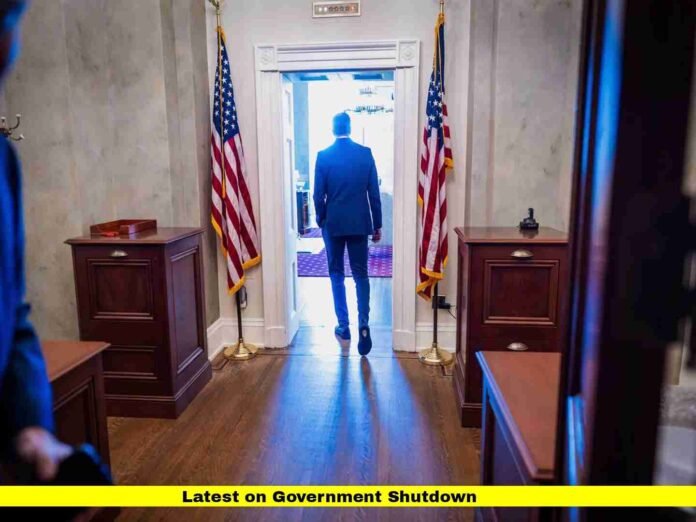

The latest on government shutdown has captured the attention of millions of Americans as Washington D.C. faces one of the most prolonged and disruptive funding crises in recent history. As of November 2025, the federal government is finally moving toward reopening after Congress reached a temporary funding agreement that could end weeks of disruption, furloughs, and economic uncertainty.
Key Points Summary
- The U.S. Senate has approved a stopgap bill to fund the government through January 30, 2026.
- The House of Representatives is expected to vote on the bill within hours, likely ending the record-breaking shutdown.
- Federal agencies have been partially closed since October 1, 2025, marking the longest government shutdown in American history.
- The shutdown has disrupted travel, delayed paychecks, halted services, and strained millions of families.
- The new deal ensures back pay for federal employees but leaves healthcare funding debates unresolved.
How the Shutdown Started
The 2025 government shutdown began on October 1, 2025, when Congress failed to pass essential spending bills to fund federal agencies for the new fiscal year. The primary dispute centered around disagreements between both parties regarding healthcare subsidies and spending levels for defense and social programs.
Republican lawmakers insisted on maintaining tighter budget limits and cutting certain social spending programs, while Democrats demanded the continuation of expanded healthcare subsidies and federal support for food assistance programs. When no agreement was reached before the fiscal deadline, large parts of the federal government were forced to close.
Senate Moves Toward Ending the Shutdown
After weeks of tense negotiations, the Senate finally voted 60-40 in favor of a temporary funding bill. The bipartisan compromise, reached late on November 10, 2025, allows the government to resume operations through January 30, 2026.
The bill restores funding for most federal agencies and provides back pay for furloughed employees. It also includes full-year funding for key departments such as Veterans Affairs and Defense but leaves healthcare subsidies unresolved — an issue likely to return in early 2026 budget talks.
This move marks a major breakthrough after weeks of gridlock, and the House is expected to vote soon to finalize the measure. If passed and signed by the President, the government could reopen within days.
Economic and Public Impact of the Shutdown
The latest on government shutdown developments has drawn nationwide attention because of its severe economic consequences. With the shutdown lasting over six weeks, its toll on everyday Americans and the economy has been significant.
During the closure:
- Hundreds of thousands of federal employees went unpaid or were furloughed.
- Air travel delays and cancellations occurred due to a shortage of air traffic controllers and TSA agents.
- Food assistance programs (SNAP) were temporarily interrupted, causing uncertainty for low-income families.
- Federal contractors and small businesses depending on government projects faced financial strain.
- Public trust in political leadership has continued to decline amid the prolonged crisis.
Economists estimate that each week of the shutdown cost the U.S. economy billions in lost productivity and delayed payments. The Congressional Budget Office will likely release updated estimates once the government reopens.
What the New Funding Bill Includes
The Senate’s short-term funding deal outlines several important measures aimed at restoring government functions and protecting affected workers:
- Funding Extension: Keeps most agencies funded through January 30, 2026.
- Back Pay: Guarantees payment for all federal workers who missed paychecks during the shutdown.
- Veterans and Military: Ensures continued funding for the Department of Veterans Affairs and military operations through the end of the fiscal year.
- SNAP and Food Aid: Allocates additional funding for nutrition programs to ensure food security for millions of Americans.
- Airport and Transportation Operations: Restores full funding for air travel services to prevent further delays and disruptions.
However, not everything was included in the bill. Healthcare subsidies under the Affordable Care Act were not extended, and negotiations on these programs are expected to resume in early 2026.
Why the Disagreements Persisted
The 2025 shutdown became the longest in U.S. history largely due to deep political divisions in Congress.
Democrats pushed to protect healthcare funding and social services, while Republicans sought to curb spending and redirect funds toward national defense and border security. Both sides stood firm, and despite multiple rounds of negotiations, neither party was willing to compromise on key priorities until public pressure reached a boiling point.
The result was a drawn-out standoff that left millions of federal workers and citizens caught in the middle. The crisis has further highlighted the challenges of managing a sharply divided government ahead of a high-stakes election year.
How Federal Workers Have Been Affected
Federal employees have borne the brunt of the shutdown’s impact. With paychecks delayed since early October, many families have struggled to pay rent, mortgages, and utility bills.
Essential workers in departments such as Homeland Security, Transportation, and Defense continued working without pay to maintain critical services. Once the funding bill passes, these workers are expected to receive back pay within the next few weeks, but the financial stress they endured remains a serious concern.
The prolonged uncertainty has also affected morale across government agencies. Many employees have expressed frustration over the repeated political gridlocks that have put their livelihoods at risk.
Impact on Daily American Life
Beyond Washington, the shutdown’s effects have rippled across the nation. From closed national parks to delayed passport processing and disrupted travel, ordinary Americans have felt the consequences firsthand.
Key areas affected include:
- Airports: Staffing shortages caused delays and cancellations.
- National Parks: Many parks were closed or operated with limited services.
- Public Safety: Certain law enforcement and investigative operations were slowed.
- Research and Education: Federal grants and research programs were paused.
These disruptions underline how interconnected government operations are with daily life, and why funding agreements are critical for stability.
Political Fallout
The political consequences of the shutdown are already taking shape. Polls show that public frustration is high across the board, with both parties sharing blame.
However, early data suggests that Republicans in Congress have faced slightly greater public backlash for their role in prolonging the deadlock, while Democrats have been criticized for refusing to compromise on spending caps.
The upcoming legislative session will test whether both parties can work together to finalize a long-term budget deal before the next deadline in January.
What Happens Next
If the House votes to approve the Senate bill and the President signs it, government agencies could reopen within 48 to 72 hours. Federal employees would return to work, and back pay would begin to process.
However, challenges remain:
- Agencies must clear large backlogs of requests, applications, and benefits.
- Economic recovery from delayed payments could take weeks.
- Political negotiations will continue in December and January to avoid another shutdown.
Until a comprehensive long-term spending bill is passed, the risk of another funding lapse will continue to hang over the nation.
The Bigger Picture
The recurring threat of government shutdowns highlights a growing issue in U.S. governance — the inability to find bipartisan agreement on essential fiscal matters.
Analysts argue that Congress may need structural reforms such as automatic continuing resolutions to prevent future shutdowns when budget negotiations stall. This would keep federal agencies funded temporarily, even when lawmakers fail to agree on new spending levels.
Until such reforms are enacted, shutdowns may remain a recurring feature of American politics, affecting workers, families, and the nation’s global reputation.
Public Reaction
Across social media platforms, citizens have voiced frustration, anger, and fatigue over the political impasse. Hashtags like #EndTheShutdown and #PayFederalWorkers have trended repeatedly.
Communities across the country have organized food drives and support funds for furloughed workers, showing solidarity in a difficult time. Many Americans say the shutdown has underscored the importance of government transparency and accountability.
Conclusion
The latest on government shutdown brings cautious optimism. With a Senate-approved funding bill on the table, an end to the record-breaking shutdown is finally within reach.
But even if the lights turn back on in federal buildings, the broader challenge remains: restoring public confidence and preventing future shutdowns. As the government prepares to reopen, Americans hope this episode serves as a lesson — that political gridlock should never come at the expense of the people it serves.
Stay tuned for more updates, and share your thoughts on how the shutdown has affected you or your community.