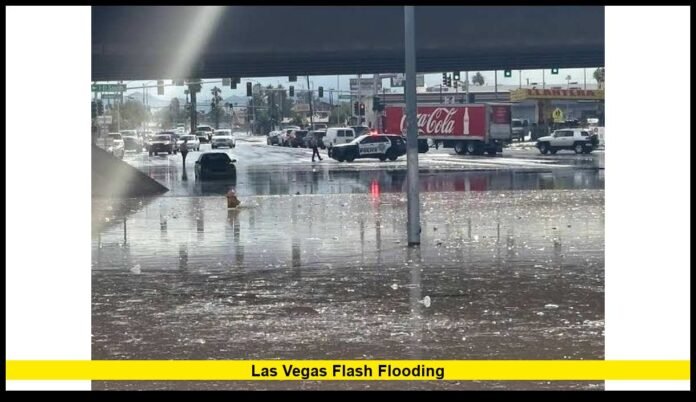

Las Vegas flash flooding remains a serious weather concern following heavy thunderstorms across Southern Nevada on October 30 and October 31, 2026. The storms triggered flash flood warnings, flooded roadways, prompted emergency water rescues and left mud and debris across several locations. Parts of the Las Vegas Valley, including North Las Vegas, Centennial Hills, Lone Mountain, Aliante and Summerlin, were included in warnings issued on Halloween evening.
The recent flooding also affected Henderson, where a person died after being rescued from a flooded wash on October 30. Emergency responders conducted multiple water rescues as intense rainfall sent water across roads and drainage areas. These incidents demonstrate how quickly desert thunderstorms can create dangerous conditions for drivers and pedestrians.
As of November 1, residents and visitors should distinguish between expired storm warnings and any current alerts. The Halloween flash flood warnings had specific expiration times and should not be treated as active today. Anyone planning to travel around Las Vegas, Henderson or Lake Mead should check current weather alerts and road conditions before leaving.
Latest Las Vegas Flash Flooding Updates
Heavy thunderstorms brought dangerous conditions to parts of Clark County during the final days of October. The National Weather Service issued flash flood warnings as radar and rainfall observations indicated that intense precipitation could cause rapid flooding.
On October 31, a warning covered parts of the northwestern Las Vegas Valley. The affected locations included North Las Vegas, Lone Mountain, Centennial Hills, Aliante and Summerlin. Forecasters reported rainfall totals ranging from approximately one-quarter inch to three-quarters of an inch in parts of the warned area.
Although these amounts may appear relatively small compared with rainfall totals in other parts of the country, intense precipitation can overwhelm drainage systems in desert communities. Water can collect on paved surfaces, move rapidly through washes and accumulate in underpasses.
The October 30 storms also caused significant flooding in Henderson and around Lake Mead Parkway. Emergency crews responded to multiple incidents involving people caught in floodwater, while mud and rocks made some roads impassable.
The most important current consideration is whether another storm or local weather alert affects a specific location. An expired warning does not establish that every road is safe, and reports of earlier closures should not be mistaken for confirmation of current closures.
Residents should monitor official weather information and follow instructions from emergency personnel when conditions change.
October 31 Flash Flood Warnings Across the Las Vegas Valley
Halloween evening brought heavy rain to parts of the Las Vegas Valley, creating hazardous conditions for residents, drivers and people attending outdoor activities.
The National Weather Service issued warnings for portions of northwestern Clark County. The alerts identified North Las Vegas and several surrounding communities where thunderstorms could produce dangerous runoff.
Rainfall observations indicated that some locations had received between 0.25 and 0.75 inches of rain during the warning period. Forecasters cautioned that flooding could affect streets, highways, underpasses, drainage channels and other low-lying areas.
The warnings covered locations including:
- North Las Vegas: Thunderstorms created a risk of dangerous runoff and street flooding.
- Centennial Hills: Heavy rain affected the northwestern part of the valley.
- Lone Mountain: The community was included in the affected area.
- Aliante: Residents faced potential flooding from intense rainfall.
- Summerlin: Parts of the western valley were included in the warnings.
- Floyd Lamb Park: The park appeared among the locations identified in the warning information.
The alerts had specific expiration times on October 31. They should not be interpreted as active warnings on November 1 without confirmation from updated weather information.
Even after a warning expires, runoff may continue moving through drainage channels. Mud, rocks and other debris can also remain on roads after the rain ends.
Drivers should avoid flooded streets and never cross a road when water covers the pavement. Conditions can change quickly, particularly when additional thunderstorms develop nearby.
Henderson Flash Flooding Turns Deadly
One of the most serious recent incidents occurred in Henderson on Friday, October 30.
Heavy rain produced dangerous flooding around East Lake Mead Parkway, Lake Las Vegas Parkway and other locations in the area. Emergency responders conducted swift-water rescues as vehicles encountered flowing water and debris.
Authorities reported that a person rescued from a flooded wash near North Pueblo Boulevard experienced cardiac arrest. Emergency crews provided immediate care and transported the person to a hospital, where the person was pronounced dead.
Other incidents involved people trapped in or around vehicles affected by floodwaters. Responders assisted people near Lake Las Vegas and other Henderson locations as the storm disrupted travel.
The flooding also left significant debris on roads. Reports described large rocks, mud and flowing water across East Lake Mead Parkway near Lake Las Vegas Parkway. The roadway became impassable during the incident.
These events highlight the dangers of driving through floodwater. Even a relatively short stretch of water can conceal road damage or create a current strong enough to move a vehicle.
Residents should avoid washes and drainage channels during heavy rainfall. Water may also arrive from storms occurring farther upstream, meaning a location can flood even when rain has stopped overhead.
Lake Mead Parkway Road Closures and Flood Damage
Lake Mead Parkway experienced significant flooding during the October 30 storm. Water, mud and large rocks covered sections of the roadway near Lake Las Vegas Parkway, creating dangerous conditions for motorists.
The flooding caused traffic backups and required crews to address the debris. Other roads in the Lake Mead National Recreation Area also experienced storm-related problems.
Officials reported closures on Lakeshore Road near Boulder Beach and Northshore Road near mile marker 7 after floodwater deposited rocks and debris on the roadways.
The National Park Service subsequently reported clearing debris from affected roads. However, reopening a roadway does not guarantee that all nearby routes or recreational areas are free of hazards.
Drivers heading toward Lake Mead, Lake Las Vegas or surrounding recreation areas should check current road conditions before traveling. Flash flooding can damage road surfaces, move debris into traffic lanes and create additional closures if more rain develops.
Motorists should obey barricades and warning signs. Driving around a closure can expose people to hazards that emergency crews have not yet cleared or inspected.
Las Vegas Strip Flooding During Recent Storms
The Las Vegas Strip and nearby roads have also experienced flooding during recent October storms.
On October 11, rainfall associated with the remnants of Tropical Storm Rachel affected parts of the valley. Floodwater disrupted traffic around portions of the Strip and nearby streets, while crews worked to remove debris and restore access.
The incident demonstrated that major tourist areas can experience sudden flooding despite Las Vegas’s typically dry climate.
Heavy rain can affect hotel access roads, parking areas, pedestrian routes and nearby intersections. Water may also collect in underpasses or other low-lying sections of the road network.
Visitors unfamiliar with local conditions should avoid walking through flowing water or attempting to cross flooded streets to reach a hotel, restaurant or entertainment venue.
Hotel staff and local emergency officials can provide practical instructions when severe weather affects access. Travelers should follow road closures rather than relying on navigation directions that may not reflect the latest conditions.
The October 11 flooding was a separate event from the October 30 Henderson incidents and the October 31 flash flood warnings.
Why Las Vegas Experiences Flash Flooding
Las Vegas sits in the Mojave Desert, where rainfall is often limited but can arrive in intense bursts. When thunderstorms develop, water may accumulate rapidly on paved surfaces and flow toward lower ground.
Several factors contribute to flash flooding in the region.
Intense rainfall: A thunderstorm can produce heavy rain over a short period. Localized downpours may overwhelm drainage systems even when nearby neighborhoods receive much less precipitation.
Urban development: Roads, sidewalks, rooftops and parking lots prevent rainfall from soaking directly into the ground. Water instead runs across these surfaces and collects in streets or drainage channels.
Desert washes: Dry washes can appear harmless for much of the year. During storms, however, they can carry powerful currents from rainfall occurring miles away.
Low-lying roadways: Underpasses, dips and other low sections can collect water quickly. Drivers may have difficulty judging the depth or strength of the current.
Mud and debris: Floodwater can carry rocks, sand, branches and other materials onto roads. These materials can obstruct traffic and create additional hazards after rainfall ends.
These conditions explain why residents should take weather warnings seriously, even when the total rainfall seems modest.
Which Areas Are at Risk During Heavy Rain?
Flooding can occur in different parts of the Las Vegas Valley depending on the location and intensity of thunderstorms.
The October 31 warnings identified several northern and western communities, including North Las Vegas, Centennial Hills, Lone Mountain, Aliante and Summerlin.
The October 30 storm caused serious problems in Henderson and around Lake Mead Parkway. Reports also documented flooding at several Las Vegas intersections and near drainage channels.
These incidents do not mean every named location is currently flooded. They demonstrate that severe rainfall can affect multiple parts of Clark County during the same storm.
During future storms, residents should pay particular attention to:
- Underpasses and low-lying roads.
- Streets beside washes and drainage channels.
- Roads crossing desert terrain.
- Areas where water regularly accumulates.
- Roads near hills and slopes where runoff can arrive quickly.
- Park access roads and routes around Lake Mead.
The actual risk depends on current rainfall, terrain and official warnings. Residents should check the alert boundaries rather than assume that an entire city faces identical conditions.
Is There a Current Flood Warning in Las Vegas?
The Halloween flash flood warnings described in recent reports had expiration times on October 31. Those specific warnings are not automatically active on November 1.
Current conditions must be verified through updated weather alerts. A flash flood watch, flood advisory and flash flood warning have different meanings.
A flood watch means conditions could support flooding. Residents should remain alert and prepare to change their plans if necessary.
A flood advisory indicates that flooding or water accumulation may create problems, although the expected impacts can vary.
A flash flood warning means dangerous flooding is occurring or expected soon in the specified area. People in the affected location should take immediate precautions.
The precise boundaries and expiration times matter. An alert affecting one part of Clark County does not necessarily apply to every Las Vegas neighborhood.
Before traveling, residents should check the latest forecast and any active warnings for their location. They should also review road conditions, particularly after storms that have already produced flooding.
What Drivers Should Do During Flash Flooding
Driving through floodwater is extremely dangerous. Water can hide potholes, damaged pavement and debris, while a strong current can move a vehicle away from the road.
The National Weather Service promotes the safety message “Turn Around, Don’t Drown.” Drivers should never attempt to cross a flooded road when water covers the pavement.
Follow these precautions during heavy rain:
- Avoid flooded roads. Turn around and choose another route.
- Obey road closures. Never drive around barricades or warning signs.
- Stay away from underpasses. Water can collect rapidly in low sections.
- Do not follow other vehicles into water. Their ability to pass does not mean your vehicle can do the same.
- Watch for debris. Rocks and mud may remain after the storm.
- Check road conditions before leaving. A previously open road may close after additional rainfall.
- Follow emergency instructions. Responders may restrict access to protect drivers and pedestrians.
If your vehicle becomes trapped in rising water, contact emergency services when possible and follow their instructions. Do not enter a strong current in an attempt to reach safety.
Safety Tips for Residents and Tourists
People on foot also face serious risks during flash flooding. Moving water can knock a person off balance, while debris may conceal dangerous obstacles.
Residents and visitors should stay away from washes, drainage channels and flooded crossings during storms. Never enter a wash to retrieve an object or inspect rising water.
Keep a charged phone available and enable emergency weather notifications. These steps can help people receive warnings when conditions deteriorate.
Tourists should check weather conditions before walking between hotels or driving to attractions. If a road closes, choose a safe alternative rather than attempting to pass through water.
People visiting Lake Mead should also review park conditions because flooding can affect recreational roads and access points beyond the city.
If authorities issue an evacuation instruction, follow it promptly. Personal belongings should never take priority over immediate safety.
How Flooding Affects Traffic and Daily Activities
Flash flooding can interrupt daily travel across Las Vegas and Henderson. A single flooded intersection can force drivers onto alternative routes and create delays in surrounding neighborhoods.
Road crews may need to remove mud, rocks and branches before reopening affected streets. Some locations may require additional inspections to identify damage to pavement or drainage infrastructure.
The October 30 storm demonstrated these challenges when Lake Mead Parkway became impassable because of water and debris.
Flooding can also affect parking areas, pedestrian access and trips to parks. Visitors should postpone nonessential travel when official warnings identify a serious threat.
Residents should allow additional travel time during unsettled weather. They should also avoid routes that pass through washes or other areas known to experience rapid runoff.
What Happens After Floodwaters Recede?
Recovery work often continues after the rain stops.
Road crews may remove mud, rocks, sand and branches from streets. Officials may inspect affected areas for damaged pavement, blocked drainage systems and other hazards.
Floodwater can leave behind unstable ground and debris that is difficult to see from a vehicle. Drivers should reduce speed near recently affected locations and follow instructions from road crews.
Residents should avoid entering damaged buildings or areas until authorities determine that it is safe. Electrical equipment exposed to water can create additional risks.
Anyone who notices a dangerous road condition should report it to the appropriate local authorities rather than attempting to clear the hazard themselves.
How to Check the Latest Las Vegas Flood Alerts
Residents should use current official information when assessing the risk of flooding.
The National Weather Service provides weather alerts, forecasts and warnings for Las Vegas and surrounding communities. Local authorities provide information about emergency responses and road restrictions.
Before traveling, check:
- Alert type: Determine whether a watch, advisory or warning applies.
- Affected location: Confirm whether your neighborhood or route falls within the alert area.
- Expiration time: Check whether the warning remains active.
- Road conditions: Verify closures and reopening announcements.
- Safety instructions: Follow any directions from emergency officials.
Social media posts and videos may help illustrate conditions, but they can show an earlier event or a location far from your route. Verify the time and location before relying on them for travel decisions.
Final Update on Las Vegas Flash Flooding
Recent storms have brought dangerous flooding to Las Vegas, Henderson and nearby areas. The October 30 incidents included emergency water rescues and a fatality, while October 31 thunderstorms prompted additional flash flood warnings across parts of the valley.
Although those particular warnings have expired, residents and visitors should continue checking current alerts and road conditions before traveling. Floodwater, mud and debris can remain dangerous after rainfall ends, and new storms can create additional hazards.
Have you experienced heavy rain or flooding in the Las Vegas area? Share your observations in the comments and stay alert for the latest confirmed weather and road updates.