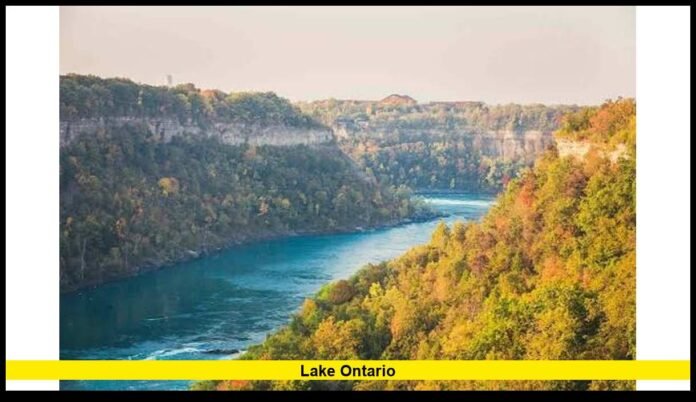

Lake Ontario has become part of the latest U.S.-Canada political dispute after President Donald Trump suggested renaming the Great Lake “Lake America” as trade tensions with Canada continue to rise.
Trump’s proposal does not mean the lake has officially received a new name. As of the latest verified updates, government agencies in both countries continue to use the established name, while the proposed change remains a political suggestion.
The comment arrived during a fresh escalation in the trade relationship between the United States and Canada. New U.S. tariffs on Canadian products and planned Canadian countermeasures have increased tensions between Washington and Ottawa.
Trump’s reference to Lake Ontario adds a symbolic geographic element to the dispute because the lake is shared by the United States and Canada.
Trump Raises the Idea of Renaming the Lake
President Donald Trump raised the proposed name change in a Truth Social post on August 25.
He said the United States was giving serious consideration to calling the lake “Lake America.” His remarks connected the proposal with the deteriorating commercial relationship between the United States and Ontario.
The statement attracted immediate attention because Lake Ontario is one of the five Great Lakes and forms part of the international boundary between New York and the Canadian province of Ontario.
Trump’s wording is important. He proposed considering the new name rather than announcing that a completed renaming had already taken place.
That means references to “Lake America” currently describe a proposed name, not the established official name of the waterway.
No verified information available on August 25 showed that the lake had been universally renamed.
Lake Ontario Remains the Established Name
The established geographic name remains Lake Ontario.
U.S. and Canadian government agencies continue to use that name in information about water quality, geography, environmental programs and the Great Lakes system.
The Great Lakes Commission identifies Lake Ontario as the smallest of the five Great Lakes by surface area. It covers about 7,340 square miles and reaches an average depth of approximately 283 feet.
The lake stretches for roughly 193 miles from west to east and reaches about 53 miles at its widest point.
Its location makes it especially important to both countries.
Ontario borders the lake to the north and west, while New York borders it to the south and east. The lake eventually drains through the St. Lawrence River toward the Atlantic Ocean.
Nothing about those geographic facts has changed because of Trump’s proposal.
Why the Proposed Name Is Politically Significant
The proposed renaming is closely connected to the current trade conflict.
Trump’s statement came as Washington and Ottawa faced another major disagreement over tariffs and cross-border commerce.
The United States recently imposed a 50% tariff on approximately $20 billion worth of Canadian goods. Canada has been preparing retaliatory measures in response.
Ontario has a particularly important role in the dispute because it is Canada’s largest province by population and has deep economic ties with the United States.
The province’s automobile industry is closely connected to U.S. manufacturing networks. Other industries also depend heavily on cross-border commerce.
That economic relationship makes Ontario a central part of the broader trade conversation.
Trump’s decision to bring Lake Ontario into that dispute gives the geographic name additional political meaning.
A Shared Lake Between Two Countries
One reason the proposed renaming has generated so much attention is the lake’s international status.
Lake Ontario is not entirely within the United States.
Its northern shoreline belongs to Ontario, Canada, while its southern and eastern shoreline lies within New York.
The lake therefore represents a shared natural resource.
Both countries cooperate on issues involving water quality, environmental protection and the wider Great Lakes ecosystem.
The International Joint Commission plays an important role in U.S.-Canada cooperation involving boundary waters. The Great Lakes Water Quality Agreement also provides a framework for joint efforts to protect the Great Lakes.
That existing cooperation makes any discussion about changing the lake’s name more complicated than changing the name of a feature located entirely within one country.
Could the United States Use ‘Lake America’?
A major distinction exists between a U.S. federal naming decision and an internationally recognized geographic name.
The president can influence how geographic features are identified in U.S. federal government materials. However, such an action would not automatically require Canada to adopt the same terminology.
Canada controls its own official geographic naming practices.
International organizations and cross-border institutions also have their own procedures and established terminology.
As a result, even if the United States formally adopted “Lake America” for federal purposes, Canada could continue using Lake Ontario.
That possibility is especially relevant because the lake sits directly along the international boundary.
As of the latest verified information, no completed federal action had replaced the established name.
Canada Continues to Use Lake Ontario
Canadian authorities have not adopted “Lake America” as the name of the lake.
Canadian government information continues to identify the waterway as Lake Ontario.
The Canadian government also continues to describe the lake as part of the Great Lakes system and the shared watershed between Canada and the United States.
Canadian officials have largely focused their public comments on the trade dispute rather than accepting Trump’s proposed terminology.
The Canadian response is significant because any lasting international change would face the practical reality of two countries using the same waterway.
A U.S. naming decision alone would not necessarily produce agreement across the border.
Trump’s Earlier Geographic Naming Push
The Lake Ontario proposal also fits into Trump’s broader interest in geographic names.
Earlier in his presidency, Trump supported changing the U.S. government’s official terminology for the Gulf of Mexico to the “Gulf of America.”
That earlier campaign demonstrated how geographic naming can become part of presidential policy and political messaging.
The proposed Lake Ontario change is different because the lake is directly shared by two countries.
The international boundary adds another layer to the debate.
It also means that a new U.S. federal designation could exist alongside Canada’s continued use of Lake Ontario.
How Large Is Lake Ontario?
Lake Ontario may be the smallest Great Lake by surface area, but it remains a major freshwater resource.
Key facts include:
| Feature | Lake Ontario |
|---|---|
| Region | Great Lakes |
| Countries | United States and Canada |
| U.S. state bordering lake | New York |
| Canadian province | Ontario |
| Approximate surface area | 7,340 square miles |
| Approximate length | 193 miles |
| Maximum width | About 53 miles |
| Average depth | About 283 feet |
| Drainage outlet | St. Lawrence River |
| Established name | Lake Ontario |
The lake’s position at the eastern end of the Great Lakes makes it an important part of the larger freshwater system.
Water flows into Lake Ontario primarily through the Niagara River from Lake Erie. From Lake Ontario, water continues through the St. Lawrence River.
That interconnected system makes cooperation between the United States and Canada especially important.
Why the Lake Matters to New York
Lake Ontario has major importance for New York communities.
Its shoreline supports tourism, boating, fishing and recreational activities. The lake also contributes to local economies and remains an important environmental resource.
Several New York communities depend on the lake’s waters and surrounding ecosystem.
New York environmental authorities continue to use the name Lake Ontario in their water-quality and watershed information.
That means U.S. residents encountering state government information should expect to see the traditional name unless a formal federal naming change alters relevant government terminology.
For now, the established terminology remains unchanged.
Why the Lake Matters to Ontario
The lake is equally important to Canada’s Ontario province.
Toronto sits along its northwestern shore, while other major communities also occupy the lake’s Canadian shoreline.
The lake forms part of the geographic identity of the province and contributes to transportation, recreation, tourism and freshwater management.
Ontario’s connection to the lake is also why Trump’s comments carry a particularly political tone.
The proposal emerged at a time when Washington and Ottawa were already arguing over trade policy.
By linking the lake’s possible new name to the business relationship with Ontario, Trump turned a geographic feature into another element of the political dispute.
The Name Has Not Been Officially Replaced
Readers should be cautious about headlines suggesting that Lake Ontario has already become Lake America.
That is not the current verified situation.
Trump has suggested the change, but a proposal is not the same as a completed renaming.
The latest available information continues to show:
- Lake Ontario remains the established name.
- U.S. agencies have not universally switched to “Lake America.”
- Canadian authorities continue to use Lake Ontario.
- No international agreement has replaced the existing name.
- The proposed name is directly connected to the current U.S.-Canada political dispute.
These distinctions are important because geographic naming can involve multiple governments and institutions.
Trade Tensions Provide the Backdrop
The timing of Trump’s comments is closely connected to the latest tariff dispute.
The United States and Canada have entered another difficult phase in their trade relationship.
Washington has imposed new tariffs on Canadian products, while Ottawa has prepared retaliatory measures.
Canadian Prime Minister Mark Carney has said Canadian counter-tariffs would take effect September 8.
The dispute has placed additional pressure on industries that depend on cross-border trade.
Ontario is particularly exposed because of its extensive economic relationship with the United States.
The proposed Lake America name therefore appeared alongside a much broader argument about tariffs, trade and Canada’s relationship with Washington.
What Happens to the Name Next?
There was no confirmed timetable for a completed U.S. renaming of Lake Ontario as of August 25.
Any formal federal action would need to be distinguished from Trump’s public comments.
If the administration moves forward, U.S. government agencies could face questions about how and where the proposed name should be used.
Canada would then have its own decision to make.
Because the lake is shared, the possibility of two different names being used by the two countries cannot be dismissed if the United States formally adopts a different designation.
However, no such completed change had been confirmed in the latest verified information.
For now, official references continue to identify the lake as Lake Ontario.
What Americans Should Know About the Proposal
The most important fact for U.S. readers is simple: Lake Ontario has not been officially renamed across North America.
President Trump has floated “Lake America” as a possible U.S. name during a period of intense disagreement with Canada.
The proposal has attracted attention because the lake sits along the U.S.-Canada border and is part of a shared freshwater system.
Its existing name remains in use by American and Canadian government agencies.
The lake’s environmental management also continues under established cross-border agreements.
That means the political debate has not changed the lake itself or its existing geographic status.
Instead, the proposal has created another symbolic issue within an increasingly tense relationship between Washington and Ottawa.
Lake Ontario Remains at the Center of a Border Dispute
The latest controversy illustrates how the current U.S.-Canada dispute has moved beyond tariffs and economic policy.
A major Great Lake has now become part of the political conversation.
For Americans living around the Great Lakes, the issue also carries practical significance. Lake Ontario remains a shared resource whose health depends on cooperation between the United States and Canada.
For Canadian communities, the lake remains an important part of Ontario’s identity and geography.
For now, the name remains unchanged.
Trump’s “Lake America” proposal is therefore best understood as a new political development rather than a completed geographic renaming.
The debate over Lake Ontario’s name is still unfolding, so share your view and stay tuned for verified developments as the U.S.-Canada dispute continues.