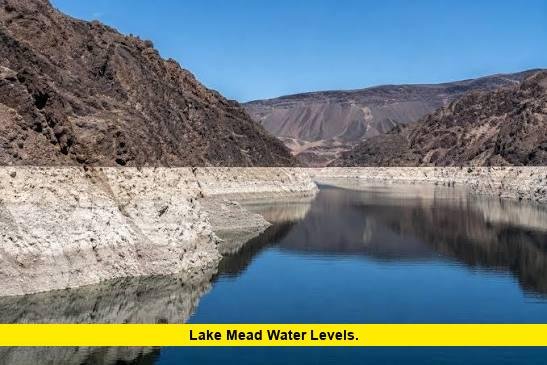

Lake Mead water levels have dropped to their lowest point ever recorded, and the milestone is raising fresh alarm across the American Southwest. Federal data released this month confirms the nation’s largest reservoir has slipped past the mark set just four years ago, deepening a water crisis that touches tens of millions of people.
A New Record for the Nation’s Largest Reservoir
The U.S. Bureau of Reclamation reported that Lake Mead’s surface elevation fell to 1,040.5 feet on Thursday, August 6, 2026. That number edges past the previous record low of 1,040.58 feet, set in July 2022. It marks the lowest level the lake has reached since Hoover Dam first began filling it in the 1930s.
Independent reservoir tracking sites confirm the same trend. As of August 5, 2026, Lake Mead sat at 1,040.61 feet, holding roughly 7,019,720 acre-feet of water. That puts the lake at about 26.9 percent of its total 26.12 million acre-feet capacity. Full pool sits at 1,229 feet, meaning today’s reading is nearly 181 feet below maximum capacity.
How Fast the Lake Has Fallen
The decline has been steady and measurable in recent weeks. Reclamation data shows the following changes leading up to the new record:
- Down 0.51 feet over the past week
- Down 2.91 feet over the past month
- Down 13.65 feet over the past year
- Falling steadily since March 2, 2026, according to Bureau of Reclamation tracking
Storage now sits at only 39 percent of the historical average for early August, based on 92 years of federal record-keeping. When Lake Powell and Lake Mead are counted together, the two reservoirs haven’t held this little water since 1957, back when Glen Canyon Dam was still under construction and Lake Powell hadn’t even begun to fill.
Why Lake Mead Keeps Dropping
The Colorado River has struggled through one of the driest multi-decade stretches in roughly 1,200 years, and 2026 has been especially harsh. Snowpack across the river’s upper watershed hit its lowest level since record-keeping began in the 1930s, leaving little runoff to refill the system this spring and summer.
Demand hasn’t slowed down to match the shrinking supply. Farms, cities, and tribal communities across seven states and Mexico all draw from the same river, and average consumptive use across the basin has totaled about 13.1 million acre-feet a year in recent seasons. The Lower Basin states of Arizona, California, and Nevada account for roughly half of that draw on their own.
Lake Mead currently operates under a Level 1 Shortage Condition for calendar year 2026. Under existing rules, Nevada must cut its consumptive use by 13,000 acre-feet and contribute another 8,000 acre-feet through the Drought Contingency Plan. Arizona and Mexico carry far larger reduction obligations. Combined, the mandated savings from Arizona, Nevada, and Mexico this year equal roughly 8 feet of elevation that Lake Mead would otherwise lose.
A New Federal Framework Through 2036
The record low arrives just days after the Bureau of Reclamation finalized a long-term operating plan for the reservoir system. On July 31, 2026, the Department of the Interior released its Post-2026 Colorado River Reservoir Operations Final Environmental Impact Statement, replacing guidelines that date back to 2007 and are set to expire at the end of this year.
Rather than locking in fixed cuts for the next decade, the plan builds what officials call an adaptive decision framework. Two-year operating guidelines will be negotiated on a rolling basis through 2036, adjusted as snowpack, runoff, and reservoir levels shift.
Key elements of the framework include:
- Annual Glen Canyon Dam releases ranging between 5 million and 12 million acre-feet, depending on conditions
- Lower Basin shortages of up to 3 million acre-feet a year for Arizona, California, and Nevada combined
- Storage of up to 8 million acre-feet of conserved water in Lake Mead and 3 million acre-feet in Lake Powell for future use
- Voluntary Upper Basin conservation of up to 200,000 acre-feet, depending on hydrology
Interior Secretary Doug Burgum said the department has a responsibility to keep the Colorado River system reliable for the communities and industries that depend on it. Assistant Secretary for Water and Science Andrea Travnicek described the approach as one that balances flexibility with predictability as drought conditions continue to evolve.
Under the new framework, the Upper Basin states of Colorado, Utah, Wyoming, and New Mexico face no mandatory cuts for now. The bulk of the reduction burden falls on the Lower Basin, with Arizona expected to absorb the largest share of any future cuts while California is shielded during smaller shortage years.
What the Record Low Means for the Southwest
Lake Mead, formed by Hoover Dam on the Colorado River between Nevada and Arizona, supplies water to more than 40 million people across seven states and northern Mexico. It also generates hydropower and supports recreation, wildlife habitat, and agriculture throughout the region.
Reclamation’s July 2026 projections placed Lake Mead’s elevation at roughly 1,037 feet under its most probable 24-month outlook, signaling the lake may sink even lower before conditions stabilize. Officials continue to watch three critical thresholds along the way down: 1,075 feet, 1,050 feet, and 1,025 feet, each of which triggers deeper shortage tiers under existing river management rules.
Past conservation agreements have already made a measurable difference. Officials credit prior deals with keeping Lake Mead roughly 150 feet higher than it would otherwise stand today, and more conservation efforts are planned for coming years. A formal federal operating decision under the new 2036 framework is expected before the 2027 water year begins on October 1, 2026, though negotiations among the seven basin states remain ongoing.
Bottom Line
Lake Mead water levels have now broken the record set in 2022, sinking to a depth not seen since the lake first began filling nearly a century ago. With snowpack at historic lows and demand still outpacing supply, water managers across the Southwest are racing to finalize new rules before the current guidelines expire this year.
What do you think the Southwest should do next to protect its water supply? Share your thoughts in the comments below.