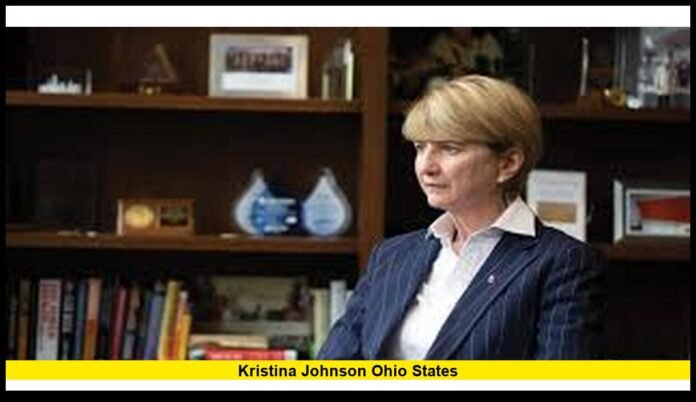

Kristina Johnson Ohio State remains a widely searched topic as students, educators, and alumni continue discussing her leadership as the 16th president of The Ohio State University. Johnson served as president from August 2020 until her resignation in May 2023. During that period, she led one of the largest public universities in the United States through a challenging era that included the COVID-19 pandemic, expanded research initiatives, and strategic academic programs.
Her presidency marked an important milestone for the institution because she became the first woman to permanently hold the role of president at Ohio State. Johnson brought a background that combined scientific research, engineering expertise, business leadership, and federal government service. Her time at the university reflected both her experience in technology innovation and her focus on strengthening research and education.
Background and Early Life
Kristina M. Johnson was born on May 7, 1957, in St. Louis, Missouri. From an early age, she developed a strong interest in science and engineering.
Her academic achievements eventually led her to pursue advanced education in electrical engineering. Johnson attended Stanford University, where she completed all three of her major academic degrees.
Her educational background includes:
| Degree | Institution |
|---|---|
| Bachelor of Science in Electrical Engineering | Stanford University |
| Master of Science in Electrical Engineering | Stanford University |
| Ph.D. in Electrical Engineering | Stanford University |
Her research focused on optics and electrical engineering, fields that later shaped her professional career.
These disciplines involve the study of light, imaging systems, and advanced optical technologies.
Scientific Research Career
Before entering university leadership roles, Johnson established herself as a respected scientist and researcher.
Her work focused on optical engineering and imaging systems. Optical engineering plays an important role in modern technologies such as cameras, displays, and communication devices.
Johnson’s research led to:
- Numerous scientific publications
- Several patents related to optical technology
- Contributions to innovations in display and imaging systems
Her technical work earned recognition in the engineering community.
Johnson later became a member of several professional organizations dedicated to science and engineering research.
Academic Positions at Major Universities
Johnson spent many years teaching and conducting research at major universities.
Her academic career included faculty positions at several institutions.
These roles allowed her to combine research with teaching and mentorship.
Universities where she worked include:
- University of Colorado Boulder
- Duke University
- Johns Hopkins University
At Johns Hopkins, she served as a professor of electrical and computer engineering.
Her work helped train students entering careers in engineering, science, and technology development.
The combination of research experience and teaching leadership prepared her for future administrative positions.
Role in the U.S. Department of Energy
Johnson expanded her professional experience by serving in the federal government.
From 2009 to 2010, she held the position of Under Secretary of Energy in the United States Department of Energy.
This role placed her among the top officials responsible for overseeing national energy research programs.
Her responsibilities included supervision of major scientific programs involving:
- Energy innovation research
- National laboratories
- Advanced technology development
The Department of Energy manages a large network of laboratories that conduct research in physics, energy systems, and environmental science.
Johnson’s leadership role required coordination with scientists, engineers, and policymakers across the country.
Leadership at SUNY Polytechnic Institute
Before becoming president of Ohio State, Johnson served as president of SUNY Polytechnic Institute.
She assumed the position in 2017.
SUNY Polytechnic focuses heavily on engineering and technology fields such as nanotechnology and semiconductor research.
During her leadership, the institution emphasized partnerships between universities and private industry.
These collaborations supported research and technology development.
Johnson worked to strengthen connections between the university and companies involved in advanced manufacturing and innovation.
Her experience leading a research-focused institution contributed to her selection for leadership at Ohio State.
Selection as Ohio State University President
The Ohio State University Board of Trustees announced Johnson as the institution’s 16th president in 2020.
She officially began her presidency on August 24, 2020.
The appointment represented a historic moment in the university’s history.
Johnson became the first permanent female president of Ohio State.
Ohio State is one of the largest universities in the United States, with tens of thousands of students across multiple campuses.
Leading such a large institution requires experience in academic administration, research development, and financial management.
The board selected Johnson after a national search that sought a candidate capable of guiding the university’s future growth.
Challenges During the Pandemic
Johnson began her presidency during the global COVID-19 pandemic.
Universities across the United States faced unprecedented challenges during this period.
Ohio State had to make critical decisions about campus safety and academic operations.
Key issues included:
- Protecting student and staff health
- Managing remote and hybrid learning
- Maintaining research activity
- Supporting student housing and campus life
The university implemented health measures and flexible learning options to continue educational programs during the pandemic.
Johnson worked with faculty, health experts, and administrators to navigate these complex challenges.
Focus on Research Growth
Ohio State already ranked among the leading research universities in the country.
Johnson emphasized expanding research opportunities and strengthening innovation initiatives.
Her administration highlighted several areas of focus.
These included:
- Artificial intelligence research
- Biomedical innovation
- Advanced manufacturing
- Energy and sustainability technologies
Ohio State continued increasing research funding during her presidency.
The university’s research programs contribute to scientific discoveries, medical advancements, and technology development.
Student Success and Academic Programs
Johnson’s administration also promoted initiatives aimed at improving student outcomes.
Ohio State continued investing in programs designed to support student achievement.
Important priorities included:
- Expanding scholarships and financial aid
- Enhancing career preparation programs
- Supporting diversity and inclusion initiatives
- Strengthening online education resources
These programs aimed to improve access to higher education and help students succeed in competitive job markets.
Johnson often emphasized the importance of connecting education with innovation and workforce development.
Ohio State University’s National Influence
Ohio State plays a major role in higher education in the United States.
The university was founded in 1870 and has grown into a large public research institution.
Key features of the university include:
- A large student population
- Extensive academic programs
- Nationally recognized research initiatives
- Prominent athletic programs
The institution contributes significantly to research, economic development, and workforce education in Ohio and across the country.
Leadership at Ohio State therefore carries national importance.
Johnson’s Resignation in 2023
In May 2023, Johnson announced her resignation as president of Ohio State.
The announcement came after nearly three years in the position.
Her departure surprised many members of the university community.
Leadership transitions at major universities often involve complex planning and governance decisions.
After Johnson stepped down, the university began a leadership transition process.
The Board of Trustees appointed Ted Carter as the next president.
Johnson’s Leadership Style
Johnson brought a unique leadership style shaped by her experience as a scientist and engineer.
Her approach often emphasized innovation, research collaboration, and technology development.
Colleagues frequently described her leadership as focused on:
- Scientific advancement
- Interdisciplinary research
- Industry partnerships
- Global collaboration
Her career background allowed her to connect academic research with real-world technology applications.
This perspective influenced several initiatives during her presidency.
Career After Leaving Ohio State
After leaving the presidency, Johnson continued contributing to fields related to science, technology, and innovation.
Leaders with extensive experience in academia and government often remain active in advisory roles, research initiatives, and industry partnerships.
Johnson’s career reflects decades of involvement in engineering, research, and higher education leadership.
Her work continues to influence discussions about innovation, energy research, and academic development.
Why People Continue Searching for Kristina Johnson and Ohio State
Interest in kristina johnson ohio state continues because her presidency represented a significant chapter in the university’s history. As the first permanent female president and a leader with a strong scientific background, Johnson brought a distinctive perspective to the role.
Her leadership period also coincided with major global challenges and institutional developments that shaped the university’s direction.
What do you think about the leadership changes at Ohio State and their impact on the university’s future? Share your thoughts and join the conversation.