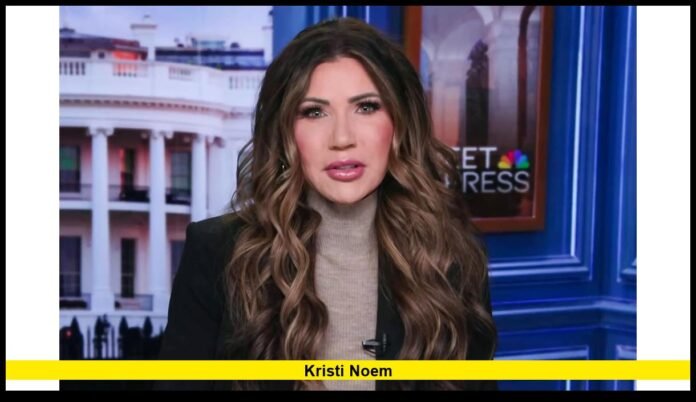

As of December 2, 2025, Secretary of Homeland Security Kristi Noem has publicly called for a sweeping travel ban on all nations she claims are sending dangerous migrants to the United States. Her announcement follows a deadly attack involving an Afghan immigrant, a move that has dramatically intensified debates over immigration, national security, and vetting procedures across the country.
Why the travel ban demand — and what triggered it
- Last week in Washington, D.C., two members of the National Guard were ambushed. One was killed, the other gravely wounded. The suspect: an Afghan national who had arrived in the U.S. under refugee resettlement.
- Investigators reportedly believe the man was radicalized after entering the U.S., sparking urgent demand for tighter controls. Secretary Noem cited this case explicitly when urging immediate action.
- In reaction, the administration has already paused all asylum decisions, suspended visa issuance for Afghan passport holders, and begun reexamining green-card holders from multiple nations of concern.
What Kristi Noem said — and how she frames the threat
On December 1, shortly after meeting with President Donald Trump, Noem published a post on X declaring her support for “a full travel ban on every damn country that’s been flooding our nation with killers, leeches, and entitlement junkies.” She framed this as a necessary step to protect American citizens, preserve public resources, and defend national security. According to her, the United States must prioritize citizens’ safety over what she views as abuse of immigration and benefit systems.
Her tone echoed previous announcements since assuming office earlier this year. This time, however, the language was the most explicit and broad: Noem did not single out a handful of countries but targeted “every country” she deems part of the problem. She labeled current border and immigration protocols as inadequate — arguing they allowed dangerous individuals into the country.
How this fits into Noem’s broader tenure at DHS
- Senate confirmed Noem as Secretary of Homeland Security in January 2025, placing her at the helm of the agency responsible for border protection, immigration enforcement, asylum processing, disaster response, and counterterrorism.
- Since taking office, she has overseen a series of aggressive immigration-related policies. These include expanding enforcement efforts nationwide and endorsing strict vetting procedures.
- She terminated Temporary Protected Status (TPS) for certain countries in 2025. She also expanded earlier travel restrictions to cover dozens of nations considered risky under the administration’s criteria.
- Under her leadership, a remodel of U.S. immigration enforcement has taken shape: tighter entry restrictions, fewer refugee and asylum admissions, and stricter scrutiny for foreign nationals seeking visas or permanent residency.
Given this trajectory, her demand for a comprehensive travel ban appears consistent with her long-standing priorities. It reflects a shift toward maximum restriction — not only for undocumented or asylum-seeking immigrants, but broadly for foreign nationals seeking to enter the United States.
What we know — and what remains to be clarified
| ✅ Confirmed facts | ❓ Still unclear / Not yet defined |
|---|---|
| Noem publicly urged a full travel ban on “every damn country” after meeting with the President. | No official list of targeted countries has been released yet. |
| The push for a ban directly followed a fatal shooting by a foreign-born individual admitted under refugee resettlement. | It is unknown whether existing green-card holders, asylum seekers already in process, or humanitarian refugees will be exempt. |
| The administration paused visa processing for certain passport holders and halted asylum adjudications. | The legal framework for implementing such a sweeping ban — including possible challenges — remains unsettled. |
| This call continues broader immigration-tightening policies enacted under her leadership this year. | The full practical, humanitarian, diplomatic, and economic impacts of a broad ban remain uncertain. |
Potential consequences — what this could mean for the U.S. and immigrants
- Refugee and asylum programs: Many eligible refugees and asylum seekers may be blocked from entering. Those already in process could see their cases frozen or terminated.
- Green-card applicants and legal immigrants: Nationals from unspecified flagged countries may face visa denials or delays. Others already residing in the U.S. might face renewed reviews or even revocations.
- Impact on immigrant communities: Immigrants — including lawful permanent residents and long-term residents — could face heightened fear, uncertainty, and challenges accessing services or opportunities.
- Diplomatic tensions: Countries whose citizens are affected may protest. The U.S. could face backlash from allies, international organizations, and human-rights advocates.
- Economic ripple effects: Industries relying on immigrant labor — agriculture, services, construction — may suffer workforce shortages. The broader U.S. economy could feel downstream effects if immigration flows are sharply curtailed.
- Legal battles: Broad prohibitions without clear criteria may invite lawsuits over due process, anti-discrimination protections, and constitutional rights. Courts may scrutinize whether such a ban legally withstands challenges.
What’s likely to happen next — and what to watch
- The Department of Homeland Security is expected to issue a formal statement soon, possibly including a list of countries targeted by the ban.
- Congress may respond: lawmakers could attempt to pass supporting legislation, propose oversight, or challenge the ban’s legality.
- Courts may become involved if green-card holders, visa applicants, or asylum seekers affected decide to sue.
- Humanitarian and civil-rights organizations will likely mobilize. They may file lawsuits, issue public statements, and press for exemptions or broader protections.
- International reaction could influence diplomacy: some nations may reciprocate, reevaluate cooperation agreements, or seek resolution through diplomatic channels.
Kristi Noem’s call for a sweeping, all-nations travel ban signifies a turning point for U.S. immigration policy. The coming days will show how broad the ban becomes — and whether it proves legally sustainable, politically viable, and socially defensible.
What do you think? Share your thoughts in the comments below or check back soon for more updates.