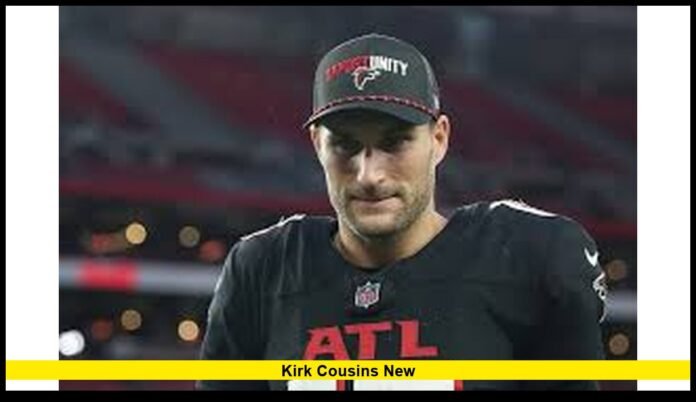

The latest kirk cousins news has quickly become one of the most talked-about developments of the NFL offseason, as the veteran quarterback’s move to the Las Vegas Raiders signals a deeper, more strategic shift within the organization. This is not just a roster addition—it is a carefully structured plan designed to stabilize the present while preparing for the future.
Kirk Cousins arrives in Las Vegas at a time when the franchise is undergoing a reset at the most important position in football. With the NFL Draft approaching and expectations rising, the Raiders are positioning themselves to compete immediately while also laying the groundwork for long-term success.
A Defining Move in a Pivotal Offseason
The Raiders entered the offseason with a clear need: certainty at quarterback. Without an established long-term starter, the team faced a familiar NFL dilemma—whether to rely entirely on a rookie or seek a veteran presence to guide the transition.
By signing Cousins, Las Vegas avoided that dilemma altogether.
At 37 years old, Cousins brings durability, experience, and a deep understanding of NFL defenses. Over the course of his career, he has built a reputation as a reliable passer capable of executing complex offensive systems. His ability to read coverage, manage tempo, and limit mistakes makes him an ideal fit for a team looking to maintain structure during a transitional phase.
This move immediately gives the Raiders credibility at quarterback—something they lacked entering the offseason.
Why This Signing Is About More Than 2026
While many will view Cousins as a short-term starter, the Raiders’ decision reflects a much broader vision.
The organization is expected to target a quarterback at the top of the upcoming draft. That means Cousins is not just a starter—he is part of a layered strategy designed to develop a future franchise quarterback under controlled conditions.
This approach addresses a growing concern across the NFL: young quarterbacks often struggle when forced into starting roles too early. By adding Cousins, the Raiders create a buffer that allows a rookie to learn without immediate pressure.
Instead of being thrown into high-stakes situations from day one, the incoming quarterback will have time to adjust to the speed, complexity, and expectations of the professional game.
That alone could significantly impact long-term development.
The Value of Experience in a Changing League
The modern NFL has increasingly leaned toward younger quarterbacks on rookie contracts. While that trend has reshaped roster construction, it has also created challenges—particularly for teams that rush development.
Cousins represents a counterbalance to that trend.
His experience offers several immediate advantages:
- Pre-snap recognition and defensive adjustments
- Leadership in high-pressure situations
- Consistent communication within the offense
- Stability in game planning and execution
These qualities are difficult to replicate with inexperienced players.
For the Raiders, this means fewer early-season mistakes and a more controlled offensive environment. It also provides a clear standard for younger players to follow.
A Seamless Fit Within the Offensive System
One of the most important aspects of this move is how naturally Cousins fits into the Raiders’ offensive structure.
Head coach Klint Kubiak’s familiarity with Cousins plays a major role in this alignment. Their previous experience working together reduces the typical adjustment period that comes with learning a new system.
This familiarity allows Cousins to step into a leadership role immediately.
Instead of spending months adapting, he can focus on execution—running the offense efficiently, building chemistry with receivers, and helping establish a consistent rhythm.
For a team entering a transitional phase, that kind of continuity is invaluable.
What Happened in Atlanta—and Why It Matters
Cousins’ departure from the Atlanta Falcons reflects the unpredictable nature of quarterback decisions in today’s NFL.
After signing a significant contract in 2024, expectations were high. However, the team’s decision to invest in a younger quarterback soon after created a complicated situation.
As the roster evolved, it became clear that the organization was shifting toward a new direction. Financial considerations and long-term planning ultimately led to Cousins’ exit.
While his time in Atlanta was relatively short, it served as a reminder of how quickly circumstances can change at the quarterback position.
For the Raiders, that lesson reinforces the importance of flexibility—something they are clearly prioritizing with this move.
How the Raiders Are Redefining the “Bridge QB” Role
Traditionally, a bridge quarterback serves as a temporary solution—someone who holds the position until a rookie is ready.
The Raiders are taking that concept a step further.
Cousins is not just a placeholder. He is expected to actively contribute to the development of the next quarterback while also leading the team on the field.
This creates a dual-impact role:
- Short-term: Provide stability, start games, and keep the team competitive
- Long-term: Mentor a rookie and help accelerate development
This hybrid model reflects a growing shift in how teams approach quarterback transitions.
Instead of choosing between development and performance, the Raiders are aiming to achieve both.
Immediate Impact on the 2026 Season
Cousins is expected to enter training camp as the leading candidate for the starting job.
That changes the outlook for the Raiders significantly.
With a proven veteran under center, the offense gains:
- Improved consistency in passing situations
- Better decision-making in critical moments
- Greater confidence across the roster
This stability can have a ripple effect throughout the team.
Receivers benefit from accurate and timely throws. The offensive line operates with clearer communication. Coaches gain more flexibility in play-calling.
All of these factors contribute to a more competitive team from the start of the season.
A Unique Opportunity for Cousins
For Cousins, this move represents a rare opportunity at this stage of his career.
Many quarterbacks nearing the end of their playing days transition into limited roles or serve strictly as backups. In Las Vegas, Cousins has a chance to do more.
He can:
- Compete for a starting role
- Influence the development of a future franchise quarterback
- Play a key role in shaping the direction of the team
This combination of responsibilities is uncommon—and it gives Cousins a meaningful path forward.
The Broader NFL Implications
The Raiders’ approach could have a lasting impact on how teams handle quarterback transitions.
If successful, this model may encourage other franchises to adopt similar strategies—pairing experienced veterans with high-potential rookies to create a more balanced development process.
This would mark a shift away from the “start immediately” mindset that has dominated in recent years.
Instead, teams may prioritize patience, structure, and long-term planning.
That could ultimately lead to better outcomes for both players and organizations.
What to Watch Moving Forward
Several key factors will determine how this situation unfolds:
Draft Strategy
The selection of a quarterback will define the next phase of the plan.
Training Camp Performance
Cousins’ command of the offense and the rookie’s development will shape early decisions.
Regular Season Results
Strong performance from Cousins could extend his role, while struggles may accelerate a transition.
Team Chemistry
Leadership and communication will play a major role in how smoothly the transition occurs.
Each of these elements will influence whether this strategy becomes a success story.
The Bigger Picture
The latest kirk cousins news reflects more than a player changing teams—it highlights a shift in how organizations think about building around the quarterback position.
The Raiders are embracing a model built on balance:
- Experience combined with youth
- Stability paired with potential
- Immediate competitiveness alongside future growth
This approach allows the team to remain competitive now while preparing for what comes next.
If executed effectively, it could set a new standard for quarterback development across the league.
Do you think this strategy gives the Raiders an edge in 2026, or should teams fully commit to rookie quarterbacks from day one? Share your thoughts and stay tuned for more updates as the season approaches.