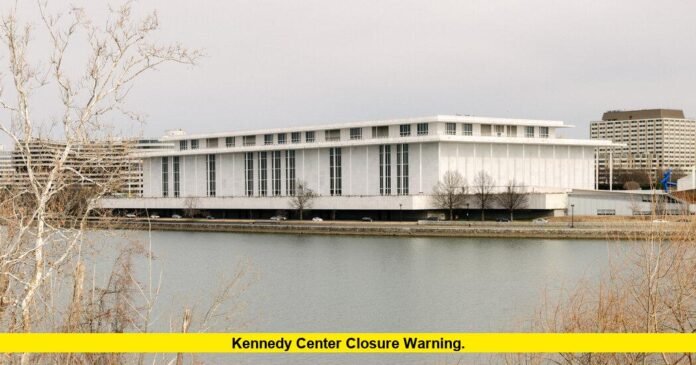

The kennedy center closure warning has taken on new urgency as the John F. Kennedy Center for the Performing Arts faces a severe financial crisis, mounting infrastructure concerns and renewed uncertainty over its future. According to a report published September 13 and updated with further reporting on September 14, Kennedy Center leaders are warning that the institution could face bankruptcy and potentially close as early as Tuesday, September 15, if a financial solution is not found.
The warning comes only weeks after the Kennedy Center’s board approved plans for a two-year closure for major renovations. The latest financial disclosures have now raised a separate and more immediate question: whether the center can continue operating at all without new funding.
Why Is the Kennedy Center Facing a Closure Warning?
The immediate concern is financial.
Documents obtained by The Washington Post show that Kennedy Center officials have warned trustees that the institution could become unable to meet payroll and routine maintenance obligations within weeks. A trustee briefing reportedly describes the situation as potentially leading to “certain fiscal collapse” without additional financial support. Reuters independently reported the same broad development, saying the center is facing an imminent financial crisis and could be forced to close as soon as Tuesday.
The latest warning is particularly significant because it goes beyond the previously announced two-year renovation closure. That earlier plan was presented as a strategic shutdown to allow extensive construction work. The newest concern involves the center’s ability to maintain normal operations because of deteriorating finances.
Internal financial projections reported earlier by The Washington Post showed a substantial gap between expected and budgeted revenue. By May, the center was projected to collect roughly $124 million against a budget of about $220 million for the fiscal year, leaving an estimated $23 million deficit even after spending reductions.
Could the Kennedy Center Actually Close on Tuesday?
A Tuesday closure is being discussed as a possibility, but it is important not to confuse a warning with a confirmed shutdown.
The center’s board is scheduled to meet Tuesday, September 15, to consider proposals addressing the institution’s financial and physical problems. The latest reporting indicates that trustees could be forced to consider whether the center has enough resources to continue normal operations.
As of the latest verified reports available September 14, there has been no confirmed announcement that the entire Kennedy Center will permanently close on Tuesday.
The situation is fluid, and the board meeting could determine whether emergency financial measures, fundraising efforts, operational changes or some form of closure become necessary.
What Is Behind the Kennedy Center’s Financial Problems?
The center’s financial difficulties appear to have multiple causes rather than a single event.
The institution has experienced major disruption since President Donald Trump took control of the Kennedy Center board in 2025 and became its chairman. Ticket sales and fundraising reportedly declined substantially during the period of political controversy surrounding the institution.
The center has also faced artist cancellations, audience concerns and organizational changes. Those disruptions have occurred alongside a costly renovation proposal and continuing legal disputes over the institution’s governance and Trump’s proposed association with the building’s name.
The financial situation therefore intersects with the center’s broader political and operational turmoil.
Trump’s Name Is Again Part of the Financial Debate
One of the most unusual elements of the latest closure warning is the connection between fundraising and President Trump’s name.
According to documents reviewed by The Washington Post, Kennedy Center leaders have argued that publicly recognizing Trump could help secure fundraising assistance and prevent a financial collapse. One proposal reportedly involves language recognizing Trump and the Trump Kennedy Center Fund in connection with renovation and endowment efforts.
This issue is controversial because Trump’s name has already been at the center of a major legal dispute.
In May, U.S. District Judge Christopher Cooper ruled that Trump’s name had been added to the Kennedy Center in violation of the law and ordered the name removed. The court also blocked the board’s earlier attempt to implement a two-year closure based on its March decision. However, the judge made clear that the ruling did not categorically prevent the board from considering a new closure decision reached through a lawful and prudent process.
The board subsequently voted again in August to pursue both a two-year closure for renovations and an inscription recognizing Trump on the building.
The $250 Million Renovation Plan
The Kennedy Center’s planned renovation is another major part of the story.
The board has backed a renovation program costing more than $250 million. The proposal includes major work involving the center’s theaters, electrical systems, plumbing and other infrastructure. Officials have argued that extensive work is necessary because of years of deferred maintenance.
The center’s leadership has argued that completing the work during a full closure would be more efficient and could reduce construction-related disruption.
A court filing described a consulting analysis that favored a complete two-year closure rather than a longer partial-closure approach. According to the Kennedy Center, a partial closure could increase construction costs, extend the disruption and create additional safety concerns.
However, the legal dispute over the closure means that the renovation timetable has remained uncertain.
A Ceiling Collapse Added to the Pressure
The financial crisis comes shortly after a separate warning sign involving the building itself.
On September 4, part of the ceiling in the Kennedy Center’s Grand Foyer collapsed during stormy weather. No injuries were reported, but debris fell onto the red-carpeted floor of the major public area connecting the center’s performance spaces. The center temporarily closed the building following the incident.
Kennedy Center officials used the incident to reinforce their argument that major renovations cannot be delayed.
The center’s leadership described the ceiling failure as evidence of the urgent need for repairs and attributed the problem to decades of deferred maintenance. Critics of the current leadership, however, have questioned whether the incident is being used to strengthen the case for a broader shutdown.
The incident has therefore become another important factor in the debate over whether the building should remain open while repairs are carried out.
The National Symphony Orchestra Has Already Prepared for Disruption
The possible closure is not entirely unexpected for performing-arts organizations based at the Kennedy Center.
The National Symphony Orchestra has already announced a 2026-27 season spread across six venues in the Washington, D.C., region because of the planned Kennedy Center closure. Its performances are scheduled at locations in Washington, Maryland and Virginia.
The orchestra’s move demonstrates how a prolonged Kennedy Center shutdown could affect the wider cultural ecosystem.
Other artists, performers, presenters, employees and nearby businesses could also experience significant consequences if the center closes for an extended period.
What Would Happen to Kennedy Center Performances?
The impact would depend on the type and duration of any closure.
A planned renovation shutdown would mean that many regular performances would move to alternative venues. The National Symphony Orchestra has already adopted that model for its upcoming season.
A sudden financial closure could be more disruptive because it could affect payroll, contracts, maintenance and other basic operations. The latest financial warning suggests that the board must consider immediate financial stability in addition to the longer-term renovation plan.
The Kennedy Center’s Reach, an extension of the campus, and off-site performances could provide some continuity, but a full operational shutdown would still represent a major change for Washington’s arts community.
How the Court Battle Could Affect the Closure
The legal situation remains an important variable.
Judge Christopher Cooper’s May ruling stopped the board from implementing its earlier closure decision, finding serious problems with how that decision had been made. At the same time, the judge specifically left open the possibility of a future closure if the board reached a new decision while meeting its legal obligations.
That distinction matters.
The current debate is not simply about whether the Kennedy Center needs repairs. It also involves questions about how the board exercises its authority, whether its decisions comply with federal law and what role Congress and the courts should play in determining the future of the national memorial and performing-arts institution.
Why the Latest Warning Is Different From Earlier Closure Reports
The Kennedy Center has faced closure headlines for months, but the September warning is different because it combines financial distress with physical infrastructure concerns and an already approved renovation strategy.
Earlier in 2026, the proposed closure was primarily presented as part of a large construction and modernization project.
Now, officials are warning that the institution could face an inability to pay its basic expenses. That creates a much more immediate concern than a planned construction shutdown.
Reuters reported September 14 that the center could be forced to close as early as Tuesday and that a board meeting is expected to play a decisive role. The center had not publicly responded to the report as of that publication.
What Happens Next at the Kennedy Center?
The next major development is expected from the board meeting on Tuesday, September 15.
Trustees could confront several interconnected issues:
- Whether emergency financing can keep the institution operating.
- How to address the reported revenue shortfall.
- Whether additional fundraising can be secured.
- Whether Trump’s proposed association with the building can proceed legally.
- How the $250 million renovation plan should be financed.
- Whether the center needs an immediate shutdown.
- How performances, employees and resident organizations would be affected.
- What role the courts could play in any new closure decision.
The answers could determine whether the Kennedy Center continues operating normally, moves toward an emergency shutdown or proceeds toward its previously proposed renovation closure.
Kennedy Center Closure Warning: What Visitors Should Know
For people planning to attend a Kennedy Center event, the most important distinction is between the possible immediate closure and the previously planned two-year renovation shutdown.
The two situations are related but not identical.
The renovation closure was intended as a planned construction period. The newest warning is tied to the center’s reported financial condition and could potentially create a much faster disruption.
Until the board announces a definitive decision, visitors should treat schedules and access plans as subject to change and rely on the Kennedy Center’s latest official announcements before traveling for an event.
The Bigger Picture
The Kennedy Center is now dealing with three major challenges at once: money, infrastructure and governance.
Its leaders say the building needs substantial investment and that fundraising is essential to preserving the institution. Opponents have challenged the way the board has handled the closure and the proposed Trump-related changes. Meanwhile, financial reports indicate that declining revenue has made the situation considerably more urgent.
The September ceiling collapse has added a visible reminder of the building’s maintenance needs, while the latest financial warning has transformed the closure debate into a question of immediate institutional survival.
For now, the most accurate description is that the Kennedy Center could face a closure as early as Tuesday, but a final shutdown has not been confirmed. The September 15 board meeting is therefore expected to be a critical moment for the future of one of the nation’s best-known performing-arts institutions.
What do you think should happen next at the Kennedy Center? Share your thoughts below and stay tuned for the latest verified updates as the situation develops.